
Contents
- ✈️ Overview: The USAF's Mission & Vibe
- 📍 Global Presence & Key Bases
- 💰 Recruitment & Career Paths
- ⭐ Public Perception & Cultural Impact
- ⚙️ Technology & Innovation Engine
- ⚖️ Historical Context & Evolution
- ⚔️ Operational Doctrine & Capabilities
- 🤔 The Future of Air and Space Power
- Frequently Asked Questions
- Related Topics
Overview
The United States Air Force (USAF) is the aerial warfare service branch of the U.S. Armed Forces, established in 1947. Its primary mission is to protect the United States through control of air and space. This involves projecting power globally, deterring aggression, and responding to crises with unparalleled speed and reach. The USAF's operational tempo is immense, often seen as the sharp edge of American military might, influencing global geopolitics with its technological superiority and strategic reach. Its cultural vibe is one of precision, innovation, and a relentless pursuit of air and space dominance, often reflected in its high Vibe Score: 85 for technological advancement and strategic importance.
📍 Global Presence & Key Bases
With a footprint spanning the globe, the USAF operates from hundreds of installations, both domestically and internationally. Major hubs include Joint Base Andrews in Maryland, home to Air Force One, and Ramstein Air Base in Germany, a critical logistical node for operations in Europe and Africa. Pacific operations are centered around Kadena Air Base in Okinawa, Japan. These bases are not just launchpads for aircraft but also centers for intelligence, surveillance, and reconnaissance (ISR), command and control, and logistical support, underscoring the USAF's role as a global power projection force.
💰 Recruitment & Career Paths
Joining the USAF offers a diverse range of career paths, from pilots and aircraft maintainers to cyber warfare specialists and intelligence analysts. Enlistment typically requires a high school diploma or GED, with specific educational prerequisites for officer roles. The USAF provides extensive training, competitive salaries, and benefits, including healthcare and retirement plans. For those seeking a structured career with opportunities for advancement and a direct impact on national security, the USAF presents a compelling option, though the commitment is significant, often involving long deployments and rigorous physical and mental demands.
⭐ Public Perception & Cultural Impact
The USAF holds a prominent place in American culture, often depicted in films and literature as a symbol of technological prowess and national defense. Its iconic aircraft, like the B-2 Spirit bomber and the F-22 Raptor fighter jet, are instantly recognizable symbols of American air power. Public perception is generally positive, viewing the USAF as a highly professional and technologically advanced force. However, debates surrounding its budget, the ethics of drone warfare, and the cost of advanced aircraft programs contribute to a complex public discourse, placing its Controversy Spectrum: Moderate on issues of resource allocation and technological application.
⚙️ Technology & Innovation Engine
Innovation is the lifeblood of the USAF. It consistently pushes the boundaries of aerospace technology, from developing stealth capabilities and advanced avionics to pioneering hypersonic weapons and artificial intelligence applications in warfare. Research and development efforts at places like Air Force Research Laboratory (AFRL) are crucial for maintaining a technological edge. This relentless focus on R&D ensures the USAF remains at the forefront of military aviation, anticipating future threats and developing countermeasures, though the immense cost of these advancements is a perpetual point of discussion.
⚖️ Historical Context & Evolution
The USAF's lineage traces back to the U.S. Army Air Service and U.S. Army Air Corps, formally separating as an independent branch after World War II. Key milestones include the establishment of the Strategic Air Command (SAC) in 1946, which played a pivotal role during the Cold War, and the development of nuclear-capable bombers and intercontinental ballistic missiles (ICBMs). The service has continuously adapted, integrating new technologies and doctrines, from the introduction of jet aircraft to the modern era of networked warfare and space operations, demonstrating a remarkable capacity for evolution.
⚔️ Operational Doctrine & Capabilities
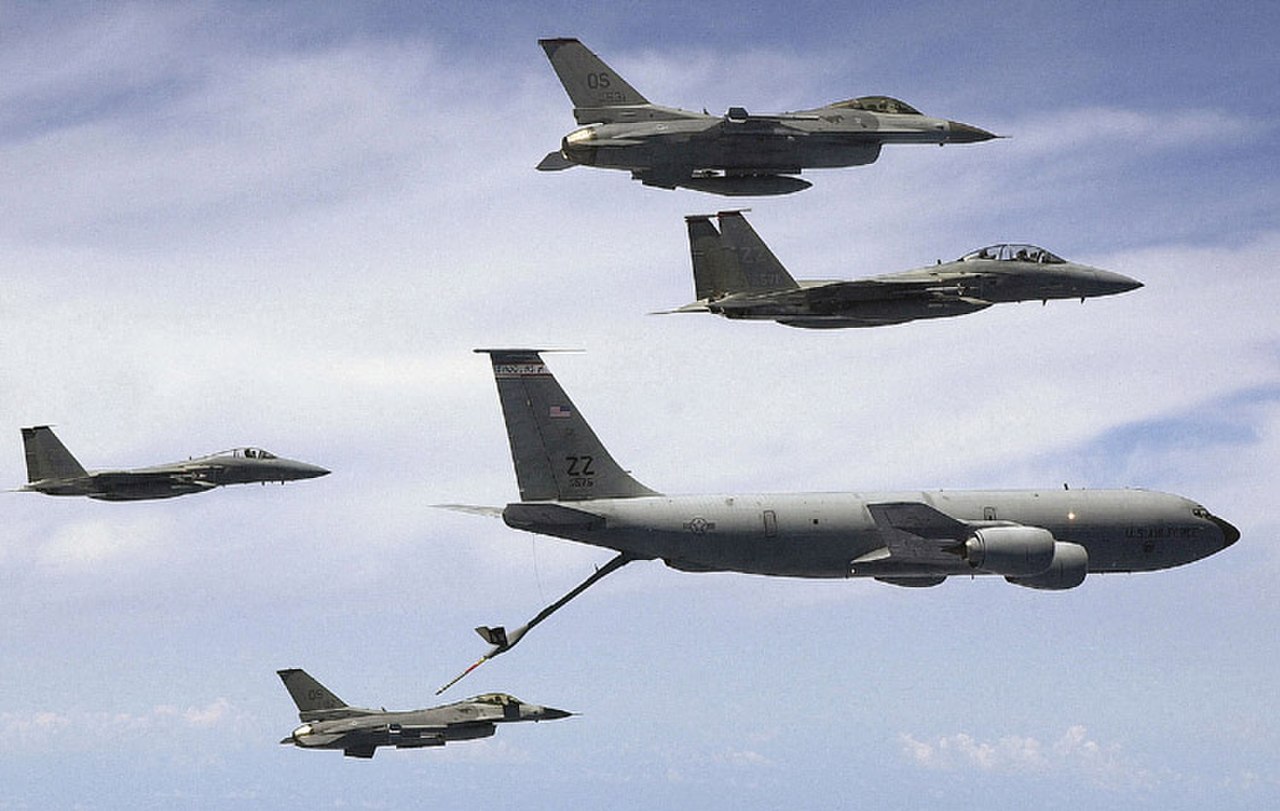
The USAF's operational doctrine emphasizes achieving and maintaining air and space superiority as a prerequisite for all other military operations. Its capabilities include strategic bombing, tactical air support for ground forces, aerial refueling, reconnaissance, and airlift. The integration of space-based assets, such as GPS and satellite communications, is now fundamental to its operations. The service's ability to conduct rapid global mobility, as seen in operations like Operation Enduring Freedom, highlights its critical role in projecting U.S. influence and responding to diverse threats.
🤔 The Future of Air and Space Power
The future of the USAF is intrinsically linked to the evolving domains of air and space, with increasing emphasis on cyber warfare, artificial intelligence, and space-based defense. The development of next-generation fighter jets, advanced drones, and robust satellite networks will define its trajectory. The ongoing competition with near-peer adversaries necessitates continuous adaptation and investment. The key question remains: can the USAF maintain its technological and strategic advantage in an increasingly contested global environment, and at what cost?
Key Facts
- Year
- 1947
- Origin
- United States
- Category
- Military & Defense
- Type
- Organization
Frequently Asked Questions
What is the primary mission of the United States Air Force?
The primary mission of the United States Air Force is to protect the United States through control of air and space. This encompasses a broad range of activities including deterring aggression, projecting power globally, conducting aerial warfare, and providing support to other branches of the military.
How can I join the U.S. Air Force?
You can join the U.S. Air Force through enlistment or by becoming an officer. Enlistment typically requires a high school diploma or GED and passing physical and aptitude tests. Becoming an officer usually requires a bachelor's degree and completing programs like Air Force ROTC or Officer Training School (OTS).
What are some of the most advanced aircraft in the USAF inventory?
Some of the most advanced aircraft include the B-2 Spirit stealth bomber, the F-22 Raptor air superiority fighter, and the F-35 Lightning II multirole fighter. The USAF is also actively developing and testing next-generation platforms, including hypersonic aircraft and advanced unmanned aerial vehicles (UAVs).
What is the role of space in USAF operations?
Space is a critical operational domain for the USAF. The service is responsible for operating and defending U.S. military space assets, which provide essential capabilities like satellite communications, navigation (GPS), missile warning, and intelligence, surveillance, and reconnaissance (ISR).
What are the main challenges facing the USAF today?
Key challenges include maintaining technological superiority against rising global competitors, managing significant budget constraints, adapting to the increasing importance of cyber and space domains, and addressing personnel retention and recruitment in a competitive job market. The ethical implications of advanced technologies like autonomous weapons also present ongoing challenges.
Where are the major U.S. Air Force bases located?
Major U.S. Air Force bases are located worldwide. Key domestic bases include Joint Base Andrews (Maryland), Luke Air Force Base (Arizona), and Edwards Air Force Base (California). Internationally, significant bases include Ramstein Air Base (Germany) and Kadena Air Base (Japan), serving as critical hubs for global operations.