
Contents
Overview
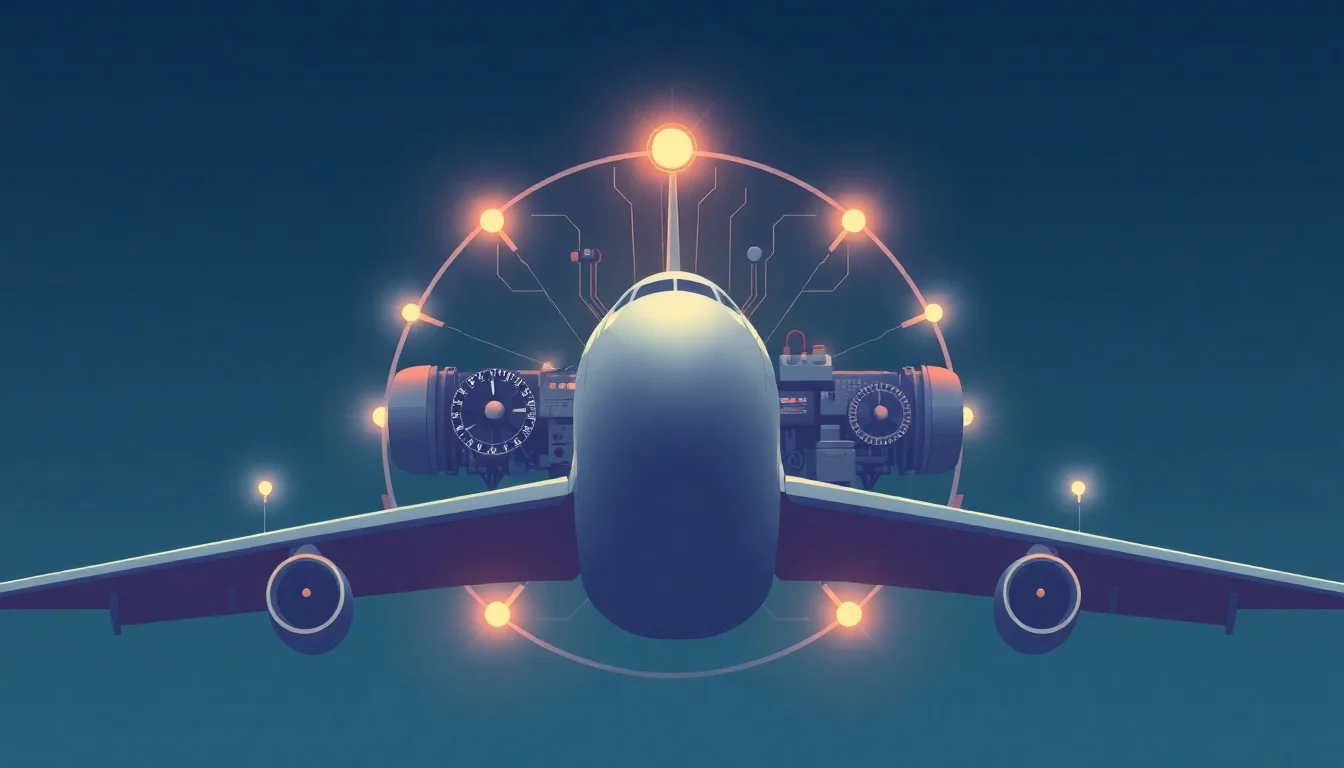
Avionics engineering is the specialized field focused on the design, development, testing, and maintenance of the electronic systems used in aircraft, spacecraft, and satellites. It's the invisible architecture that dictates everything from navigation and communication to flight control and in-flight entertainment. Think of it as the nervous system of any flying machine, integrating complex hardware and software to ensure safe, efficient, and sometimes even autonomous operation. This discipline bridges electrical engineering, computer science, and aerospace principles, demanding a deep understanding of real-time systems, signal processing, and stringent safety certifications.
✈️ What is Avionics Engineering?
Avionics engineering is the specialized field focused on the design, development, testing, and maintenance of the electronic systems used in aircraft, spacecraft, and satellites. It's the brain and nervous system of any flying machine, encompassing everything from the navigation and communication systems to flight control computers and sensor arrays. For anyone fascinated by the intricate dance of technology that keeps us airborne, understanding avionics is crucial. This field demands a rigorous blend of electrical engineering, computer science, and aerospace principles, ensuring safety, efficiency, and performance in the skies and beyond.
🛠️ Core Disciplines & Technologies
At its heart, avionics engineering integrates a vast array of technologies. This includes flight control (both fly-by-wire and traditional), navigation (like GPS, INS, and radar), communication equipment (radios, transponders), flight instruments (altimeters, airspeed indicators), and increasingly, sophisticated AI and machine learning for autonomous operations. The complexity lies in ensuring these disparate systems communicate seamlessly and reliably under extreme environmental conditions, from stratospheric cold to intense vibration.
📈 Historical Evolution & Milestones
The roots of avionics engineering trace back to the early days of aviation, with rudimentary radio direction finding and basic instrumentation. The post-World War II era saw a significant acceleration, driven by military needs for advanced radar and navigation. The space race of the 1960s pushed the boundaries further, demanding highly reliable and miniaturized electronics for spacecraft. Key milestones include the development of INS in the 1950s, the advent of digital avionics in the 1970s, and the widespread adoption of Global Positioning System in the 1990s, fundamentally reshaping how aircraft navigate.
💡 Key Innovations & Future Trends
The future of avionics is electrifying, driven by trends like UAVs (drones), advanced ATM systems, and the push towards more electric aircraft. Expect to see greater integration of AI for predictive maintenance, enhanced situational awareness through sensor fusion, and the development of resilient navigation systems that can operate even in GPS-denied environments. The pursuit of supersonic and hypersonic flight also presents new avionics challenges, demanding systems that can withstand extreme speeds and temperatures.
🎓 Education & Career Paths
Aspiring avionics engineers typically pursue a Bachelor's degree in electrical engineering, computer engineering, or aerospace engineering, often with a specialization or significant coursework in avionics. Advanced degrees are common for research and development roles. Career paths can lead to positions in aircraft manufacturing (e.g., Boeing, Airbus), defense contractors (e.g., Lockheed Martin, Raytheon), avionics system suppliers (e.g., Honeywell, Garmin), and regulatory bodies like the Federal Aviation Administration.
🌍 Global Impact & Industry Players
The global avionics market is a multi-billion dollar industry, dominated by major players like Honeywell, Collins Aerospace (a Raytheon Technologies company), Garmin, and Thales. These companies design and manufacture a vast array of avionics components and integrated systems for commercial, military, and general aviation. The influence of these entities extends globally, shaping safety standards and technological advancements through their extensive research and development efforts and their critical role in supplying aircraft manufacturers worldwide.
⚖️ Debates & Controversies
A central debate in avionics engineering revolves around the balance between proprietary, closed systems and open architectures. While closed systems offer enhanced security and control, open architectures promise greater interoperability and innovation. Another ongoing discussion concerns the increasing reliance on software in critical flight systems and the associated challenges of verification, validation, and cybersecurity. The integration of AI also raises questions about human oversight and the ethical implications of autonomous decision-making in flight.
🚀 Getting Started in Avionics
To embark on a career in avionics engineering, start by building a strong foundation in mathematics and physics. Pursue relevant undergraduate degrees and seek internships with avionics companies or aerospace manufacturers. Engage with professional organizations like the American Institute of Aeronautics and Astronautics and stay abreast of industry publications. Consider pursuing certifications or advanced studies in specialized areas like embedded systems or cybersecurity for avionics. Networking at industry conferences is also invaluable for understanding current trends and potential opportunities.
Key Facts
- Year
- 1910
- Origin
- Early 20th Century Aviation
- Category
- Engineering & Technology
- Type
- Field of Study/Industry
Frequently Asked Questions
What is the difference between avionics and aerospace engineering?
Aerospace engineering is the broader field encompassing the design, construction, and science of aircraft and spacecraft. Avionics engineering is a specialized subset of aerospace engineering that focuses specifically on the electronic systems within these vehicles. Think of aerospace as the body and avionics as the brain and nervous system that controls it.
What are the main components of an avionics system?
Key components include flight control computers, navigation systems (GPS, INS), communication radios, transponders, radar, flight displays (cockpit instruments), and increasingly, sensors for situational awareness and data processing units for AI applications. The integration of these elements is what defines a modern avionics suite.
What kind of math and science is important for avionics engineers?
A strong foundation in calculus, differential equations, linear algebra, physics (especially electromagnetism and mechanics), and computer science is essential. Understanding digital signal processing and control theory is also critical for many roles within avionics.
Are avionics systems used in space exploration?
Absolutely. Spacecraft and satellites rely heavily on sophisticated avionics for navigation, communication, attitude control, data acquisition, and mission operations. The reliability demands for space avionics are exceptionally high due to the inaccessibility for repairs.
What are the career prospects for avionics engineers?
Career prospects are generally strong, driven by continuous innovation in aviation and space sectors, as well as the growing demand for unmanned systems and advanced air mobility. Opportunities exist in design, testing, integration, maintenance, and research and development across various industries.
How does cybersecurity apply to avionics engineering?
Cybersecurity is paramount in modern avionics. Engineers must design systems that are resistant to hacking and data breaches, protecting critical flight functions and sensitive information. This involves secure coding practices, encryption, and robust authentication protocols.