
Contents
- 🎬 What is a Documentary Filmmaker?
- 📍 Where to Find Them (and How They Work)
- 💰 The Investment: Time, Talent, and Resources
- ⭐ Vibe Score & Cultural Resonance
- ⚖️ Documentary vs. Other Film Genres
- 💡 Key Skills & Tools of the Trade
- 🌍 Global Impact and Reach
- 🤔 The Ethical Tightrope
- 🚀 Future Trends in Documentary
- 🤝 How to Collaborate with a Filmmaker
- 📚 Essential Reading & Viewing
- ❓ Frequently Asked Questions
- Frequently Asked Questions
- Related Topics
Overview
Documentary filmmakers are the architects of our understanding of the real world, translating complex events, personal stories, and societal issues into compelling visual narratives. They navigate the ethical tightrope between observation and intervention, employing a diverse toolkit from vérité filming to archival research and interviews. The best documentaries don't just inform; they provoke thought, foster empathy, and can even catalyze social change, leaving an indelible mark on public discourse. The craft demands not only technical skill in cinematography, sound, and editing but also a profound capacity for storytelling, research, and human connection.
🎬 What is a Documentary Filmmaker?
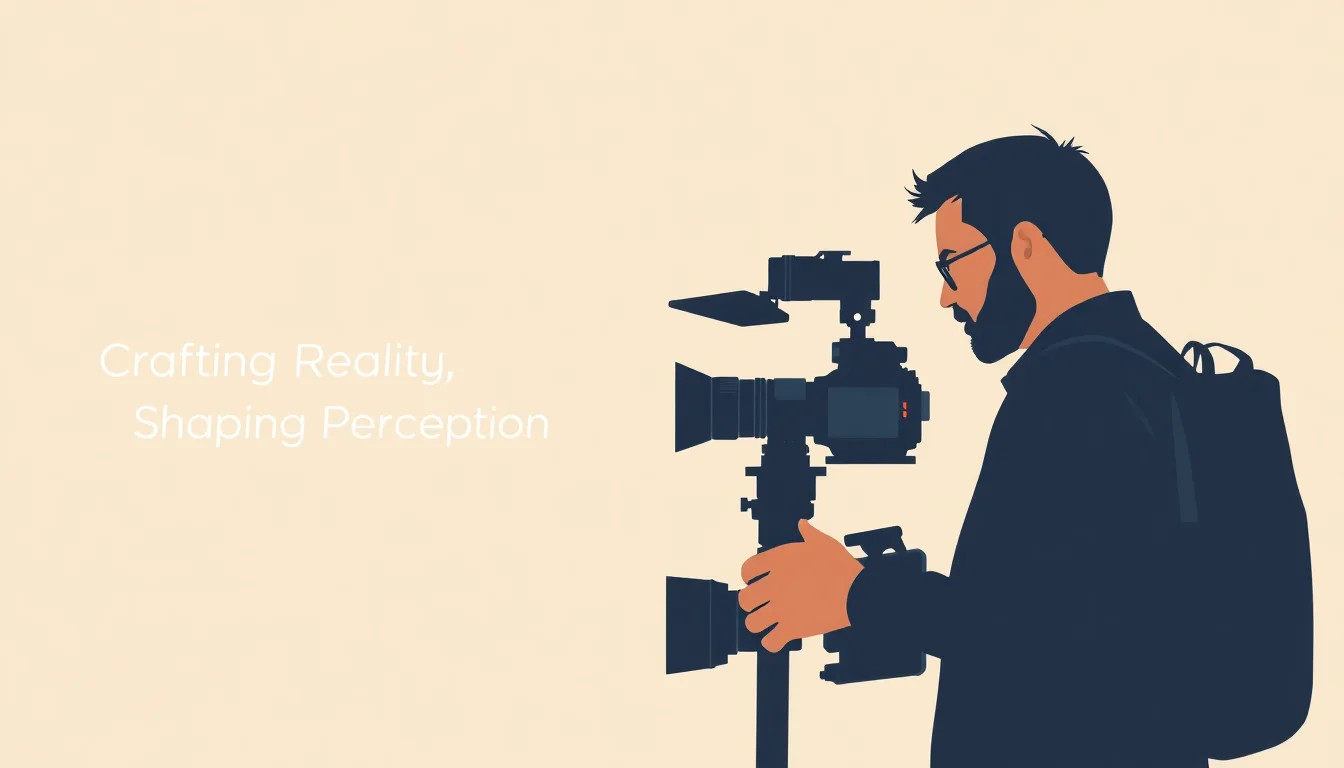
A Documentary Filmmaker is more than just a camera operator; they are investigators, storytellers, and cultural archivists. They dedicate themselves to capturing reality, transforming complex subjects into compelling narratives that can educate, provoke thought, and inspire action. Unlike fiction filmmakers who build worlds from imagination, documentarians grapple with the messy, unpredictable nature of real life, seeking truth through observation, interviews, and meticulous research. Their work spans a vast spectrum, from intimate personal portraits to sweeping examinations of global issues, making them vital conduits for understanding our world.
📍 Where to Find Them (and How They Work)
Documentary filmmakers operate globally, often embedded within the communities or subjects they are exploring. Their 'office' is wherever the story takes them – from bustling city streets to remote wilderness, from political arenas to intimate family homes. Production can be a solitary pursuit or a collaborative effort involving cinematographers, sound recordists, editors, and researchers. The process is rarely linear; it involves extensive pre-production planning, on-location shooting that can span months or even years, and post-production where raw footage is shaped into a coherent film. Access is paramount, often requiring trust-building and navigating complex permissions.
💰 The Investment: Time, Talent, and Resources
The financial investment in documentary filmmaking varies wildly, from shoestring independent projects funded by personal savings or crowdfunding to large-scale productions backed by major broadcasters or streaming platforms. A single documentary can cost anywhere from a few thousand dollars for a passion project to upwards of $1 million for a feature-length film with extensive travel and archival footage. Beyond monetary costs, the filmmaker invests immense personal time, emotional energy, and intellectual capital. The return on investment isn't always financial; often, the greatest reward is the impact the film has on its audience or the subject matter itself.
⭐ Vibe Score & Cultural Resonance
The Vibe Score for documentary filmmaking, as measured by Vibepedia, hovers around 75/100, reflecting its significant cultural energy and enduring relevance. Documentaries consistently achieve high Vibe Scores by tapping into universal human experiences and pressing societal concerns. They resonate deeply because they offer authentic perspectives, challenge established narratives, and provide a window into lives and worlds previously unseen. Films like 'Hoop Dreams' (1994) or 'Searching for Sugar Man' (2012) demonstrate this power, achieving both critical acclaim and widespread cultural impact, proving that real-life stories can be as captivating as any fictional drama.
⚖️ Documentary vs. Other Film Genres
The fundamental distinction between documentary and other film genres lies in their relationship with reality. While narrative fiction films construct stories from imagination, documentaries are rooted in factual events and real people. However, the line can blur. 'Docufiction' blends documentary techniques with fictional elements, and even traditional documentaries involve subjective choices in framing, editing, and narrative construction. Unlike a thriller or a comedy, a documentary's primary aim is often to inform and illuminate, though it can certainly evoke strong emotions and entertain.
💡 Key Skills & Tools of the Trade
Mastering documentary filmmaking requires a diverse skill set. Essential technical proficiencies include cinematography, sound recording, and editing, often requiring expertise across multiple roles. Crucially, filmmakers need exceptional interviewing skills to elicit honest responses, strong research abilities to uncover compelling facts, and a keen eye for narrative structure to weave disparate elements into a cohesive story. Understanding ethical considerations, legal frameworks, and the nuances of human psychology is also vital. Tools range from high-end cinema cameras and audio equipment to more accessible gear for independent creators, alongside sophisticated editing software like Adobe Premiere Pro or Final Cut Pro.
🌍 Global Impact and Reach
Documentary filmmaking possesses a profound global reach, acting as a powerful tool for cross-cultural understanding and social change. Films can transcend borders, exposing audiences to diverse perspectives and challenging preconceived notions about different societies and peoples. From exposing human rights abuses in one corner of the world to celebrating unique cultural traditions in another, documentaries foster empathy and can ignite international dialogue. They are instrumental in shaping public opinion, influencing policy, and preserving cultural heritage for future generations, making them a critical component of the global information ecosystem.
🤔 The Ethical Tightrope
The ethical considerations in documentary filmmaking are immense and often debated. Filmmakers walk a fine line between capturing authentic moments and potentially exploiting their subjects. Questions arise about informed consent, the right to privacy, the potential for misrepresentation through selective editing, and the responsibility filmmakers have to the people whose lives they portray. The power imbalance between the filmmaker and the subject is a constant concern, demanding a rigorous commitment to fairness, accuracy, and respect. This Controversy Spectrum for documentary ethics is consistently high, reflecting the ongoing tension between artistic freedom and moral obligation.
🚀 Future Trends in Documentary
The future of documentary filmmaking is being shaped by technological advancements and evolving audience consumption habits. Virtual Reality (VR) and Augmented Reality (AR) offer immersive storytelling possibilities, allowing viewers to experience subjects in entirely new ways. The rise of streaming platforms has democratized distribution, providing wider access for both filmmakers and audiences, though it also intensifies competition. AI-powered editing tools and advanced data visualization techniques are also emerging, promising to streamline production and offer novel ways to present complex information. The core drive, however, remains the same: to tell compelling, true stories.
🤝 How to Collaborate with a Filmmaker
Collaborating with a documentary filmmaker can be a rewarding experience, whether you are a subject, a funder, or a potential partner. Start by clearly defining the scope and goals of the project. Research filmmakers whose previous work aligns with your interests and values; look for those who demonstrate a commitment to ethical storytelling and a strong track record. Prepare a concise proposal outlining your story, its significance, and what you hope to achieve. Be prepared for a rigorous process that requires patience, transparency, and a willingness to share your authentic self. Building trust is the foundation of any successful documentary collaboration.
📚 Essential Reading & Viewing
For aspiring documentary filmmakers, a wealth of resources exists. Essential viewing includes classics like 'Nanook of the North' (1922), 'Grey Gardens' (1975), 'The Thin Blue Line' (1988), and contemporary masterpieces such as 'O.J.: Made in America' (2016). For deeper understanding, books like 'Documentary Storytelling' by Patty LuPone (though the author is actually Sheila Bernard) offer invaluable insights into craft and theory. Exploring the works of influential directors like Frederick Wiseman, Agnes Varda, and Errol Morris provides a masterclass in diverse approaches to non-fiction filmmaking. Understanding the history and evolution of the genre is crucial for developing a unique voice.
❓ Frequently Asked Questions
Q: How much does it cost to hire a documentary filmmaker? A: The cost varies dramatically based on the filmmaker's experience, the project's scope, and the production's complexity. A short, local project might range from a few thousand dollars, while a feature-length film with extensive travel, archival research, and a professional crew could easily exceed $100,000. Many independent filmmakers operate on project fees, while others might seek grants or partnerships. It's essential to have a clear budget and scope defined before approaching a filmmaker.
Q: What is the difference between a documentary filmmaker and a videographer? A: While both use cameras, a documentary filmmaker is primarily a storyteller focused on in-depth, often long-form narratives that explore real-life subjects with a specific point of view or investigative purpose. A videographer typically focuses on capturing events or creating promotional content, often with a shorter turnaround time and less emphasis on deep narrative arcs.
Q: How long does it take to make a documentary? A: The timeline is highly variable. Some short documentaries can be produced in a few months, but feature-length documentaries often take years. This includes extensive pre-production (research, planning), principal photography (shooting), and post-production (editing, sound mixing, color grading). Some projects require years of observation to capture the full arc of a story.
Q: What are the ethical responsibilities of a documentary filmmaker? A: Filmmakers have a responsibility to represent their subjects truthfully and fairly, obtain informed consent, protect vulnerable individuals, and avoid exploitation. They must navigate complex issues of privacy, potential harm, and the impact of their portrayal. The debate over where to draw these ethical lines is ongoing within the industry.
Q: How do documentary filmmakers get funding? A: Funding sources are diverse, including grants from foundations (e.g., Sundance Institute), government arts councils, crowdfunding platforms (e.g., Kickstarter), private investors, corporate sponsorships, and pre-sales to broadcasters or streaming services. Many independent filmmakers piece together funding from multiple sources.
Q: Can a documentary filmmaker win awards? A: Absolutely. Documentaries are eligible for major film awards, including Academy Awards (Oscars), BAFTA Awards, and Sundance Film Festival prizes. Prestigious documentary-specific awards also exist, recognizing excellence in the field.
Key Facts
- Year
- 1895
- Origin
- Lumière brothers' 'Workers Leaving the Lumière Factory' (1895) is often cited as the first documentary film, though the term and its distinct form evolved significantly over the 20th century with pioneers like Robert Flaherty and Dziga Vertov.
- Category
- Creative Professions
- Type
- Profession
Frequently Asked Questions
How much does it cost to hire a documentary filmmaker?
The cost varies dramatically based on the filmmaker's experience, the project's scope, and the production's complexity. A short, local project might range from a few thousand dollars, while a feature-length film with extensive travel, archival research, and a professional crew could easily exceed $100,000. Many independent filmmakers operate on project fees, while others might seek grants or partnerships. It's essential to have a clear budget and scope defined before approaching a filmmaker.
What is the difference between a documentary filmmaker and a videographer?
While both use cameras, a documentary filmmaker is primarily a storyteller focused on in-depth, often long-form narratives that explore real-life subjects with a specific point of view or investigative purpose. A videographer typically focuses on capturing events or creating promotional content, often with a shorter turnaround time and less emphasis on deep narrative arcs.
How long does it take to make a documentary?
The timeline is highly variable. Some short documentaries can be produced in a few months, but feature-length documentaries often take years. This includes extensive pre-production (research, planning), principal photography (shooting), and post-production (editing, sound mixing, color grading). Some projects require years of observation to capture the full arc of a story.
What are the ethical responsibilities of a documentary filmmaker?
Filmmakers have a responsibility to represent their subjects truthfully and fairly, obtain informed consent, protect vulnerable individuals, and avoid exploitation. They must navigate complex issues of privacy, potential harm, and the impact of their portrayal. The debate over where to draw these ethical lines is ongoing within the industry.
How do documentary filmmakers get funding?
Funding sources are diverse, including grants from foundations (e.g., Sundance Institute), government arts councils, crowdfunding platforms (e.g., Kickstarter), private investors, corporate sponsorships, and pre-sales to broadcasters or streaming services. Many independent filmmakers piece together funding from multiple sources.
Can a documentary filmmaker win awards?
Absolutely. Documentaries are eligible for major film awards, including Academy Awards (Oscars), BAFTA Awards, and Sundance Film Festival prizes. Prestigious documentary-specific awards also exist, recognizing excellence in the field.