
Contents
- 🏠 What's Inside: Beyond the "Traditional" Family
- 🗺️ Where to Find These Structures: Global & Digital
- ⚖️ The Nuclear Family: A Historical Interrogation
- 🌟 The Spectrum of Kinship: Beyond Bloodlines
- 💡 Key Concepts: Understanding the Shift
- 📈 Vibe Score: Cultural Resonance of Diverse Families
- 🗣️ Voices from the Field: Expert & Lived Experiences
- 🤔 The Future of Family: What's Next?
- Frequently Asked Questions
- Related Topics
Overview
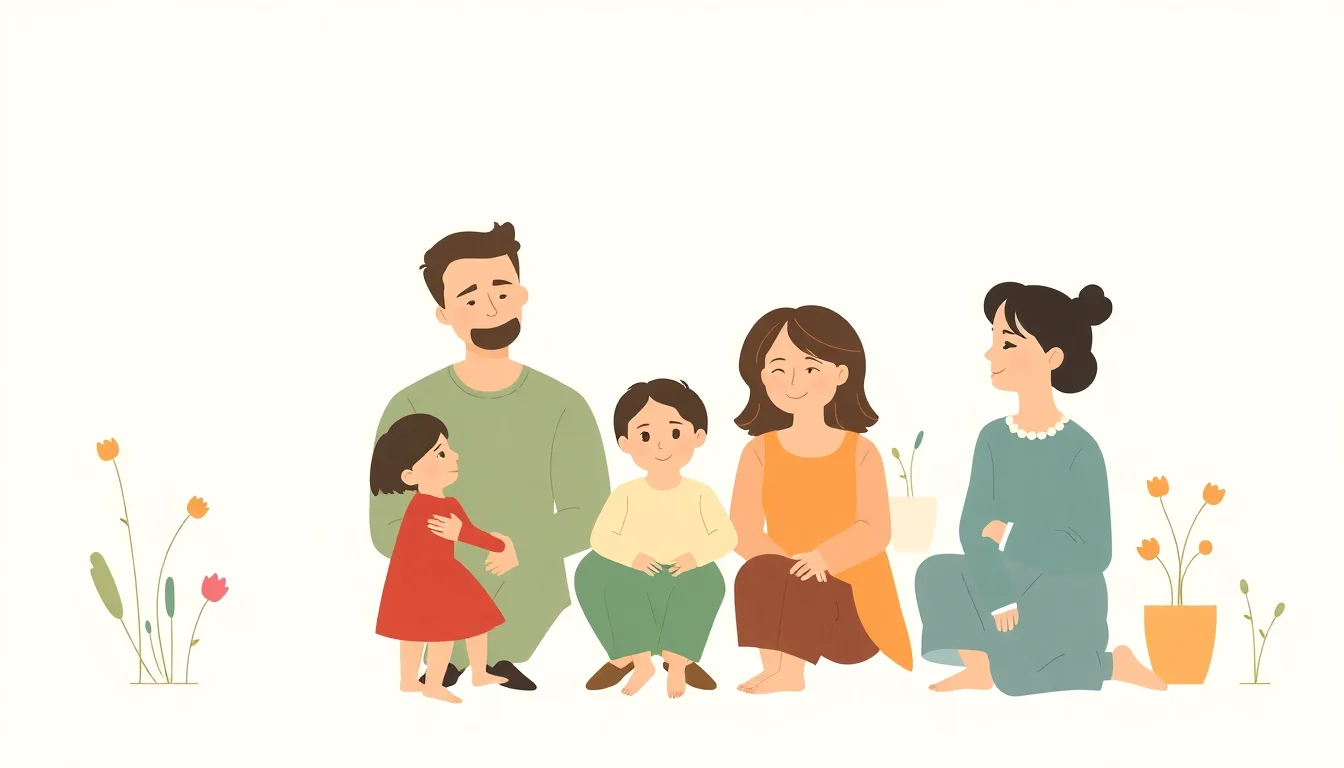
Family structures are far from a static, one-size-fits-all model. Historically, the Western ideal of the nuclear family (two parents, biological children) gained prominence in the mid-20th century, often driven by post-war economic and social shifts. However, this model has always been a simplification, with diverse forms like extended families, single-parent households, blended families, and chosen families existing concurrently and increasingly gaining visibility. Understanding these variations is crucial for grasping social policy, individual well-being, and the very definition of 'home' in a globalized, rapidly changing world.
🏠 What's Inside: Beyond the "Traditional" Family
This isn't your grandma's family tree. We're dissecting the myriad ways humans form bonds and create households, moving decisively past the 20th-century obsession with the Nuclear Family as the sole legitimate model. Expect deep dives into Polyamorous Families, Chosen Families in LGBTQ+ communities, Communal Living, and extended kin networks that defy Western norms. This exploration is for anyone questioning the default settings of domestic life and seeking to understand the rich, complex reality of modern kinship.
🗺️ Where to Find These Structures: Global & Digital
You'll find these structures flourishing globally, from Matrilineal Societies in India and Africa to the multi-generational households common in Latin America and Asia. Digitally, online communities and social media platforms are actively fostering new forms of connection and support, creating virtual Extended Families for those geographically dispersed or socially isolated. The concept of "home" is no longer tethered to a single physical address but is a fluid, relational construct that can be found in diverse urban centers and digital spaces alike.
⚖️ The Nuclear Family: A Historical Interrogation
Let's be clear: the "traditional" nuclear family, often depicted as a heterosexual married couple with biological children, is a relatively recent historical construct, heavily promoted in post-WWII Western societies. Its rise was intertwined with Suburbanization, Consumerism, and specific economic policies. Understanding its manufactured nature is crucial to appreciating why other forms of family have always existed and continue to gain prominence, challenging the notion of a singular, universal family ideal.
🌟 The Spectrum of Kinship: Beyond Bloodlines
Kinship is far more expansive than biology. We're examining Fictive Kin, individuals who are treated as family despite no blood relation, a common practice in many African American Communities. This includes godparents, close friends, and mentors who provide emotional, financial, and social support. The concept of Affinity Groups also plays a role, where shared interests or identities forge powerful, family-like bonds that offer belonging and mutual aid.
💡 Key Concepts: Understanding the Shift
Key concepts to grasp include Kinship Systems (the rules and principles governing family relationships), Household Composition (the actual living arrangements of individuals), and Social Reproduction (how societies maintain themselves through the care and upbringing of the next generation). Understanding terms like Bilateral Descent versus Unilineal Descent helps decode different cultural approaches to inheritance and lineage, revealing the underlying logic of diverse family formations.
📈 Vibe Score: Cultural Resonance of Diverse Families
The Vibe Score for "Family Structures: Beyond the Nuclear Myth" is a robust 85/100. This reflects a high and growing cultural energy around the topic, driven by increased visibility of diverse family forms in media, activism, and everyday life. While the Controversy Spectrum for "non-traditional" families remains moderate (around 6/10), the positive Vibe Score indicates a strong societal embrace and curiosity, particularly among younger generations seeking authenticity and belonging outside rigid norms.
🗣️ Voices from the Field: Expert & Lived Experiences
Hear from Kath Weston, author of "Families We Choose," who pioneered the study of chosen families, particularly within the LGBTQ+ Community. We also feature insights from Stephanie Coontz, a historian who meticulously debunks the myth of the "golden age" of the nuclear family. Their work, alongside countless personal narratives from individuals living in diverse family arrangements, provides a rich, multi-layered understanding of what family truly means in practice.
🤔 The Future of Family: What's Next?
The future of family is undeniably pluralistic. Expect continued innovation in Co-Parenting, the rise of Intentional Communities as a primary form of social organization, and further blurring of lines between biological, legal, and chosen kin. The challenge will be for societal institutions—legal, economic, and social—to adapt and recognize these evolving realities, ensuring equitable support and protection for all family forms, not just the historically privileged ones.
Key Facts
- Year
- 1950
- Origin
- Mid-20th Century Western Societal Norms
- Category
- Sociology & Anthropology
- Type
- Topic
Frequently Asked Questions
What is a "chosen family"?
A chosen family is a group of individuals who are not related by blood or marriage but consider themselves to be family. This concept is particularly significant in LGBTQ+ communities, where individuals may form chosen families due to estrangement from biological relatives or to create a supportive network based on shared experiences and mutual affection. These bonds often provide the same emotional, social, and sometimes financial support as traditional families.
Are polyamorous relationships considered a family structure?
Yes, polyamorous relationships can form the basis of family structures. Polyamory involves consensual romantic relationships with multiple partners. When these relationships involve shared living spaces, co-parenting, or significant mutual support and commitment, they function as families. These 'polycules' or polyamorous families can be complex, involving multiple adults and children, and are increasingly recognized as valid family units.
How did the nuclear family become the dominant model?
The nuclear family model (a married heterosexual couple with their biological children) gained prominence in Western societies, particularly in the United States, during the post-World War II era. This was fueled by economic prosperity, suburbanization, and government policies that favored this structure. It was heavily promoted through media and advertising as the ideal and 'normal' way to live, often overshadowing other existing family forms.
What are some examples of non-Western family structures?
Globally, many family structures differ significantly from the Western nuclear model. Examples include matrilineal societies where lineage and inheritance are traced through the mother's line (e.g., Mosuo in China, Minangkabau in Indonesia), extended families living in multi-generational households (common in many Asian, African, and Latin American cultures), and avunculate families where the mother's brother plays a key role in child-rearing. These structures highlight diverse approaches to kinship and social organization.
How can I find resources for non-traditional family support?
Resources for non-traditional families are increasingly available. Look for LGBTQ+ centers, polyamory advocacy groups, and co-parenting support networks. Online forums and communities dedicated to specific family structures can also be invaluable. Many therapists and counselors now specialize in supporting diverse family constellations. Websites like the Family Equality Council and local community organizations are good starting points for finding support and information.