
Contents
- 🏛️ The Roman Crucible: Birth of an Empire
- ⚔️ From Republic to Empire: The Price of Power
- 🌐 Mediterranean Hegemony: Rome's Golden Age
- ✝️ Christianity's Rise and the Empire's Fall
- 👑 The Fragmented Peninsula: Medieval Italy
- ⚜️ Renaissance Rebirth: Art, Science, and City-States
- ⚔️ Wars of Italian Succession: Foreign Domination
- 🇮🇹 The Risorgimento: Forging a Nation
- 🌍 Italy in the World Wars: Triumph and Tragedy
- 📈 Post-War Italy: Reconstruction and Modernity
- 🤔 Debates and Controversies in Italian History
- 🚀 The Future of Italian History's Legacy
- Frequently Asked Questions
- Related Topics
Overview
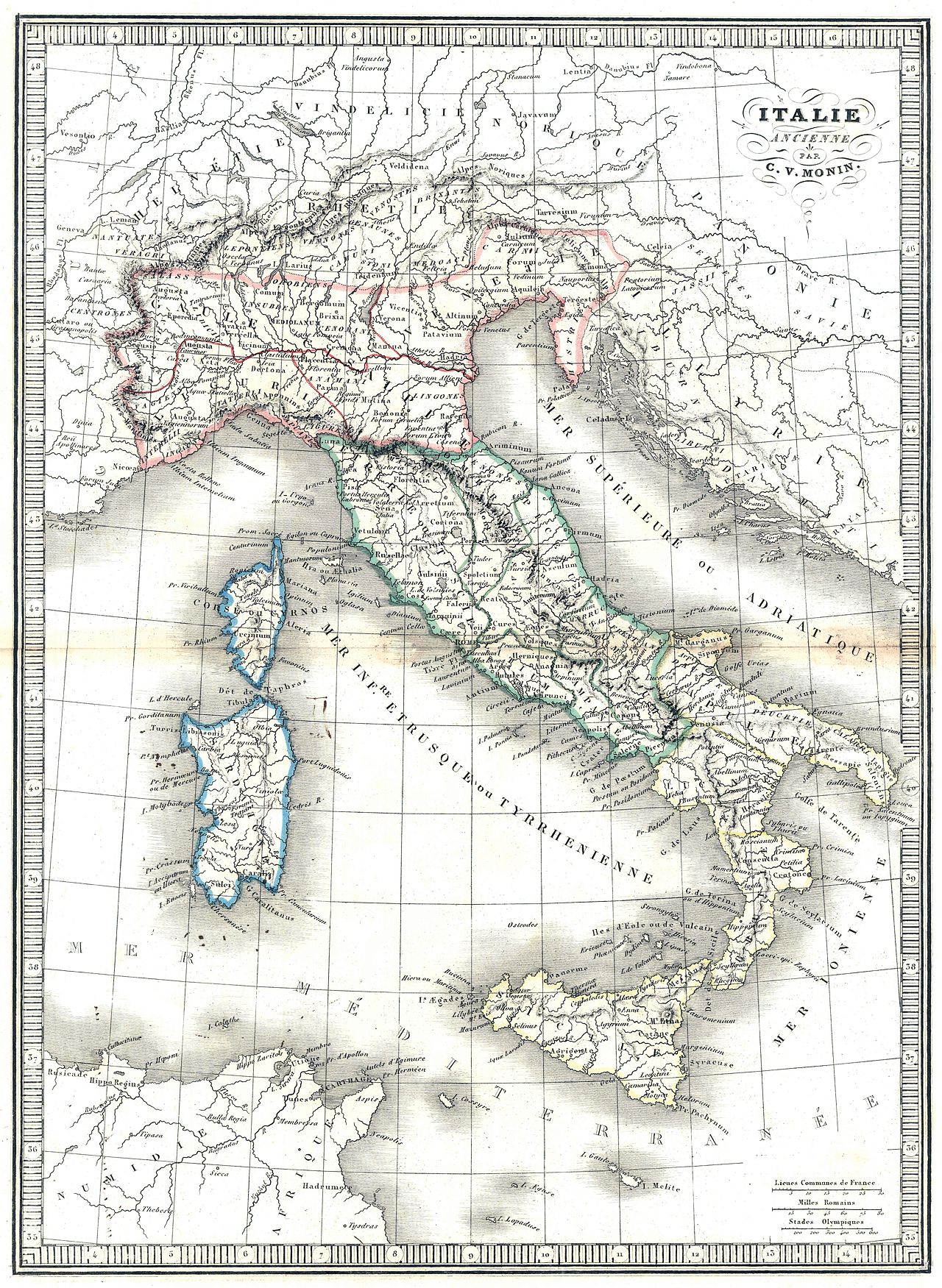
The story of Italy, as a distinct historical entity, ignites with the foundational myths of Rome, traditionally dated to 753 BC. Before Rome's ascent, the peninsula was a vibrant mosaic of peoples – the enigmatic Etruscans, the foundational Latins, the formidable Samnites, and Greek colonists in Magna Graecia. Rome, initially a kingdom, transitioned to a republic in 509 BC, a pivotal moment that set the stage for unprecedented expansion. This early period saw the gradual unification of the Italian peninsula under Roman hegemony, a process far from bloodless, involving complex alliances and military campaigns against rivals like the Gauls. The consolidation of power laid the groundwork for Rome's future dominance.
⚔️ From Republic to Empire: The Price of Power
The Roman Republic's expansion was a double-edged sword, fostering immense wealth and influence while simultaneously sowing the seeds of internal strife. Figures like Julius Caesar and Pompey rose to prominence, their ambitions clashing in a series of civil wars that ultimately dismantled the Republic. The establishment of the Roman Empire under Augustus in 27 BC marked a new era, ushering in the Pax Romana. This period, though autocratic, saw unparalleled stability and prosperity across the vast territories controlled by Rome, profoundly shaping Western civilization through its legal systems, infrastructure, and administrative prowess. The transition from Republic to Empire remains a subject of intense historical debate, particularly regarding the inevitability and consequences of centralized power.
🌐 Mediterranean Hegemony: Rome's Golden Age
For centuries, the Roman Empire was the undisputed master of the Mediterranean basin. Its legions patrolled vast frontiers, its trade routes crisscrossed continents, and its culture permeated diverse societies. This era witnessed monumental achievements in architecture, engineering, and governance, leaving an indelible mark on the development of Western philosophy, science, and art. The sheer scale of Roman influence, from the British Isles to North Africa and the Near East, is staggering, representing a high point of centralized imperial power and cultural diffusion in the ancient world. Understanding this period is crucial for grasping the subsequent fragmentation of Europe.
✝️ Christianity's Rise and the Empire's Fall
The rise of Christianity within the Roman Empire presented a profound ideological challenge to the established pagan order. Initially persecuted, the faith eventually gained imperial favor under Constantine the Great in the 4th century AD, becoming the dominant religion. This shift had immense cultural and political ramifications. The eventual decline and fall of the Western Roman Empire in 476 AD, often attributed to a confluence of internal decay, economic pressures, and external invasions by Germanic tribes like the Goths and Vandals, plunged the peninsula into a period of fragmentation and instability. The legacy of Rome, however, persisted, influencing subsequent political and religious structures.
👑 The Fragmented Peninsula: Medieval Italy
The centuries following the fall of the Western Roman Empire were characterized by political fragmentation and frequent invasions. Various Germanic kingdoms, including the Lombards and Franks, vied for control of the Italian peninsula. The Byzantine Empire also maintained a presence in parts of Italy, leading to a complex geopolitical landscape. The rise of the Papacy in Rome as a significant temporal and spiritual power also began to shape the peninsula's destiny. This era saw the development of distinct regional identities and the emergence of powerful city-states, laying the groundwork for future rivalries and alliances. The concept of a unified 'Italy' was largely absent during this period.
⚜️ Renaissance Rebirth: Art, Science, and City-States
The Renaissance, a period of extraordinary cultural and intellectual flourishing, began in Italy in the 14th century. Fueled by the wealth of powerful city-states like Florence, Venice, and Milan, and inspired by the rediscovery of classical antiquity, this era witnessed unparalleled advancements in art, literature, and science. Figures like Leonardo da Vinci, Michelangelo, and Machiavelli produced masterpieces that continue to define Western culture. The Renaissance was not merely an artistic movement; it represented a fundamental shift in humanistic thought and the burgeoning of empirical inquiry, profoundly influencing the trajectory of European intellectual history. The competitive spirit between these city-states, however, also led to frequent conflicts.
⚔️ Wars of Italian Succession: Foreign Domination
From the late 15th century onwards, Italy became a battleground for the major European powers during the Wars of Italian Succession. France, Spain, and the Holy Roman Empire (later Austria) repeatedly invaded and occupied various Italian states, vying for control of its strategic position and economic resources. This prolonged period of foreign domination stifled indigenous political development and contributed to Italy's relative decline compared to the rising nation-states of northern Europe. The peninsula was largely divided into spheres of influence, with local rulers often serving as puppets for foreign monarchs. This experience fostered a deep-seated desire for national independence among many Italians.
🇮🇹 The Risorgimento: Forging a Nation
The 19th century witnessed the Risorgimento, the complex and often violent movement for Italian unification. Driven by nationalist fervor and inspired by figures like Giuseppe Mazzini, Giuseppe Garibaldi, and Count Cavour, various political and military campaigns gradually coalesced the fragmented peninsula into a single kingdom. The proclamation of the Kingdom of Italy in 1861, though incomplete (Venice and Rome were added later), marked a monumental achievement in nation-building. The process, however, was fraught with internal divisions, regional disparities, and the challenges of integrating diverse populations under a single banner. The legacy of the Risorgimento continues to shape Italian national identity.
🌍 Italy in the World Wars: Triumph and Tragedy
Italy's involvement in the First World War and the Second World War brought both national triumph and profound tragedy. Initially joining the Allied powers in WWI, the war proved costly and divisive. The interwar period saw the rise of Benito Mussolini and the Fascist regime, leading Italy into an alliance with Nazi Germany in WWII. The war devastated the country, culminating in its defeat, occupation, and a brutal civil conflict. The post-war period was marked by a reckoning with Fascism, the establishment of a republic, and a deep societal introspection regarding national identity and responsibility. The impact of these conflicts on Italy's political and social fabric cannot be overstated.
📈 Post-War Italy: Reconstruction and Modernity
The post-war era saw Italy embark on a path of reconstruction and economic recovery, becoming a founding member of the European Economic Community (now the European Union). The period known as the 'Italian economic miracle' saw rapid industrialization and modernization, transforming the country into a major global economy. However, this period also saw persistent political instability, corruption scandals (like Tangentopoli), and the enduring challenge of bridging the economic and social divide between the more prosperous North and the less developed South. Contemporary Italy grapples with issues of immigration, economic competitiveness, and its role within an evolving global order, all while navigating the complex legacy of its past.
🤔 Debates and Controversies in Italian History
A central debate in Italian history revolves around the concept of 'Italianness' itself. Was there ever a truly unified 'Italy' before 1861, or was it merely a geographical expression? The legacy of Roman imperial power versus the vibrant independence of the city-states presents a continuous tension. Furthermore, the enduring North-South divide, rooted in historical economic and social disparities, remains a contentious issue. The role and influence of the Catholic Church throughout Italian history, from the Papal States to its modern role, also sparks ongoing discussion. Finally, the interpretation of Fascism and its lasting impact on Italian society and politics is a deeply sensitive and debated topic.
🚀 The Future of Italian History's Legacy
The history of Italy is not a static artifact but a living, breathing entity whose influence continues to ripple outwards. The enduring appeal of Roman law, Renaissance art, and Italian design demonstrates a persistent cultural energy. As Italy navigates the complexities of the 21st century – from demographic shifts to its role in the European Union – its historical experiences offer crucial context. The question remains: how will the lessons learned from empire, division, rebirth, and conflict shape Italy's trajectory in an increasingly interconnected and unpredictable world? Understanding this rich past is essential for anticipating its future contributions and challenges.
Key Facts
- Year
- -753
- Origin
- Vibepedia-wiki
- Category
- History
- Type
- Topic
Frequently Asked Questions
When did Italy become a unified country?
Italy was officially unified as the Kingdom of Italy on March 17, 1861. However, the process of unification, known as the Risorgimento, was complex and continued with the annexation of Venice in 1866 and Rome in 1870. This unification brought together numerous previously independent states and kingdoms that had existed on the Italian peninsula for centuries.
What were the major periods of Italian history?
Key periods include Antiquity (Etruscans, Greeks, Romans), the Early Middle Ages (fall of Rome, barbarian kingdoms), the High Middle Ages and Renaissance (city-states, cultural rebirth), the period of foreign domination (Italian Wars), the Risorgimento (unification), and the modern era (Kingdom of Italy, Fascism, Republic, EU membership). Each era left a distinct mark on Italy's culture and political landscape.
Who were the most influential figures in Italian history?
This is a vast question, but some universally recognized figures include Julius Caesar and Augustus for their roles in shaping the Roman Empire, Leonardo da Vinci and Michelangelo for their Renaissance artistry, Machiavelli for his political philosophy, Giuseppe Garibaldi for his role in unification, and Benito Mussolini for his impact during the Fascist era. The list is extensive and depends heavily on the specific historical focus.
What is the significance of the Roman Empire for Italy?
The Roman Empire is foundational to Italian history and identity. Rome's legacy in law, language, architecture, engineering, and governance profoundly shaped not only Italy but the entire Western world. The ruins of Roman civilization are still visible throughout Italy, serving as constant reminders of this powerful past and influencing subsequent cultural and political developments.
What was the Renaissance and why did it start in Italy?
The Renaissance was a period of intense artistic, intellectual, and cultural revival in Europe, beginning in Italy around the 14th century. It started in Italy due to several factors: the wealth of its independent city-states (like Florence and Venice) from trade, the presence of classical Roman ruins and texts, and a competitive environment among patrons and artists. This era saw a renewed interest in humanism and classical learning, leading to masterpieces by artists like Leonardo da Vinci and Michelangelo.
What is the North-South divide in Italy?
The North-South divide refers to the significant economic, social, and cultural disparities between the northern and southern regions of Italy. Historically, the North has been more industrialized and prosperous, while the South has faced challenges with poverty, unemployment, and organized crime. This division has roots in historical developments, including differing economic bases, political policies, and the impact of unification, and remains a persistent issue in contemporary Italy.