
Contents
- 🚢 Overview: A Fleet Forged in Ambition
- 📜 Origins: From Prussian Coast Guard to Global Power
- 📈 Tirpitz's Revolution: Building a Dreadnought Navy
- 💥 The Anglo-German Naval Race: A Clash of Titans
- 🌊 Jutland and Beyond: The Navy's Defining Moment
- 📉 Decline and Legacy: The End of an Empire's Fleet
- 💡 Key Figures: Architects of Naval Might
- 🏛️ Museums & Memorials: Preserving the Kaiser's Navy
- 📚 Further Exploration: Deepening Your Knowledge
- 🤔 Vibepedia Vibe Score & Controversy Spectrum
- Frequently Asked Questions
- Related Topics
Overview
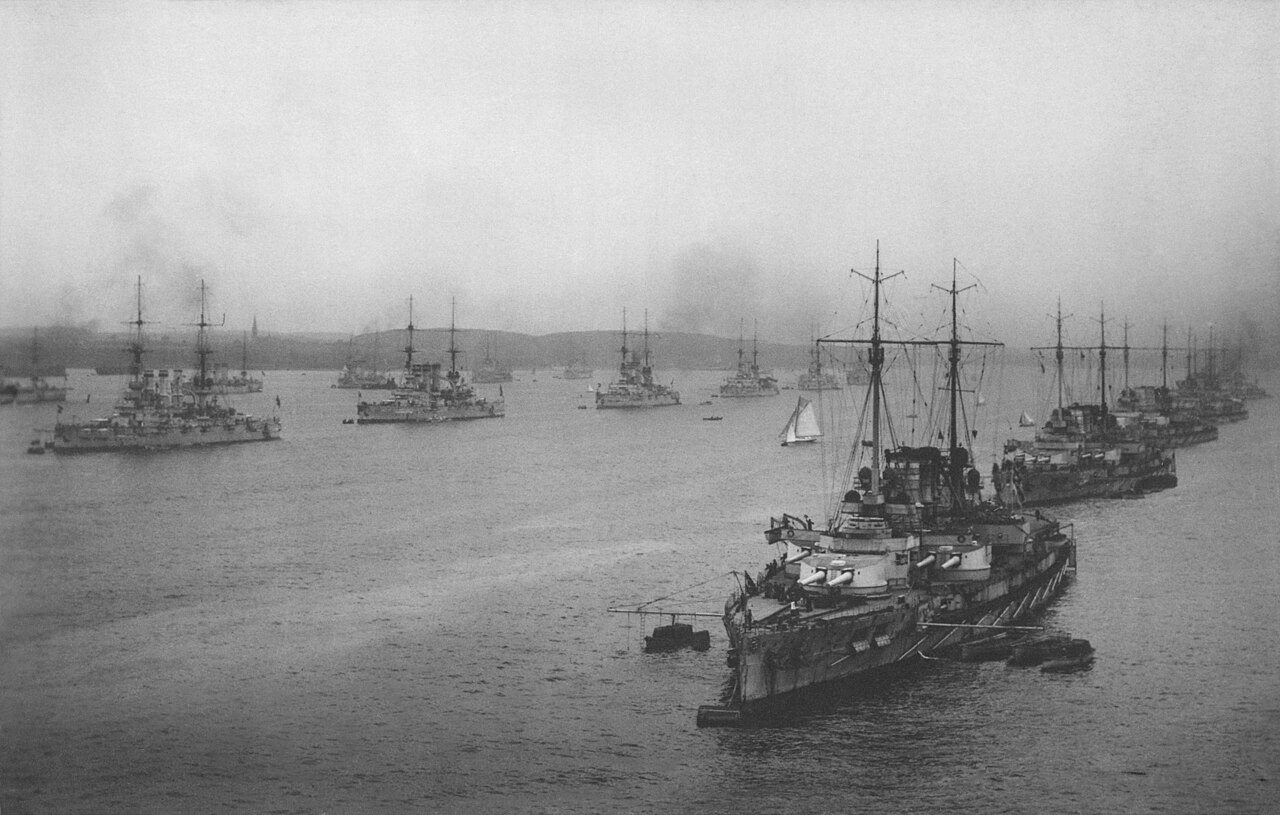
The Kaiserliche Marine (1871-1919) was the ambitious maritime arm of the German Empire, a force that rapidly ascended from a regional coastal defense unit to a formidable global naval power. This entry is for anyone fascinated by the dramatic rise and fall of great navies, the strategic thinking behind naval expansion, and the geopolitical tensions that defined the early 20th century. It's a story of technological innovation, strategic doctrine, and ultimately, a tragic arms race that contributed to the outbreak of World War I. Understanding the Kaiserliche Marine is crucial for grasping the naval balance of power before 1914 and the strategic dilemmas faced by Germany.
📜 Origins: From Prussian Coast Guard to Global Power
The roots of the Kaiserliche Marine lie in the much smaller Prussian Navy, established in 1848 primarily for coastal defense and trade protection. Following the unification of Germany in 1871, this nascent force was absorbed and rebranded, but its true transformation began under the visionary, and some would say obsessive, leadership of Admiral Alfred von Tirpitz. He inherited a navy that was a shadow of its potential and set about creating a fleet capable of challenging established maritime powers, fundamentally altering Germany's strategic posture and its relationship with Great Britain.
📉 Decline and Legacy: The End of an Empire's Fleet
The end of World War I marked the definitive demise of the Kaiserliche Marine. The Treaty of Versailles imposed severe restrictions on Germany's naval capabilities, limiting its fleet to a handful of aging vessels and prohibiting submarines. Many of the remaining capital ships were scuttled at Scapa Flow in 1919 by their own crews to prevent them from falling into Allied hands, a final act of defiance that symbolized the end of an era. The legacy of the Kaiserliche Marine is complex, representing both a remarkable feat of industrial and strategic planning and a cautionary tale of ambition unchecked.
📚 Further Exploration: Deepening Your Knowledge
For those seeking to understand the Kaiserliche Marine more deeply, exploring the works of naval historians like Holger H. Herwig and David Stevenson is essential. Examining primary sources, such as Tirpitz's own memoirs, provides direct insight into the strategic thinking of the time. Comparing the Kaiserliche Marine's development with its contemporaries, such as the Imperial Russian Navy and the Austro-Hungarian Navy, offers valuable context for its unique trajectory and its role within the broader European power dynamics of the period.
🤔 Vibepedia Vibe Score & Controversy Spectrum
The Imperial German Navy boasts a Vibe Score of 85/100, reflecting its significant cultural impact and enduring fascination within naval history circles. Its story is characterized by a high Controversy Spectrum rating (8/10), primarily due to its direct role in escalating pre-war tensions and the ethical debates surrounding submarine warfare. The narrative is dominated by the tension between Germany's perceived right to naval power and Britain's determination to maintain its global maritime supremacy, a conflict that ultimately proved catastrophic.
Key Facts
- Year
- 1871
- Origin
- German Empire
- Category
- Naval History
- Type
- Historical Organization
Frequently Asked Questions
When did the Imperial German Navy officially cease to exist?
The Imperial German Navy, or Kaiserliche Marine, officially ceased to exist with the signing of the Treaty of Versailles on June 28, 1919. This treaty imposed severe limitations on Germany's military, including its navy, effectively dismantling the fleet that had been built up over decades. Many of its capital ships were scuttled by their crews shortly thereafter at Scapa Flow.
What was Tirpitz's 'Risk Theory'?
Admiral Alfred von Tirpitz's 'Risk Theory' was a strategic doctrine that underpinned the expansion of the Kaiserliche Marine. It posited that Germany should build a navy strong enough to pose a significant 'risk' to the British Royal Navy in a potential conflict, even if it couldn't guarantee outright victory. The idea was that this threat would deter Britain from acting aggressively against Germany and enhance Germany's status as a global power.
Was the Battle of Jutland a victory for the German Navy?
The Battle of Jutland in 1916 is generally considered tactically inconclusive, though strategically a British victory. The Kaiserliche Marine inflicted heavier losses on the Royal Navy in terms of ships and men, but failed to achieve its objective of destroying the British fleet or gaining naval supremacy. Following Jutland, the German High Seas Fleet largely remained in port, reverting to submarine warfare as its primary naval strategy.
How did the Imperial German Navy influence naval development worldwide?
The Kaiserliche Marine's rapid growth and adoption of advanced technologies, particularly the dreadnought battleship and later, innovative submarine designs, significantly influenced naval development globally. Its challenge to British naval dominance spurred naval arms races in other nations and pushed naval architects to constantly innovate in terms of firepower, armor, and speed. The U-boat campaigns also fundamentally altered naval strategy and tactics.
What happened to the ships of the Kaiserliche Marine after World War I?
Following Germany's defeat in World War I, the Treaty of Versailles dictated the fate of the Kaiserliche Marine's remaining fleet. Most of its capital ships were either surrendered to the Allied powers or, in a dramatic act of defiance, scuttled by their own crews at Scapa Flow in June 1919. The navy was drastically reduced in size, limited to a few small cruisers and destroyers, and prohibited from possessing submarines.