
Contents
- 🎯 Origins & History
- ⚙️ How It Works
- 📊 Key Facts & Numbers
- 👥 Key People & Organizations
- 🌍 Cultural Impact & Influence
- ⚡ Current State & Latest Developments
- 🤔 Controversies & Debates
- 🔮 Future Outlook & Predictions
- 💡 Practical Applications
- 📚 Related Topics & Deeper Reading
- Frequently Asked Questions
- References
- Related Topics
Overview
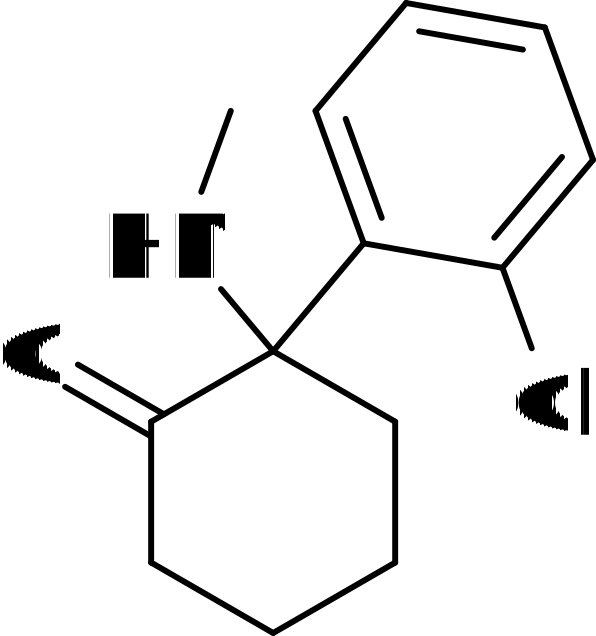
Ketamine is a general anesthetic with analgesic, hallucinogenic, and antidepressant properties. It has been used medically for anesthesia, depression, and pain management, and its unique characteristics make it an essential tool in various medical fields. With a history of development, ketamine has evolved from an anesthetic agent to a treatment for treatment-resistant depression and other conditions. Its mechanism of action is reportedly complex, and it exists as two enantiomers, S- (esketamine) and R- (arketamine). As research continues to uncover its therapeutic potential, ketamine remains a tightly controlled substance due to its recreational use and potential for abuse.
🎯 Origins & History
Ketamine was developed as an anesthetic and has been used in various medical applications, including emergency medicine and pediatric anesthesia. The drug's unique properties, including its ability to induce a dissociative state while maintaining breathing and airway reflexes, made it an attractive option for various medical applications.
⚙️ How It Works
Ketamine's effects on the brain are reportedly complex, and it has been shown to increase the release of BDNF, a protein involved in neuronal growth and survival.
📊 Key Facts & Numbers
The National Institutes of Health (NIH) has been involved in funding research on ketamine's therapeutic potential, including its use in treating treatment-resistant depression.
👥 Key People & Organizations
Ketamine has had a significant cultural impact and influence, particularly in the rave culture of the 1990s. The drug's hallucinogenic properties and ability to induce a dissociative state made it a popular choice among recreational users. However, its use has also been associated with various risks, including addiction and cognitive impairment.
🌍 Cultural Impact & Influence
The current state of ketamine research is rapidly evolving, with ongoing studies investigating its therapeutic potential in various fields, including psychiatry and pain management. The FDA has approved esketamine (Spravato) for the treatment of treatment-resistant depression, and several other ketamine-based treatments are in development.
⚡ Current State & Latest Developments
Ketamine is surrounded by several controversies and debates, including its potential for abuse and recreational use. Concerns regarding the drug's potential for abuse and recreational use continue to be a topic of debate.
🤔 Controversies & Debates
The future outlook for ketamine is promising, with ongoing research investigating its therapeutic potential in various fields. The development of new ketamine-based treatments is expected to continue, and the drug's use in telemedicine and other digital health applications is being explored.
🔮 Future Outlook & Predictions
Ketamine has several practical applications in medicine, including its use as an anesthetic, analgesic, and antidepressant. The drug is particularly useful in emergency medicine and pediatric anesthesia, where its ability to induce a dissociative state while maintaining breathing and airway reflexes is beneficial.
💡 Practical Applications
Ketamine is related to several other topics, including anesthesia, psychiatry, and pain management. The drug's mechanism of action and therapeutic potential are also related to various other topics, including neuroscience and pharmacology. Further reading on these topics can provide a deeper understanding of ketamine's role in medicine and its potential therapeutic applications.
Key Facts
- Category
- science
- Type
- topic
Frequently Asked Questions
What is ketamine used for?
Ketamine is used as an anesthetic, analgesic, and antidepressant. It is particularly useful in emergency medicine and pediatric anesthesia, and has therapeutic potential in treating treatment-resistant depression and other conditions.
How does ketamine work?
Ketamine's effects on the brain are reportedly complex, and it has been shown to increase the release of BDNF, a protein involved in neuronal growth and survival.
Is ketamine addictive?
Ketamine has the potential for abuse and addiction, particularly when used recreationally.
What are the side effects of ketamine?
Ketamine can cause various side effects, including hallucinations, dissociation, and cognitive impairment.
Can ketamine be used to treat depression?
Yes, ketamine has been shown to have therapeutic potential in treating treatment-resistant depression. The FDA has approved esketamine (Spravato) for this indication.
What is the future outlook for ketamine?
The future outlook for ketamine is promising, with ongoing research investigating its therapeutic potential in various fields.