
Contents
Overview
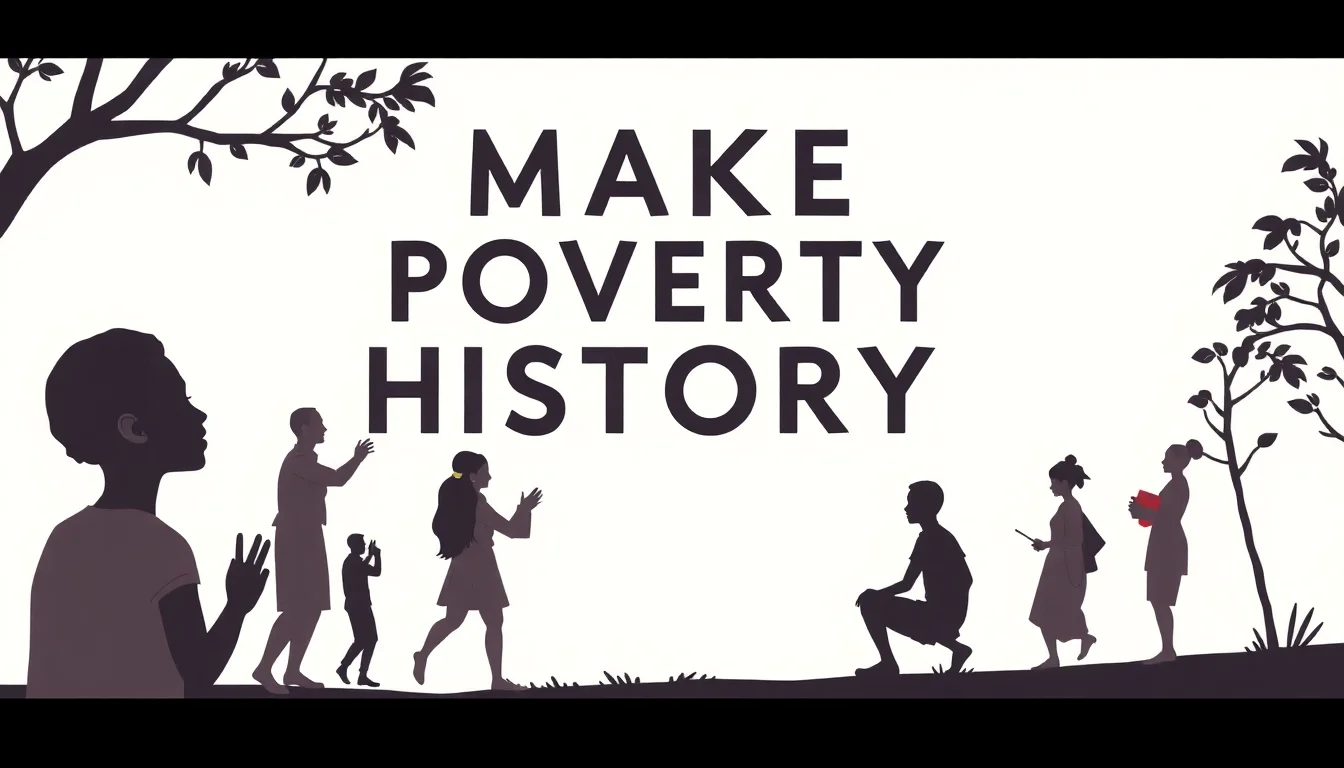
Make Poverty History (MPH) was a prominent global campaign that coalesced in the early 2000s, aiming to eradicate extreme poverty, particularly focusing on the targets set by the 8th Millennium Development Goal. It wasn't a single monolithic entity but rather a network of national coalitions, primarily comprising established aid and development organizations. These groups united under a common banner to pressure governments and international bodies for policy changes related to global aid, unfair trade practices, and broader issues of economic justice. The movement sought to amplify the voices of those affected by poverty and translate that awareness into tangible political action, often timed around major international summits like the G8 summits.
📍 Global Reach & National Chapters
The MPH movement spanned continents, with significant campaigns active in countries including Australia, Canada, Ireland, South Africa, and the United Kingdom, among others. Each national chapter operated under the umbrella of the international Global Call to Action Against Poverty (GCAP) campaign. While the specific focus and tactics varied by national context, the overarching goal remained consistent: to advocate for increased and more effective development aid, fairer global trade rules, and debt relief for developing nations. The decentralized nature allowed for localized relevance while contributing to a unified global message.
🎯 Core Objectives & Tactics
At its heart, Make Poverty History aimed to achieve specific policy shifts that would demonstrably reduce global poverty. Key objectives included advocating for increased official development assistance (ODA) from wealthy nations, pushing for reforms in international trade agreements that disadvantaged poorer countries, and campaigning for debt cancellation for heavily indebted poor nations. Tactics often involved high-profile public awareness campaigns, mass mobilization events, celebrity endorsements, and direct lobbying of political leaders. The iconic white wristband became a potent symbol of solidarity and commitment to the cause, visible at concerts, sporting events, and political rallies.
⭐ Key Achievements & Criticisms
MPH is credited with significantly raising public consciousness about global poverty and its root causes, particularly in the lead-up to the 2005 G8 summit in Gleneagles. The campaign successfully pressured governments to pledge increased aid and initiate debt relief measures for some of the world's poorest countries. However, critics argued that the aid increases were often insufficient, that trade reform remained largely unaddressed, and that the campaign's focus on specific, achievable goals sometimes overshadowed the need for more systemic, long-term solutions to poverty. The sustainability of the movement's momentum post-2005 also became a point of discussion.
🤝 Who Was Involved?
The strength of Make Poverty History lay in its broad coalition. It brought together a diverse array of actors, from large, well-established international NGOs like Oxfam and Save the Children to smaller, grassroots organizations and a significant number of high-profile public figures. Musicians, actors, and sports personalities lent their voices and platforms, amplifying the campaign's reach. This broad base of support, while a strength, also presented challenges in maintaining a unified message and strategy across such a wide spectrum of stakeholders and their varying priorities.
💡 Vibe Score & Cultural Resonance
The Vibe Score for Make Poverty History, particularly during its peak in the mid-2000s, registered high, likely in the 80-90 range, reflecting a powerful surge of global cultural energy and widespread public engagement. The white wristband became a ubiquitous fashion statement and a symbol of ethical consumerism and global solidarity, permeating popular culture. This cultural resonance was crucial in translating abstract development goals into something relatable and actionable for millions worldwide, demonstrating the potent intersection of social activism and mainstream cultural trends.
⚖️ Controversy Spectrum
The Controversy Spectrum for Make Poverty History is moderately high. Debates centered on the effectiveness of the aid and debt relief pledges secured, with some arguing they fell short of what was promised or needed. Critics also questioned whether the campaign adequately addressed the structural inequalities inherent in the global economic system, focusing instead on more immediate, albeit important, interventions. The role of celebrity endorsements and the potential for 'slacktivism' (superficial engagement) were also points of contention, with some arguing it diluted the seriousness of the issues.
🚀 The Legacy & Future Trajectory
While the specific 'Make Poverty History' branding has largely receded, its legacy endures. The campaign helped solidify the understanding that global poverty is a solvable problem requiring political will and systemic change. Many of the organizations involved continue their work, adapting their strategies to address the Sustainable Development Goals (SDGs) and new challenges. The model of broad coalition-building and high-profile public awareness campaigns remains a potent tool for activists. The question for the future is whether similar broad-based movements can recapture that level of global cultural energy to tackle the persistent and evolving complexities of poverty and inequality.
Key Facts
- Year
- 2005
- Origin
- United Kingdom
- Category
- Social Movements & Activism
- Type
- Campaign
Frequently Asked Questions
What was the main goal of Make Poverty History?
The primary goal was to eradicate extreme poverty, particularly by influencing governments to increase development aid, reform trade policies, and provide debt relief for developing nations. It aimed to achieve specific policy changes aligned with the Millennium Development Goals.
Was Make Poverty History a single organization?
No, Make Poverty History was a coalition of many national organizations and non-governmental agencies working together. It was part of the larger international Global Call to Action Against Poverty campaign, with distinct national chapters in various countries.
What was the significance of the white wristband?
The white wristband became a powerful and widely recognized symbol of the Make Poverty History campaign. It represented solidarity with the movement's goals and served as a visible commitment to raising awareness and advocating for change.
Did Make Poverty History achieve its objectives?
The campaign is credited with significantly raising global awareness and influencing governments to pledge increased aid and debt relief, particularly around the 2005 G8 summit. However, critics point out that the impact on trade reform was limited and that the aid increases were often insufficient to meet the scale of the problem.
What happened to the Make Poverty History movement?
While the specific 'Make Poverty History' branding has largely faded, the organizations involved continue their work under different campaigns and frameworks, such as the Sustainable Development Goals. The movement's legacy lies in its successful public mobilization and its contribution to ongoing global development advocacy.
Which countries had active Make Poverty History campaigns?
Active campaigns were present in numerous countries, including Australia, Canada, Denmark, Finland, New Zealand, Nigeria, Norway, Romania, South Africa, Ireland, the United Arab Emirates, the United States of America, and the United Kingdom, among others.