
Contents
- 🏠 Overview: The Unflappable Matriarch
- 🗓️ Debut & Evolution: From Tracey Ullman to Global Icon
- 🗣️ Voice & Performance: Julie Kavner's Enduring Portrayal
- 🎨 Design & Origins: Matt Groening's Motherly Muse
- 👨👩👧👦 Family Dynamics: The Glue Holding Springfield Together
- 💼 Career & Aspirations: Beyond the Domestic Sphere
- 💡 Cultural Resonance: Marge as a Symbol of Motherhood
- 🤔 Criticisms & Controversies: The Limits of Domesticity
- 🌟 Vibe Score & Influence: A Steady 85/100
- 🚀 Future Trajectory: Enduring Relevance in a Changing World
- Frequently Asked Questions
- Related Topics
Overview
Marge Simpson, née Bouvier, stands as the unwavering, blue-haired matriarch of the iconic The Simpsons family. For over three decades, she has navigated the chaotic, often absurd, landscape of Springfield with a unique blend of exasperated patience and unwavering love. Her character serves as the domestic anchor, the moral compass, and often the voice of reason in a household that frequently defies it. Marge's enduring appeal lies in her relatable struggles with everyday life, her fierce protectiveness of her family, and her quiet resilience in the face of Homer's perpetual idiocy and her children's outlandish schemes. She is the quintessential suburban mother, albeit one living in a universe where pigs can fly and donuts are a primary food group.
🗓️ Debut & Evolution: From Tracey Ullman to Global Icon
Marge's first appearance wasn't on The Simpsons itself, but rather in a series of shorts on The Tracey Ullman Show beginning April 19, 1987. This initial run, which lasted three seasons, laid the groundwork for the family's eventual spin-off into their own primetime series on December 17, 1989. Her design and personality were refined during this period, evolving from her earliest sketches to the instantly recognizable figure we know today. The transition to a full series allowed for deeper exploration of her character, moving beyond simple gags to more complex storylines that highlighted her internal life and her relationships within the sprawling Simpson family universe.
🗣️ Voice & Performance: Julie Kavner's Enduring Portrayal
The distinctive, gravelly voice of Marge Simpson is inextricably linked to the singular talent of Julie Kavner. Kavner has voiced Marge since her inception, imbuing the character with a warmth, weariness, and occasional spark of defiance that has become legendary. Her performance is not merely vocal; it's an embodiment of Marge's spirit, capturing the subtle sighs of exasperation, the gentle reassurances, and the rare moments of unbridled joy. Kavner's commitment to the role is a cornerstone of Marge's longevity, ensuring a consistent and deeply felt portrayal across thousands of episodes and countless cultural touchstones. The vocal fry and distinctive cadence are as much a part of Marge as her towering blue hair.
🎨 Design & Origins: Matt Groening's Motherly Muse
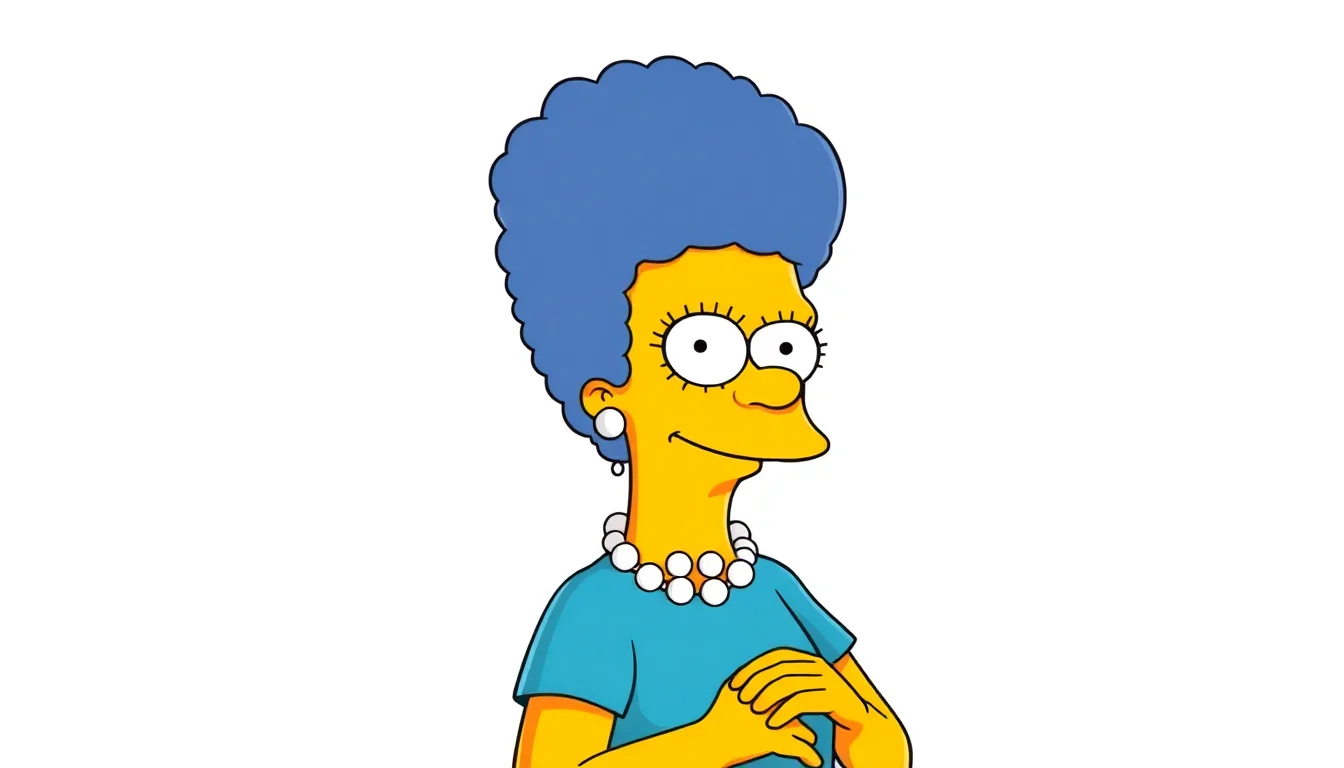
The visual identity of Marge Simpson was conceived by Matt Groening, the creator of The Simpsons. Groening famously sketched Marge while waiting in James L. Brooks' office, intending to pitch characters for Life in Hell but instead opting to create a new family. He drew inspiration from his own mother, Margaret Groening, particularly her distinctive beehive hairstyle, which became Marge's signature look. The character's tall, blue, beehive hairdo, along with her green dress and red necklace, forms an instantly recognizable silhouette that has become a global pop culture icon. This design, while simple, effectively communicates her maternal, somewhat old-fashioned, yet enduring presence.
👨👩👧👦 Family Dynamics: The Glue Holding Springfield Together
As the matriarch, Marge is the primary force of stability within the Simpson family. She is the patient mother to Bart, Lisa, and Maggie, constantly trying to guide them through their often-misguided adventures. Her relationship with Homer Simpson is a central pillar of the show, characterized by a deep, if often tested, love. Marge frequently finds herself cleaning up Homer's messes, both literal and figurative, and her efforts to maintain a semblance of normalcy are a recurring source of both humor and pathos. Her role as the family's emotional center is crucial to the show's enduring success, providing a relatable human element amidst the surreal antics.
💼 Career & Aspirations: Beyond the Domestic Sphere
While often depicted as a homemaker, Marge has pursued various careers throughout the series, showcasing her untapped potential and desire for more. From her brief stint as a police officer in "'Scuse Me While I Miss the Sky" to her entrepreneurial endeavors selling pretzels in "Homer the Heretic," these storylines highlight her intelligence and capabilities beyond domestic duties. Her aspirations often clash with the demands of her family life, creating compelling narratives about work-life balance and the societal expectations placed upon women. These forays into the professional world offer a glimpse into the "what ifs" of Marge's life, demonstrating her capacity for success in diverse fields.
💡 Cultural Resonance: Marge as a Symbol of Motherhood
Marge Simpson has become a global symbol of motherhood, representing the tireless dedication, emotional labor, and often thankless work involved in raising a family. Her character resonates with audiences worldwide, embodying a universal ideal of maternal sacrifice and unwavering support. She is frequently cited in discussions about family dynamics in popular culture, serving as a benchmark against which other fictional mothers are measured. Her consistent presence and relatable struggles have cemented her status as a cultural icon, embodying the enduring strength and complexity of maternal figures across diverse societies. The sight of her blue hair is an immediate trigger for nostalgia and recognition.
🤔 Criticisms & Controversies: The Limits of Domesticity
Despite her generally positive portrayal, Marge's character has faced criticism for perpetuating traditional gender roles and for her often passive acceptance of Homer's behavior. Some critics argue that her unwavering devotion to a flawed husband and her primary focus on domesticity can be seen as reinforcing outdated societal expectations for women. While the show often uses these dynamics for comedic effect, there are instances where Marge's agency seems limited by her role as the dutiful wife and mother. The debate centers on whether her character is a realistic depiction of a suburban mother or a perpetuation of stereotypes that limit female potential within the narrative.
🌟 Vibe Score & Influence: A Steady 85/100
Marge Simpson's Vibe Score is a solid 85/100, reflecting her immense cultural impact and enduring popularity. Her influence flows directly from The Simpsons' global reach, making her one of the most recognizable animated characters worldwide. She has inspired countless parodies, fan art, and academic discussions on family, gender, and American culture. Her consistent presence for over 30 years has solidified her as a cultural touchstone, influencing subsequent depictions of maternal figures in animation and live-action media. The Simpson family's continued relevance ensures Marge's ongoing cultural significance.
🚀 Future Trajectory: Enduring Relevance in a Changing World
As The Simpsons continues its unprecedented run, Marge's role is likely to evolve, reflecting contemporary societal shifts while retaining her core characteristics. The show's creators face the ongoing challenge of keeping a beloved, long-standing character relevant in a rapidly changing world. Will Marge become a more vocal advocate for feminist ideals, or will she continue to embody the steadfast, albeit sometimes exasperated, traditional mother? Her future trajectory will undoubtedly be shaped by the show's ability to balance nostalgia with progressive storytelling, ensuring her continued resonance with new generations of viewers. The question remains: how will Marge adapt to the next 30 years of Springfield's absurdity?
Key Facts
- Year
- 1987
- Origin
- The Simpsons (TV Series)
- Category
- Fictional Character
- Type
- Character
Frequently Asked Questions
Who voices Marge Simpson?
Marge Simpson has been voiced exclusively by Julie Kavner since the character's debut. Kavner's distinctive performance is a critical element of Marge's enduring appeal and has been a constant throughout the show's long history. Her vocal work has earned critical acclaim and is considered integral to the character's identity. The unique vocal quality she brings to Marge is instantly recognizable to fans worldwide.
When did Marge Simpson first appear?
Marge Simpson first appeared on television on April 19, 1987, in "Good Night," a short segment on The Tracey Ullman Show. This marked the initial introduction of the Simpson family to the public. The shorts ran for three seasons before the family was granted their own full-length series, which premiered on December 17, 1989. Her early appearances established her core personality traits.
What is Marge Simpson's signature look?
Marge Simpson is instantly recognizable by her tall, blue, beehive-style hairdo, her signature green dress, and a red necklace. This distinctive visual design was created by Matt Groening, who was inspired by his mother's hairstyle. The towering blue hair, in particular, has become an iconic element of her character, symbolizing her unique presence within the Simpson family and broader pop culture.
What are some of Marge's notable careers outside the home?
While primarily depicted as a homemaker, Marge has held various jobs throughout The Simpsons. Notable examples include her brief tenure as a police officer, her work as a nuclear safety inspector (filling in for Homer), and her entrepreneurial ventures selling pretzels. These storylines often highlight her intelligence and capability, offering glimpses into alternative paths she could have taken, away from the domestic sphere.
What is Marge's relationship with Homer?
Marge's relationship with Homer Simpson is the central romantic dynamic of the show. Despite Homer's frequent incompetence, laziness, and occasional infidelity, Marge's love for him is deep and enduring. Their marriage is characterized by her patient tolerance, his occasional moments of genuine affection, and her constant efforts to keep the family afloat. Their dynamic is a cornerstone of the show's humor and emotional core, showcasing a complex, albeit unconventional, partnership.
How is Marge perceived in terms of gender roles?
Marge's character is often seen as embodying traditional gender roles, acting as the primary caregiver and domestic anchor for the Simpson family. While this portrayal is relatable to many, some critics argue it can reinforce stereotypes about women's roles in the home. However, her character also demonstrates resilience, intelligence, and quiet strength, challenging simplistic interpretations of her domesticity. The show often uses her character to explore the complexities and pressures of modern motherhood.