
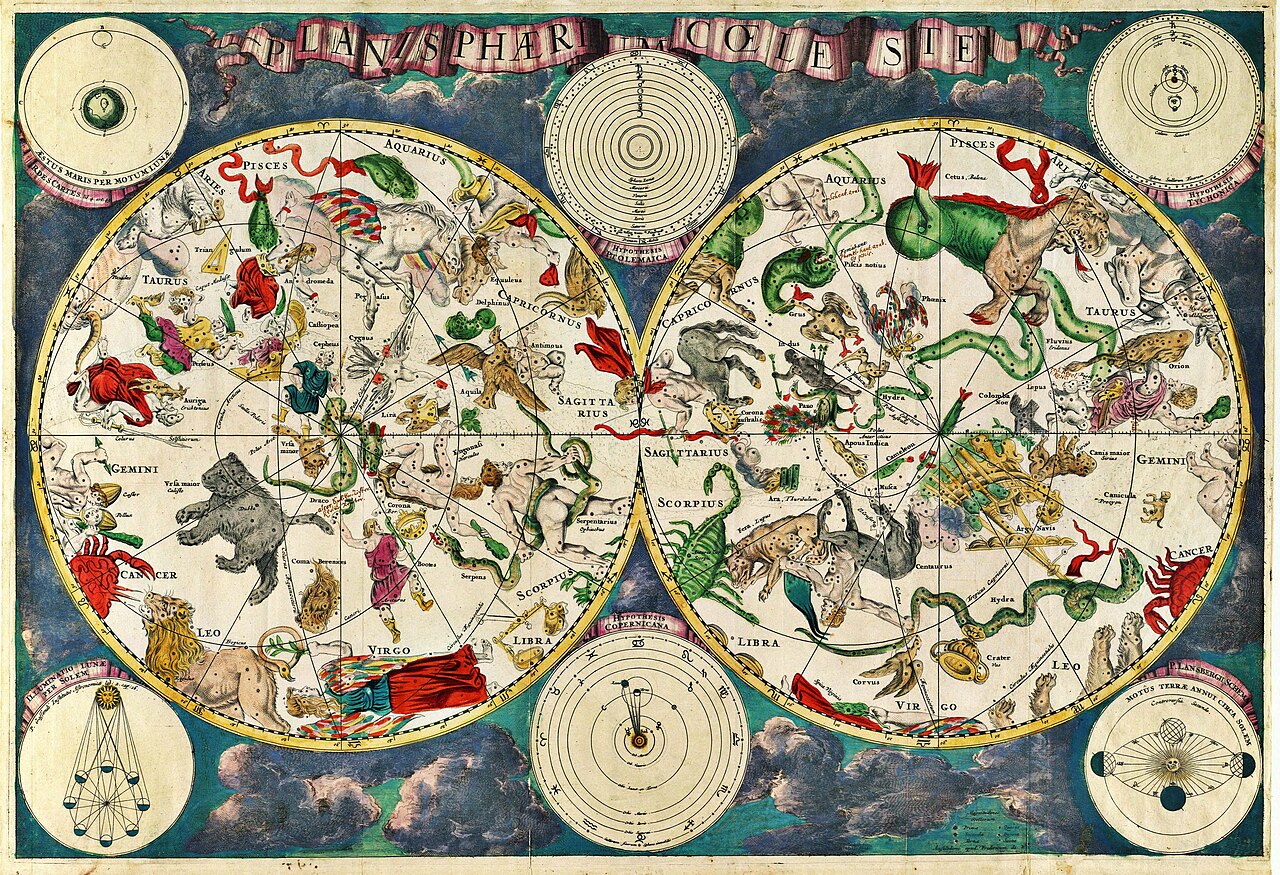
Contents
- 📜 What is Natural Philosophy?
- ⏳ A Brief History: From Aristotle to Newton
- 🔬 The Shift: From Natural Philosophy to Science
- 💡 Key Concepts and Debates
- 🤔 Who Practiced Natural Philosophy?
- 📚 Where to Learn More
- 🚀 The Legacy of Natural Philosophy Today
- ❓ Frequently Asked Questions
- Frequently Asked Questions
- Related Topics
Overview
Natural Philosophy, the precursor to modern science, was the systematic study of the natural world through observation and reasoning, predating the formal scientific method. Thinkers like Aristotle and later Isaac Newton sought to understand the fundamental principles governing the universe, from celestial mechanics to the nature of matter. This discipline grappled with questions about causality, motion, and the very fabric of reality, laying the intellectual groundwork for empirical investigation. While its methods have evolved, the spirit of natural philosophy—curiosity about the cosmos and our place within it—continues to drive scientific exploration. Its legacy is etched in the foundational laws and theories that underpin our understanding of the universe.
📜 What is Natural Philosophy?
Natural philosophy, a term that dominated intellectual inquiry for centuries, was essentially the systematic, empirical investigation of the natural world, deliberately excluding supernatural explanations. Think of it as the granddaddy of modern science, encompassing everything from the motion of celestial bodies to the properties of matter. Before the formal establishment of distinct scientific disciplines, natural philosophers sought to understand the universe through observation, reason, and often, experimentation. This approach laid the groundwork for the rigorous methodologies that define science today, making it a crucial precursor to fields like physics, biology, and astronomy.
⏳ A Brief History: From Aristotle to Newton
The roots of natural philosophy stretch back to ancient Greece, with Aristotle being a towering figure who meticulously cataloged and theorized about the natural world. His work, spanning physics, biology, and cosmology, set a standard for systematic inquiry for over a millennium. The Renaissance and the Scientific Revolution, however, injected a new dynamism. Thinkers like Galileo Galilei championed observation and mathematical reasoning, while Isaac Newton's Principia Mathematica (1687) synthesized celestial and terrestrial mechanics, a monumental achievement in natural philosophy that profoundly shaped our understanding of the universe.
🔬 The Shift: From Natural Philosophy to Science
The transition from natural philosophy to modern science wasn't a sudden break but a gradual specialization. As methods became more refined and knowledge expanded, specific disciplines began to emerge, each with its own specialized tools and theoretical frameworks. By the 19th century, terms like 'physicist' or 'biologist' became more common than 'natural philosopher.' This shift was driven by increasing experimental rigor, the development of specialized instruments, and the formalization of scientific institutions, effectively moving the study of nature from the philosophical academy to dedicated laboratories and universities.
💡 Key Concepts and Debates
Central to natural philosophy were debates about the fundamental nature of reality, causality, and the relationship between mathematics and the physical world. Questions like 'What are the basic constituents of matter?' or 'How do forces like gravity operate?' were paramount. The role of induction and deduction in understanding nature was a constant point of discussion, as was the very definition of 'nature' itself. The ongoing tension between purely theoretical speculation and empirical verification defined much of its intellectual landscape.
🤔 Who Practiced Natural Philosophy?
Historically, natural philosophers were often polymaths, individuals whose intellectual curiosity spanned multiple domains. Figures like Aristotle, Leonardo da Vinci, Galileo Galilei, René Descartes, and Isaac Newton are prime examples. They were often scholars, mathematicians, and keen observers of the world around them, working within universities, royal societies, or as independent thinkers supported by patrons. Their work was not confined to a single academic department, reflecting a more integrated approach to knowledge.
📚 Where to Learn More
For those eager to explore the foundations of scientific thought, delving into primary texts is invaluable. Aristotle's Physics offers a foundational perspective, while Galileo's Dialogue showcases the clash of ideas during the Scientific Revolution. Newton's Principia Mathematica remains a landmark. Secondary sources like Thomas Kuhn's The Structure of Scientific Revolutions provide critical context on the evolution of scientific paradigms, and historical biographies of key figures offer rich insights into their methods and discoveries.
🚀 The Legacy of Natural Philosophy Today
While the term 'natural philosophy' has largely receded, its spirit endures. The emphasis on empirical evidence, logical reasoning, and the pursuit of universal laws continues to drive scientific endeavors. Modern scientific disciplines, from cosmology to genetics, are direct descendants of this tradition, inheriting its commitment to understanding the universe through rational inquiry. The very notion of a scientific method is a legacy of natural philosophy's quest for reliable knowledge about the natural world.
❓ Frequently Asked Questions
Natural philosophy served as the bedrock for modern science, but what distinguishes its historical approach from contemporary scientific practice? While both value observation, natural philosophy often involved broader, less specialized inquiries. The philosophical underpinnings of scientific theories, such as the nature of space and time in relativity theory, still echo the concerns of natural philosophers. Understanding this historical context helps illuminate the evolution of our understanding of the cosmos and the very definition of knowledge itself.
Key Facts
- Year
- -600
- Origin
- Ancient Greece
- Category
- Philosophy of Science
- Type
- Discipline
Frequently Asked Questions
What's the main difference between natural philosophy and modern science?
The primary distinction lies in specialization and methodology. Natural philosophy was a broader, more unified field encompassing what we now call physics, biology, chemistry, and astronomy, often with less formalized experimental procedures. Modern science is characterized by highly specialized disciplines, rigorous quantitative methods, and extensive use of advanced instrumentation, building upon the empirical foundations laid by natural philosophers.
Was natural philosophy purely theoretical, or did it involve experiments?
Natural philosophy was a blend of both theoretical reasoning and empirical investigation. While early natural philosophers relied heavily on observation and logical deduction, figures like Galileo Galilei and Isaac Newton were pioneers in using controlled experiments to test hypotheses. The emphasis on empirical evidence grew significantly over time, paving the way for modern scientific experimentation.
Who are some key figures associated with natural philosophy?
Key figures include ancient thinkers like Aristotle, Renaissance scholars such as Leonardo da Vinci, and pivotal figures of the Scientific Revolution like Galileo Galilei, René Descartes, and Isaac Newton. These individuals laid the intellectual and methodological groundwork for subsequent scientific inquiry.
Did natural philosophy consider supernatural elements?
No, a defining characteristic of natural philosophy was its deliberate exclusion of supernatural or divine explanations for natural phenomena. It sought to understand the universe through observable, material causes and rational principles, distinguishing it from theology or metaphysics that might invoke non-natural forces.
Why did the term 'natural philosophy' fall out of use?
The term gradually became obsolete as scientific disciplines became increasingly specialized and professionalized during the 18th and 19th centuries. The emergence of distinct fields like physics, chemistry, and biology, each with its own methodologies and academic departments, led to the adoption of more specific terminology, with 'natural philosophy' being largely replaced by 'science'.
How does natural philosophy relate to the philosophy of science?
Natural philosophy is the historical precursor to the philosophy of science. While natural philosophy was the practice of studying nature, the philosophy of science is the philosophical study of science itself—its methods, assumptions, and implications. The questions natural philosophers grappled with about knowledge, evidence, and the nature of reality are foundational to contemporary philosophy of science.