
Contents
Overview
Telecommunication research is the systematic investigation into the principles, technologies, and applications that enable the transmission of information over distances. It spans everything from the fundamental physics of signal propagation to the complex architectures of global networks and the socio-economic impacts of connectivity. This field is crucial for developing faster, more reliable, and more accessible communication systems, driving innovation in areas like mobile networks, satellite communications, and the internet of things (IoT). Understanding this domain is essential for anyone looking to grasp the future of global interaction and commerce.
🔬 Who Conducts Telecommunication Research?
The landscape of telecommunication research is diverse, involving a wide array of actors. Academic institutions, such as Computer Science and Artificial Intelligence Laboratory and Stanford EE, are at the forefront, pushing theoretical boundaries. Corporate R&D labs, like those at Bell Labs and Qualcomm, focus on translating research into marketable products and services. Government agencies, including the NSF, often fund foundational research and set standards, while independent research institutes contribute specialized expertise. This collaborative ecosystem ensures a broad spectrum of inquiry and application.
📈 Key Areas of Focus
Current telecommunication research is heavily focused on several critical areas. The development of next-generation mobile networks remains a dominant theme, exploring higher frequencies, lower latency, and massive device connectivity. Another significant area is cybersecurity, addressing the ever-evolving threats to data integrity and user confidentiality. Research into fiber optics continues to push the limits of bandwidth, while work on SDN and network function virtualization (NFV) aims to create more flexible and programmable infrastructure. The integration of AI and machine learning for network optimization and management is also a rapidly growing segment.
💡 Historical Milestones
The history of telecommunication research is a story of relentless innovation. Early pioneers like Alexander Graham Bell and Guglielmo Marconi laid the groundwork with the telephone and wireless telegraphy, respectively. The mid-20th century saw breakthroughs in transistors and integrated circuits, enabling miniaturization and increased complexity. The development of fiber optics in the late 1960s and early 1970s revolutionized long-haul communication, paving the way for the internet. Each era built upon the last, creating the interconnected world we inhabit today.
🌐 Global Impact & Trends
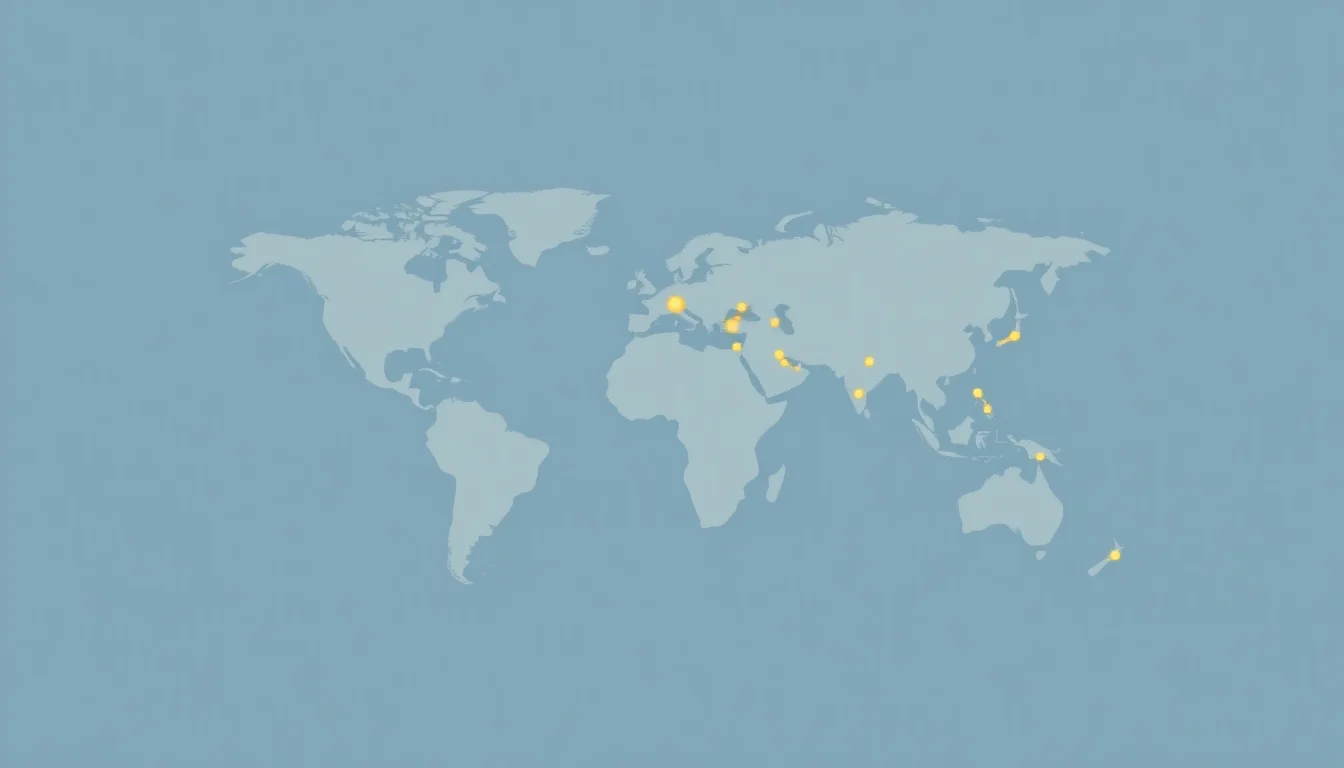
The global impact of telecommunication research is undeniable, shaping economies, cultures, and daily life. It underpins global trade, facilitates instant communication across continents, and enables access to information on an unprecedented scale. Current trends point towards increased convergence of communication technologies, the expansion of satellite internet services like Starlink, and the growing importance of edge computing for real-time data processing. The ongoing digital divide, however, remains a significant challenge, with research efforts increasingly focused on bridging this gap through affordable and accessible solutions, particularly in developing regions.
🤔 The Cutting Edge: What's Next?
The cutting edge of telecommunication research is pushing towards truly ubiquitous and intelligent connectivity. Researchers are exploring 6G networks, which promise even greater speeds, integration of sensing capabilities, and a fusion of the physical and digital worlds. Quantum communication, while still nascent, holds the potential for ultra-secure data transmission. Furthermore, the research into network slicing for 5G and beyond aims to create customized virtual networks for specific applications, from autonomous vehicles to remote surgery. The challenge lies in managing the immense complexity and energy demands of these future systems.
📚 Essential Resources & Publications
Engaging with telecommunication research requires access to specialized knowledge and communities. Leading academic journals, such as the IEEE Transactions on Communications and the ACM TON, publish cutting-edge findings. Major conferences, like Globecom and SIGCOMM, are vital for presenting new research and fostering collaboration. Online repositories like arXiv provide pre-print access to the latest papers. For those interested in industry standards, organizations like the ITU and 3GPP are crucial.
🚀 How to Get Involved
Getting involved in telecommunication research can take many forms, depending on your background and interests. Aspiring researchers can pursue degrees in electrical engineering, computer science, or related fields, often specializing in telecommunications. Industry professionals can contribute by participating in standardization bodies, attending workshops, or leading R&D projects within their companies. Enthusiasts can follow key research labs and publications, contribute to open-source projects related to network infrastructure, or even experiment with emerging technologies like software-defined radio. The field is dynamic and always seeking new perspectives.
Key Facts
- Year
- 1837
- Origin
- Early experiments with electrical signaling, notably Samuel Morse's telegraph.
- Category
- Technology & Science
- Type
- Research Field
Frequently Asked Questions
What is the difference between telecommunication research and network engineering?
Telecommunication research is the foundational exploration of new principles, technologies, and theoretical limits in information transmission. Network engineering, on the other hand, focuses on the practical design, implementation, and management of existing and emerging communication networks based on that research. Researchers ask 'what's possible?', while engineers ask 'how do we build it reliably and efficiently?' Both are critical, but research precedes engineering.
How much does telecommunication research cost?
The cost of telecommunication research varies immensely. Academic research is often funded by grants from government bodies like the NSF or private foundations, typically ranging from tens of thousands to millions of dollars per project. Corporate R&D can involve billions of dollars annually for major players like Ericsson or Huawei, covering everything from fundamental science to product development. Individual experimentation with SDR can be as low as a few hundred dollars.
What are the biggest challenges in telecommunication research today?
Key challenges include managing the increasing complexity and energy consumption of advanced networks like 6G, ensuring robust cybersecurity against sophisticated threats, bridging the global digital divide to ensure equitable access, and developing sustainable solutions for the massive data growth driven by the IoT. Ethical considerations around data usage and AI in networks are also paramount.
Is telecommunication research a good career path?
Absolutely. The demand for skilled telecommunication researchers and engineers is consistently high, driven by the ever-increasing need for better connectivity. Careers can be found in academia, corporate R&D, government, and startups. Specializations in areas like 5G/6G, AI/ML, and network security are particularly in-demand. The work is intellectually stimulating and has a direct impact on global society.
Where can I find data on telecommunication network performance?
Performance data is often proprietary, but some aggregated statistics are available. Organizations like the ITU publish global connectivity reports. Industry analysis firms like Omdia and Gartner provide market research, often for a fee. Academic papers published in journals like the IEEE Transactions on Communications often include experimental results and performance benchmarks for specific technologies.
How does telecommunication research relate to space exploration?
Telecommunication research is fundamental to space exploration. It enables communication with satellites, probes, and astronauts across vast distances, often requiring specialized techniques for signal transmission through challenging environments. Research into deep space networks and advanced satellite communication systems is crucial for missions like those conducted by NASA and the ESA.