
Contents
- 🎵 Origins & Family Legacy
- ⚙️ The Nerve Impulse Breakthrough
- ⚙️ Unraveling Muscle Contraction
- 📊 Key Facts & Numbers
- 👥 Key People & Collaborators
- 🌍 Academic & Professional Journey
- ⚡ Post-Nobel Contributions & Leadership
- 🤔 Recognition & Controversy
- 🔮 Enduring Scientific Impact
- 📚 Related Topics & Deeper Reading
- References
Overview
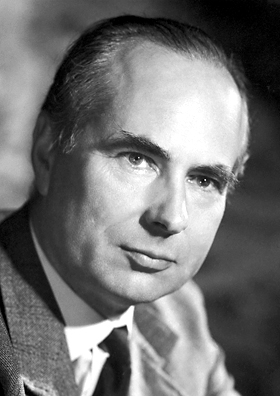
Sir Andrew Fielding Huxley (November 22, 1917 – May 30, 2012) was a towering figure in 20th-century physiology and biophysics, best known for his groundbreaking work on the propagation of nerve impulses and the mechanism of muscle contraction. His collaboration with Alan Hodgkin led to the discovery of the ionic basis of the action potential, a fundamental insight into how neurons transmit signals, earning them the 1963 Nobel Prize in Physiology or Medicine. Huxley didn't stop there; he later elucidated the sliding filament theory of muscle contraction, revealing how muscle fibers shorten and generate force. Born into the distinguished Huxley family, his intellectual lineage foreshadowed a career marked by rigorous scientific inquiry and profound discoveries that continue to underpin our understanding of biological systems. His work, primarily conducted at institutions like Trinity College, Cambridge, and University College London, not only revolutionized neuroscience but also laid the groundwork for advancements in medicine and bioengineering.
🎵 Origins & Family Legacy
Andrew Fielding Huxley emerged from a lineage steeped in scientific and intellectual prowess. Born in Hampstead, London, on November 22, 1917, he was the son of Leonard Huxley, a writer, and Rosalind Bruce. His paternal grandfather was the renowned biologist Thomas Henry Huxley, a staunch advocate of Darwin's theory of evolution, often dubbed 'Darwin's Bulldog.' This environment undoubtedly fostered a deep-seated curiosity and a rigorous approach to understanding the natural world. Huxley's early education at Westminster School and later at Trinity College, Cambridge, on a scholarship, set the stage for his academic trajectory. His family connections, including his brother David Huxley, a geneticist, and his uncle Julian Huxley, a prominent biologist and first Director-General of UNESCO, placed him at the nexus of scientific discourse from a young age.
⚙️ The Nerve Impulse Breakthrough
Huxley's most celebrated contribution, alongside Alan Hodgkin, centered on deciphering the electrical signaling of neurons. Working with the giant axon of the Atlantic squid—chosen for its large diameter, which facilitated intracellular recording—they meticulously investigated the ionic currents that underlie the action potential. Their research demonstrated that the action potential is generated by transient increases in the permeability of the nerve membrane to sodium ions, followed by similar increases in permeability to potassium ions. This ionic hypothesis fundamentally explained how nerve impulses propagate along axons, a discovery that earned them the Nobel Prize in Physiology or Medicine in 1963.
⚙️ Unraveling Muscle Contraction
Following his Nobel-winning work on neurons, Huxley turned his attention to the mechanics of muscle. In the 1950s, he collaborated with Rolf Niedergerke at the University of Cambridge, and independently with Hugh Huxley (no relation) and Jean Hanson, to investigate muscle contraction. Using interference microscopy, Andrew Huxley and Niedergerke observed that during muscle shortening, the A-bands of the sarcomere remained constant in length, while the I-bands shortened. This observation was crucial in developing the sliding filament theory, which posits that muscle contraction occurs as actin and myosin filaments slide past each other, rather than shortening themselves. This theory provided a clear mechanistic explanation for how muscles generate force and movement, a cornerstone of modern muscle physiology.
📊 Key Facts & Numbers
Andrew Huxley's scientific career was marked by significant quantitative achievements. His Nobel Prize-winning work involved precise measurements of ionic currents. He developed interference microscopy, enabling him to resolve structures within muscle fibers with unprecedented detail. He was a prolific publication record includes over 100 peer-reviewed articles and numerous influential reviews.
👥 Key People & Collaborators
The scientific journey of Andrew Huxley was profoundly shaped by his collaborators. Alan Hodgkin, his Nobel co-recipient, was a crucial partner in unraveling the nerve impulse. Their shared experimental approach and intellectual synergy were vital. Later, his work on muscle contraction benefited immensely from collaborations with Rolf Niedergerke, who independently confirmed key aspects of the sliding filament theory. Hugh Huxley (no relation), another pivotal figure, also contributed significantly to the understanding of muscle structure and contraction, working concurrently on similar problems. The insights gained from these partnerships underscore the collaborative nature of scientific progress, even when individual contributions are monumental.
🌍 Academic & Professional Journey
Huxley's academic path was distinguished. He received his scholarship to Trinity College, Cambridge, where he studied Natural Sciences. After his wartime service, he returned to Cambridge and later held positions at University College London (UCL) as a professor of neurophysiology and biophysics. He also served as a Fellow of the Royal Society, a testament to his exceptional contributions. During World War II, he contributed to the war effort, initially with British Anti-Aircraft Command and later transferring to the Admiralty, where he worked on radar development, showcasing his versatility beyond pure biological research. His academic career spanned decades, influencing generations of scientists.
⚡ Post-Nobel Contributions & Leadership
Beyond his Nobel Prize, Huxley continued to be a leading voice in science. He remained an active researcher and mentor well into his later years, contributing to the intellectual life of institutions like UCL and the University of Cambridge, where he died on May 30, 2012, at the age of 94.
🤔 Recognition & Controversy
While Huxley's scientific contributions are universally lauded, the sheer impact of his discoveries has occasionally led to debates about the historical narrative. The Nobel Prize in 1963 was awarded solely to Hodgkin and Huxley, a decision that sometimes overlooks the crucial experimental work and theoretical contributions of others who were simultaneously or subsequently involved in related research, such as Hugh Huxley and Rolf Niedergerke. However, the Nobel committee's decision was based on the specific discoveries related to the action potential's ionic basis, a field where Hodgkin and Huxley's experimental rigor and theoretical framework were unparalleled. Huxley himself was known for his humility and dedication to scientific accuracy, rarely engaging in self-promotion.
🔮 Enduring Scientific Impact
The legacy of Andrew Huxley's work is immeasurable, forming the bedrock of modern neuroscience and muscle physiology. His elucidation of the action potential is fundamental to understanding everything from brain function and consciousness to neurological disorders like epilepsy and multiple sclerosis. The sliding filament theory remains the primary explanation for muscle movement, essential for fields ranging from sports science and rehabilitation to prosthetics and robotics. His development of interference microscopy also opened new avenues for studying cellular structures. The principles he uncovered continue to guide research into treatments for neuromuscular diseases and the development of artificial muscle technologies, ensuring his impact resonates for centuries.
Key Facts
- Category
- science
- Type
- topic