
Contents
- 🦴 What is Bone Biology? A Living Framework
- 🔬 The Microscopic Architects: Cells at Work
- ⚙️ The Engineering Marvel: Structure and Function
- 📈 Bone's Dynamic Life: Remodeling and Repair
- 💡 Historical Footprints: Unraveling Bone's Secrets
- 🤔 Debates in Bone: From Osteoporosis to Regeneration
- 🌟 Vibe Score: The Cultural Resonance of Our Skeleton
- 🚀 The Future of Bone: Innovations and Possibilities
- Frequently Asked Questions
- Related Topics
Overview
Bone biology isn't just about dead scaffolding; it's the study of our skeleton as a dynamic, living organ system. Think of it as the ultimate internal architecture, providing structural support, protecting vital organs like the brain and heart, and serving as a crucial reservoir for minerals, primarily calcium and phosphorus. Understanding bone biology is fundamental to grasping everything from how we move to how our bodies respond to injury and disease. It’s a field that bridges the gap between the macroscopic form of our bodies and the intricate cellular processes that maintain it. This living framework is constantly adapting, making it a fascinating subject for anyone interested in human physiology and health.
🔬 The Microscopic Architects: Cells at Work
At the cellular level, bone is a bustling metropolis. Osteoblasts are the builders, synthesizing new bone tissue, while osteoclasts are the remodelers, breaking down old bone. Osteocytes, embedded within the bone matrix, act as mechanosensors, detecting stress and communicating needs to other bone cells. This intricate cellular dance, orchestrated by hormones like parathyroid hormone and calcitonin, ensures bone remains strong and responsive. The coordination between these cell types is so precise that a disruption in their balance can lead to significant skeletal disorders. Their continuous activity is what makes bone a truly living tissue, not merely inert material.
⚙️ The Engineering Marvel: Structure and Function
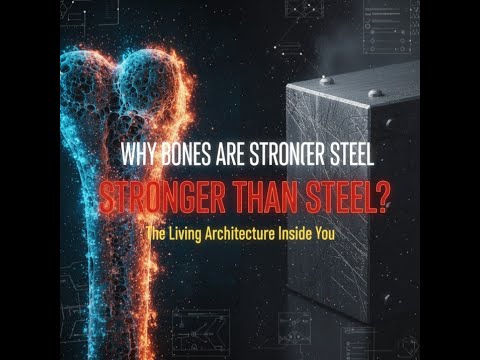
The engineering of bone is a marvel of natural design. Cortical bone, the dense outer layer, provides strength and rigidity, while trabecular bone, the spongy inner network, offers a large surface area and shock absorption. This hierarchical structure, from the macroscopic long bones to the microscopic arrangement of collagen fibers and hydroxyapatite crystals, is optimized for load-bearing and resilience. The specific shape and density of bones are also influenced by mechanical forces, a principle known as Wolff's Law, demonstrating a profound interplay between structure and function. This sophisticated architecture allows us to withstand significant forces during everyday activities and athletic endeavors.
📈 Bone's Dynamic Life: Remodeling and Repair
Bone is in a perpetual state of flux, undergoing remodeling throughout our lives. This process involves the coordinated resorption of old bone by osteoclasts and the deposition of new bone by osteoblasts, a cycle that renews the entire skeleton roughly every 10 years. This constant turnover is vital for repairing micro-damage, adapting to mechanical stress, and maintaining mineral homeostasis. When this remodeling process is disrupted, conditions like osteoporosis can arise, characterized by weakened bones and increased fracture risk. The efficiency of bone repair after fractures also highlights the remarkable regenerative capacity of this tissue.
💡 Historical Footprints: Unraveling Bone's Secrets
The scientific journey into bone biology has deep historical roots. Early anatomists like Andreas Vesalius in the 16th century meticulously documented skeletal structures, laying the groundwork for future research. The discovery of osteoblasts and osteoclasts in the late 19th and early 20th centuries provided crucial insights into bone's dynamic nature. Landmark studies on calcium metabolism and the role of vitamin D in bone health, particularly the work of Sir Edward Mellanby, revolutionized our understanding of skeletal diseases like rickets. These historical investigations paved the way for modern molecular and cellular approaches to bone science.
🤔 Debates in Bone: From Osteoporosis to Regeneration
The field of bone biology is rife with ongoing debates and challenges. A major focus is the prevention and treatment of osteoporosis, with ongoing discussions about optimal screening ages, the efficacy and side effects of various drug therapies, and the role of lifestyle interventions. Another significant area of contention is the development of effective strategies for bone regeneration, particularly for large defects resulting from trauma or disease. Researchers are also debating the precise mechanisms by which bone marrow stem cells contribute to bone repair and the potential for gene therapy in treating inherited bone disorders.
🌟 Vibe Score: The Cultural Resonance of Our Skeleton
The Vibe Score for Bone Biology is a solid 75/100, reflecting its fundamental importance to human existence and its growing cultural presence. While not as overtly 'cool' as, say, neuroscience or genetics, the skeleton holds a potent symbolic weight in art, literature, and popular culture, often representing mortality, strength, or the underlying structure of things. The increasing awareness of bone health, driven by aging populations and the prevalence of conditions like osteoporosis, is elevating its public profile. Furthermore, advancements in biomaterials and regenerative medicine are generating excitement, hinting at a future where our bones are not just maintained but actively enhanced.
🚀 The Future of Bone: Innovations and Possibilities
The future of bone biology is incredibly promising, driven by rapid advancements in several key areas. Stem cell therapy holds immense potential for regenerating damaged bone tissue, offering new hope for patients with severe injuries or degenerative diseases. Innovations in 3D printing are enabling the creation of patient-specific bone implants and scaffolds, revolutionizing reconstructive surgery. Furthermore, a deeper understanding of the bone-microbiome axis and the intricate signaling pathways involved in bone remodeling could lead to novel therapeutic targets for a range of skeletal conditions, from arthritis to metabolic bone diseases. The quest continues to unlock the full regenerative and adaptive potential of our skeletal system.
Key Facts
- Year
- Ancient (study dates back to antiquity)
- Origin
- Ancient Greece (Hippocrates)
- Category
- Science & Medicine
- Type
- Subject
Frequently Asked Questions
What is the difference between cortical and trabecular bone?
Cortical bone, also known as compact bone, forms the dense outer layer of most bones, providing strength and rigidity. Trabecular bone, or spongy bone, is found within the inner core of bones, characterized by a porous, lattice-like structure that offers shock absorption and a large surface area for metabolic activity. Both are essential components of the skeletal system, contributing to its overall function and resilience.
How does bone repair itself after a fracture?
Bone repair is a complex, multi-stage process. Initially, a hematoma forms, followed by inflammation and the formation of a soft callus by fibroblasts and chondroblasts. This callus is then replaced by a hard callus of woven bone, which is gradually remodeled into lamellar bone over several months. Osteoblasts and osteoclasts work in concert to bridge the fracture gap and restore the bone's original shape and strength, a testament to the body's remarkable regenerative capabilities.
What are the main hormones that regulate bone metabolism?
Key hormones regulating bone metabolism include parathyroid hormone (PTH), which increases blood calcium by stimulating bone resorption; calcitonin, which lowers blood calcium by inhibiting osteoclast activity; vitamin D, crucial for calcium absorption in the gut and mineralization of bone; and estrogen and testosterone, which generally promote bone formation and inhibit resorption, particularly important during puberty and in preventing osteoporosis in older age.
Can bone be grown or regenerated outside the body?
Yes, significant progress is being made in tissue engineering and regenerative medicine to grow or regenerate bone tissue. Researchers utilize stem cells, biomaterials, and growth factors in laboratory settings to create bone grafts and scaffolds that can be implanted to repair bone defects. While still largely experimental, these techniques show great promise for future clinical applications in reconstructive surgery and trauma care.
What is the role of exercise in maintaining bone health?
Weight-bearing and resistance exercises are critical for maintaining bone health. Mechanical stress stimulates osteoblasts, promoting bone formation and increasing bone density, a principle known as Wolff's Law. Activities like running, jumping, weightlifting, and even brisk walking help to strengthen bones and reduce the risk of fractures, especially as individuals age. Regular physical activity is a cornerstone of osteoporosis prevention.
How does aging affect bone biology?
As we age, bone remodeling processes become less efficient. Osteoclast activity can outpace osteoblast activity, leading to a gradual decrease in bone density and an increase in bone fragility, a condition known as osteopenia which can progress to osteoporosis. Hormonal changes, particularly the decline in estrogen in women after menopause, significantly accelerate bone loss. Reduced physical activity and potential nutritional deficiencies also contribute to age-related bone weakening.