
Contents
- 💡 What Exactly Are Chiplets?
- 🚀 Why Chiplets Now? The Driving Forces
- ⚙️ How Chiplets Work: The Interconnects
- 📦 The Chiplet Ecosystem: Players and Platforms
- 📈 Performance & Cost: The Big Trade-offs
- 🤔 Chiplets vs. Monolithic: The Ongoing Debate
- 🌟 The Future of Chiplets: Beyond CPUs and GPUs
- ⚠️ Risks and Challenges in Chiplet Adoption
- Frequently Asked Questions
- Related Topics
Overview
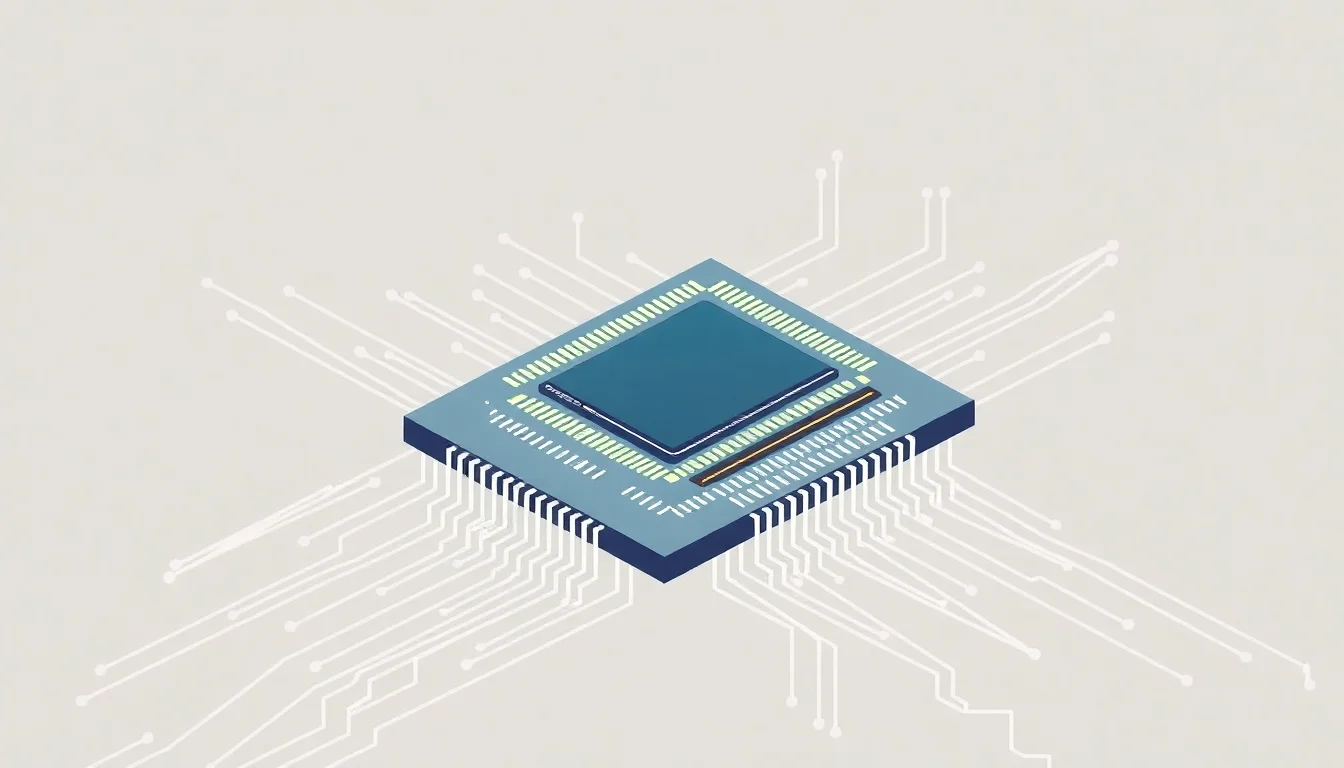
Chiplets are essentially smaller, specialized semiconductor dies that are manufactured independently and then assembled into a single, larger package. Think of them as Lego bricks for processors, allowing designers to mix and match different functionalities – CPU cores, I/O controllers, memory interfaces, AI accelerators – onto a single substrate. This modular approach contrasts sharply with traditional monolithic chip design, where an entire complex processor is fabricated as one giant piece of silicon. The primary goal is to overcome the escalating costs and manufacturing complexities associated with building ever-larger single chips, a challenge that has become particularly acute as Moore's Law begins to show its age. Chiplets promise greater design flexibility and faster time-to-market for advanced computing systems.
🚀 Why Chiplets Now? The Driving Forces
The shift towards chiplets isn't a sudden whim; it's a calculated response to several industry pressures. The sheer cost of building and operating leading-edge semiconductor fabrication plants (fabs), now exceeding $20 billion, makes monolithic designs at advanced nodes prohibitively expensive for many. Furthermore, as chip sizes increase, the probability of defects also rises dramatically, leading to lower yields and higher per-unit costs. Chiplets allow companies to leverage smaller, more mature manufacturing processes for certain functions, while reserving the most advanced (and costly) nodes only for the most critical components. This strategy is particularly appealing for heterogeneous integration, where diverse functionalities need to coexist efficiently. The rise of AI hardware and specialized accelerators also fuels the need for modularity.
⚙️ How Chiplets Work: The Interconnects
The magic behind chiplets lies in the interconnect technology that links them together within a package. This isn't just about sticking pieces together; it's about high-speed, low-latency communication between the dies. Technologies like Intel's EMIB (Embedded Multi-die Interconnect Bridge) and AMD's Infinity Fabric are prime examples, creating dense, high-bandwidth pathways. These interconnects can be implemented on an interposer (a silicon or organic bridge) or directly on the package substrate. The goal is to make the communication between chiplets as fast and efficient as if they were on the same monolithic die, minimizing performance bottlenecks. The development of standardized chiplet interconnects is crucial for a thriving ecosystem.
📦 The Chiplet Ecosystem: Players and Platforms
The chiplet landscape is rapidly evolving, with major players establishing their own platforms and pushing for standardization. Intel has been a vocal proponent with its 'Ponte Vecchio' GPU and 'Meteor Lake' CPU, showcasing its advanced packaging capabilities. AMD has successfully implemented chiplets in its Ryzen and EPYC processors for years, demonstrating the performance benefits. Beyond the giants, companies like TSMC are offering advanced packaging solutions (e.g., CoWoS) that are essential for chiplet assembly. The emergence of open standards like UCIe (Universal Chiplet Interconnect Express) aims to foster interoperability, allowing different vendors' chiplets to work together, a move that could democratize advanced chip design.
📈 Performance & Cost: The Big Trade-offs
Chiplets offer a compelling performance and cost proposition, but it's not a simple win-win. By using smaller dies manufactured on potentially less advanced (and cheaper) nodes, the overall cost per chip can be significantly reduced, especially for complex designs. Yields are also generally higher because a defect on one small chiplet doesn't necessarily ruin the entire package. However, the packaging and interconnect technologies themselves add complexity and cost. The performance can be excellent, but the overhead introduced by the interconnects, even with advanced solutions, can sometimes be a limiting factor compared to a perfectly optimized monolithic design. The total cost of ownership needs careful evaluation.
🤔 Chiplets vs. Monolithic: The Ongoing Debate
The debate between chiplets and monolithic designs is far from settled. Proponents argue that chiplets are the only viable path forward to continue performance scaling in the face of Moore's Law's slowdown and the astronomical cost of advanced monolithic fabrication. They highlight the flexibility, faster time-to-market, and ability to mix-and-match IP. Skeptics, however, point to the potential performance overhead of inter-die communication, the added complexity of packaging, and the still-significant R&D investment required. They argue that for certain applications, a highly optimized monolithic design can still offer superior performance and efficiency. The reality is likely a hybrid future where both approaches coexist, chosen based on specific application needs and economic constraints. The controversy spectrum here is moderate, with strong technical arguments on both sides.
🌟 The Future of Chiplets: Beyond CPUs and GPUs
The future of chiplets extends far beyond just CPUs and GPUs. We're seeing them applied to network processors, data center accelerators, and even automotive SoCs. The modularity allows for rapid customization and specialization, enabling companies to create highly tailored solutions for specific markets without the immense NRE (Non-Recurring Engineering) costs of designing entirely new monolithic chips. Expect to see chiplets integrated with advanced memory technologies like HBM (High Bandwidth Memory) and even photonics for even faster data transfer. The potential for democratizing high-performance computing by allowing smaller companies to assemble powerful processors from off-the-shelf chiplets is also a significant long-term prospect. The influence flow from high-performance computing to mainstream applications is a key trend to watch.
⚠️ Risks and Challenges in Chiplet Adoption
Despite the promise, the path to widespread chiplet adoption is fraught with challenges. A primary concern is the lack of universal standardization; while UCIe is gaining traction, proprietary interconnects still dominate, limiting interoperability. Supply chain complexity increases as multiple vendors and manufacturing steps are involved. Ensuring the reliability and long-term durability of these complex multi-chip packages under various operating conditions is another significant hurdle. Thermal management can also be more challenging when multiple high-power dies are densely packed. Finally, the intellectual property protection and security implications of sharing designs across different entities need careful consideration. Overcoming these obstacles will be critical for chiplets to truly fulfill their potential.
Key Facts
- Year
- 2017
- Origin
- Intel announced its "Compute Express Link" (CXL) interconnect standard in 2017, which became a key enabler for chiplet architectures, though the concept has roots in earlier multi-chip module designs.
- Category
- Semiconductor Technology
- Type
- Technology Concept
Frequently Asked Questions
Are chiplets cheaper than traditional chips?
Often, yes, especially for complex processors. Chiplets allow for the use of smaller dies, which have higher manufacturing yields and can be produced on less expensive, more mature process nodes. While the advanced packaging itself adds cost, the overall bill of materials and manufacturing expenses can be lower compared to a giant monolithic chip with similar functionality. However, the total cost depends heavily on the specific design, the number of chiplets, and the interconnect technology used.
Will chiplets replace monolithic chips entirely?
It's unlikely they will replace monolithic chips entirely. For certain applications where extreme integration and the absolute highest performance are paramount, monolithic designs may still be preferred. Chiplets are best suited for complex systems where modularity, cost-effectiveness, and faster development cycles are key. We'll likely see a future where both approaches coexist, with the choice dictated by the specific requirements of the end product and market.
What is the main advantage of chiplets?
The primary advantage of chiplets is their modularity, which enables greater design flexibility, faster time-to-market, and improved cost-efficiency for complex processors. They allow designers to mix and match specialized functional blocks (like CPU cores, I/O, or AI accelerators) from different sources or manufactured on different process nodes. This approach helps overcome the escalating costs and manufacturing challenges associated with building ever-larger monolithic chips.
What are the biggest challenges for chiplet technology?
Key challenges include the need for robust and standardized interconnect technologies to ensure high-speed, low-latency communication between chiplets. Supply chain complexity, ensuring reliability and thermal management in densely packed multi-chip packages, and the development of a truly interoperable ecosystem where chiplets from different vendors can work together are also significant hurdles. Intellectual property protection and security are also growing concerns.
Which companies are leading the chiplet revolution?
Major players like Intel and AMD have been at the forefront, integrating chiplets into their high-performance CPUs and GPUs. TSMC is a critical enabler, providing advanced packaging solutions essential for chiplet assembly. Other companies like Nvidia, Qualcomm, and various startups are also actively developing and utilizing chiplet-based designs for their specialized products. The push for standardization through initiatives like UCIe involves a broad range of industry participants.
How do chiplets affect power consumption?
The impact on power consumption is complex. While chiplets can allow for the use of more power-efficient process nodes for certain functions, the interconnects themselves can introduce power overhead. Advanced packaging techniques aim to minimize this, but it's an area of active research and development. For a given performance level, a well-designed chiplet architecture can potentially be more power-efficient than a monolithic equivalent due to better process node utilization and specialization, but this is not guaranteed and depends heavily on the implementation.