
Contents
- 🎵 Origins & History
- ⚙️ How It Works
- 📊 Key Facts & Numbers
- 👥 Key People & Organizations
- 🌍 Cultural Impact & Influence
- ⚡ Current State & Latest Developments
- 🤔 Controversies & Debates
- 🔮 Future Outlook & Predictions
- 💡 Practical Applications
- 📚 Related Topics & Deeper Reading
- Frequently Asked Questions
- References
- Related Topics
Overview
The concept of composite materials is as old as civilization itself. Ancient peoples instinctively combined materials to enhance their properties: mud bricks reinforced with straw (dating back to Mesopotamia around 5000 BCE) are an early example of a fiber-reinforced composite. The Romans mastered concrete, a mixture of aggregate, cement, and water, which allowed for monumental structures like the Pantheon and Colosseum. Wood laminates, such as plywood, have been used for centuries, demonstrating an early understanding of combining wood veneers with adhesives. The modern era of engineered composites truly began to take shape in the 20th century with the development of synthetic polymers and advanced fiber technologies. Early work on fiberglass composites in the 1930s by Owens Corning and the subsequent development of carbon fiber by Union Carbide in the 1950s and 60s laid the groundwork for high-performance applications in aerospace and defense.
⚙️ How It Works
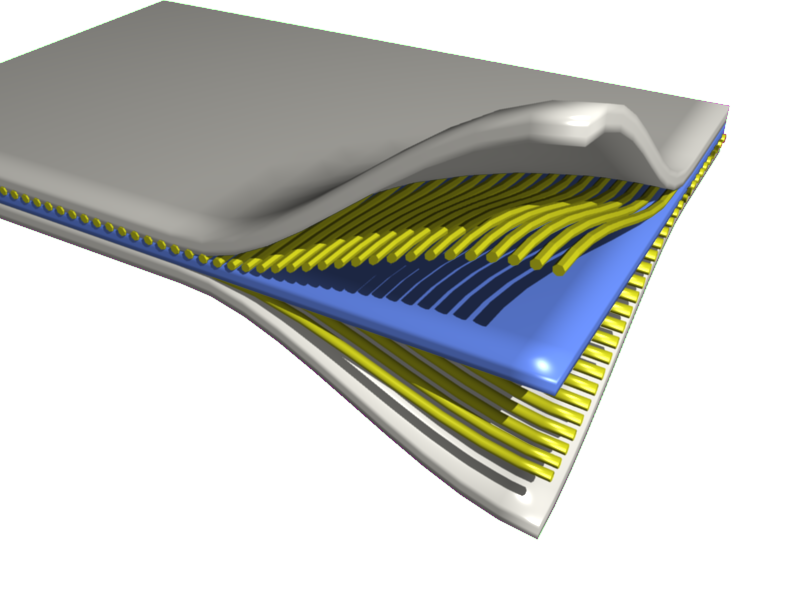
At its core, a composite material consists of at least two distinct phases: a reinforcement phase and a matrix phase. The reinforcement, often in the form of fibers (like carbon fiber, glass fiber, or aramid fiber) or particles, provides strength and stiffness. The matrix, typically a polymer resin (thermoset or thermoplastic), a metal, or a ceramic, binds the reinforcement together, transfers loads to it, and protects it from environmental damage. The interface between the reinforcement and the matrix is crucial; it must ensure good adhesion for effective load transfer. The properties of the final composite are a synergistic outcome of the constituent materials' properties, their geometry, and their arrangement. For instance, CFRP composites achieve exceptional strength-to-weight ratios due to the high tensile strength of carbon fibers embedded in a lightweight polymer matrix.
📊 Key Facts & Numbers
The global market for composites is substantial and growing. In 2023, the worldwide market for advanced composites was estimated to be worth around $30 billion, with projections suggesting it could reach over $50 billion by 2030, exhibiting a compound annual growth rate (CAGR) of approximately 7-8%. Aerospace and automotive sectors are major consumers, accounting for roughly 30% and 25% of the market share, respectively. Wind energy applications, particularly for turbine blades, represent another significant segment, consuming about 15% of the market. The production of fiberglass composites, the most common type, exceeds 10 million metric tons annually worldwide. The demand for lightweight materials in transportation alone is projected to drive a 6% annual increase in composite usage over the next decade.
👥 Key People & Organizations
Numerous individuals and organizations have been pivotal in advancing composite materials. Reginald Fawcett and Charles Dresden at Owens Corning were instrumental in the commercialization of fiberglass in the late 1930s. Roger Bacon, a 13th-century philosopher, is credited with early speculative ideas about using materials like glass fibers. In the realm of carbon fiber, Frank Morgan at Union Carbide developed the first commercially viable process in the early 1960s. Today, major players include Toray Industries, Hexcel Corporation, and Solvay S.A., all significant contributors to the development and production of high-performance composites. Research institutions like the University of Delaware's Center for Composite Materials and the National Composites Center are at the forefront of innovation.
🌍 Cultural Impact & Influence
Composite materials have profoundly reshaped design possibilities and performance benchmarks across industries. In aerospace, the introduction of composites like CFRP in aircraft structures, such as the Boeing 787 Dreamliner and Airbus A350 XWB, has led to significant weight reductions (up to 20-30%), resulting in improved fuel efficiency and extended range. The automotive industry utilizes composites for lighter chassis, body panels, and structural components, contributing to better fuel economy and performance. Beyond these, composites have influenced sports equipment (tennis rackets, bicycles, golf clubs), medical prosthetics, and even architectural designs, enabling more complex and aesthetically daring forms. The aesthetic appeal of visible carbon fiber weave has also become a cultural signifier of high performance and luxury.
⚡ Current State & Latest Developments
The current landscape of composite materials is characterized by rapid advancements in manufacturing processes and material science. Innovations in additive manufacturing (3D printing) for composites are gaining traction, enabling more complex geometries and on-demand production. The development of self-healing composites and smart composites with embedded sensors is enhancing durability and providing real-time performance monitoring. There's a strong push towards sustainability, with increased research into bio-composites derived from natural fibers and recyclable composites. Companies like Arkema S.A. are investing heavily in thermoplastic composites, which offer faster processing times and recyclability compared to traditional thermosets. The integration of artificial intelligence and machine learning in composite design and manufacturing is also accelerating, optimizing material selection and process parameters.
🤔 Controversies & Debates
The primary controversy surrounding composite materials often centers on their end-of-life management. While many composites offer superior performance, their complex structure, particularly thermoset-based ones, makes them difficult and expensive to recycle. This has led to significant waste management challenges, especially in industries like wind energy, where decommissioned turbine blades pose a disposal problem. Efforts to develop effective recycling technologies for composites, such as chemical recycling and pyrolysis, are ongoing but still face economic and scalability hurdles. Another debate revolves around the long-term durability and repairability of composites in critical applications, with some engineers advocating for traditional materials in certain high-risk scenarios due to established repair protocols and predictable failure modes.
🔮 Future Outlook & Predictions
The future of composite materials is poised for significant expansion, driven by demands for lightweighting, enhanced performance, and sustainability. Expect to see composites playing an even larger role in electric vehicles (EVs), where weight reduction is paramount for battery range. The development of nanocomposites incorporating nanomaterials like graphene and carbon nanotubes promises unprecedented strength and functionality. Advanced manufacturing techniques, including automated fiber placement and out-of-autoclave curing, will further reduce production costs and lead times. The integration of artificial intelligence in material design will enable the creation of bespoke composites tailored for specific applications with optimized properties. Furthermore, the drive towards a circular economy will spur further innovation in bio-composites and advanced recycling methods, making composites a more sustainable choice.
💡 Practical Applications
Composite materials find application in virtually every sector requiring high performance and efficiency. In aerospace, they are used for fuselage sections, wings, tail assemblies, and interior components. The automotive industry employs them for body panels, chassis components, drive shafts, and interior trim. In renewable energy, they are essential for manufacturing large, efficient wind turbine blades and components for solar power installations. Sports equipment benefits immensely, with composites used in tennis rackets, bicycle frames, skis, and golf clubs. The medical device industry utilizes biocompatible composites for prosthetics, implants, and surgical instruments. Even in construction, composites are used for bridge decks, rebar, and architectural elements, offering corrosion resistance and lighter weight.
Key Facts
- Year
- Ancient origins, modern development from 20th century
- Origin
- Global (ancient origins, modern development in USA/Europe)
- Category
- technology
- Type
- technology
Frequently Asked Questions
What are the main types of composite materials?
Composite materials are broadly categorized by their matrix material. Polymer matrix composites (PMCs), such as fiberglass and CFRP, are the most common. Metal matrix composites (MMCs) use metals like aluminum or titanium as the matrix, offering high-temperature performance. Ceramic matrix composites (CMCs) employ ceramics, providing exceptional heat resistance and hardness, often used in jet engines. Wood and concrete are also considered natural or traditional composites.
Why are composite materials so important in aerospace?
Composite materials are critical in aerospace primarily due to their exceptional strength-to-weight ratio. This allows aircraft manufacturers like Boeing and Airbus to build lighter structures, which directly translates to improved fuel efficiency, increased payload capacity, and longer flight ranges. For example, the Boeing 787 uses over 50% composite materials by weight. Their corrosion resistance and design flexibility also contribute to reduced maintenance costs and the ability to create more aerodynamically efficient shapes.
How are composite materials recycled?
Recycling composite materials, especially thermoset-based ones like fiberglass and CFRP, is challenging. Traditional methods include mechanical recycling (grinding into filler material), which degrades fiber properties, and thermal recycling (pyrolysis), which breaks down the resin at high temperatures to recover fibers and chemical feedstocks. Emerging chemical recycling methods aim to dissolve the resin more selectively. However, these processes are often energy-intensive and costly, limiting widespread adoption compared to recycling metals or thermoplastics. Wind turbine blade recycling is a particularly pressing issue.
What is the difference between a composite and a mixture?
The key distinction lies in the distinctness of the constituent materials. In a mixture, components are blended but may not retain their individual properties or structural integrity. In a composite material, the reinforcement (e.g., fibers) and the matrix remain separate and identifiable phases within the final structure. The reinforcement provides specific mechanical properties, while the matrix binds them and transfers loads. This distinct phase separation allows composites to achieve properties unattainable by either constituent alone, unlike a simple mixture where properties are often averaged.
Are composite materials more expensive than traditional materials like steel or aluminum?
The initial cost of advanced composite materials, particularly CFRP, can be significantly higher than traditional materials like steel or aluminum on a per-kilogram basis. However, the total lifecycle cost can be competitive or even lower. This is due to factors like reduced weight leading to lower fuel consumption, increased durability and corrosion resistance reducing maintenance, and the ability to design integrated components that reduce assembly time and part count. For high-performance applications where weight savings are critical, the benefits often outweigh the higher upfront material cost.
How can I identify a composite material?
Visually, composite materials can sometimes be identified by their unique textures or patterns, such as the woven appearance of carbon fiber or the slightly irregular surface of fiberglass. They often feel lighter than metals of the same size. In applications like automotive body panels or aircraft structures, they might exhibit complex molded shapes that are difficult to achieve with sheet metal. Tapping on a composite part might produce a different sound than tapping on a metal part. For definitive identification, material testing or examining manufacturing specifications is required.
What are the latest advancements in composite material manufacturing?
Recent advancements focus on speed, automation, and sustainability. 3D printing of composites, using techniques like fused deposition modeling (FDM) with reinforced filaments or advanced robotic systems, allows for complex geometries and rapid prototyping. Automation in processes like automated fiber placement (AFP) and automated tape laying (ATL) increases production efficiency and consistency for large structures. Out-of-autoclave (OOA) curing methods are reducing the reliance on expensive autoclave curing equipment. Furthermore, the development of thermoplastic composites enables faster processing cycles and recyclability, aligning with sustainability goals.