
Contents
Overview
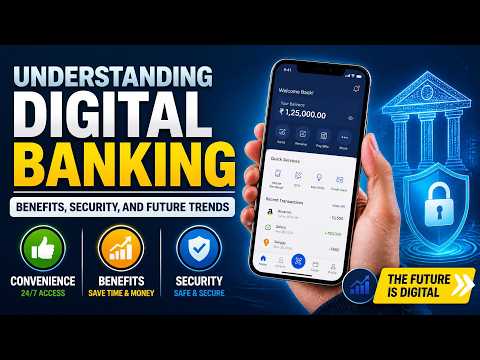
Digital banking trends represent the ongoing evolution of financial services, driven by technological innovation and changing consumer expectations. These trends encompass the adoption of mobile banking, the rise of neobanks and challenger banks, the integration of artificial intelligence for personalized services and fraud detection, and the exploration of blockchain and cryptocurrencies for transactions. The shift is characterized by a move away from traditional brick-and-mortar branches towards seamless, omnichannel digital experiences, with a growing emphasis on user experience, data security, and financial inclusion. Key developments include the proliferation of digital wallets, the adoption of biometric authentication, and the increasing use of open banking APIs to foster innovation and competition among financial institutions.
🎵 Origins & History
The genesis of digital banking can be traced back to the early days of electronic funds transfer (EFT) in the 1970s. The advent of the internet in the 1990s paved the way for online banking, allowing customers to access accounts and perform basic transactions via web browsers. Early pioneers like Netscape Navigator and Internet Explorer were crucial in making the internet accessible, while Security First Network Bank was among the first to offer purely online banking services. The subsequent explosion of mobile phones and smartphones, particularly with the launch of the iPhone in 2007 and the Android ecosystem, catalyzed the shift towards mobile banking, making financial management accessible anytime, anywhere.
⚙️ How It Works
Digital banking operates through a complex interplay of secure software platforms, robust network infrastructure, and advanced data analytics. Core banking systems, often modernized legacy platforms or cloud-native architectures, manage customer accounts, transactions, and regulatory compliance. Mobile apps and web portals act as the user interface, leveraging APIs to communicate with the backend systems. Cloud computing provides scalability and flexibility, while encryption protocols and multi-factor authentication (MFA) are paramount for safeguarding sensitive financial data. AI and machine learning are increasingly embedded to personalize user experiences, detect fraudulent activities in real-time, and automate customer service through chatbots.
📊 Key Facts & Numbers
The digital banking sector is experiencing exponential growth. Neobanks like Revolut and Chime have attracted tens of millions of users, with some reporting transaction volumes in the hundreds of billions annually. Mobile payment transaction values are also soaring.
👥 Key People & Organizations
Key figures driving digital banking trends include visionary tech leaders and banking innovators. Elon Musk, through his ventures like X.com (which merged to form PayPal), has long championed digital financial innovation. Max Levchin, a co-founder of PayPal, later founded Affirm, a prominent buy-now-pay-later (BNPL) service. Executives at major banks like Jamie Dimon (CEO of JPMorgan Chase) have overseen massive investments in digital transformation, while leaders at fintech disruptors such as Nikolay Storonsky (CEO of Revolut) and Matt Symons (co-founder of Monzo) have redefined customer expectations. Organizations like the Financial Stability Board and national regulators play a crucial role in shaping the regulatory landscape for these evolving services.
🌍 Cultural Impact & Influence
Digital banking trends are fundamentally altering consumer behavior and the structure of the financial industry. The convenience of 24/7 access and personalized services has led to a decline in branch traffic, with many traditional banks closing physical locations. This shift has also democratized access to financial services for previously underserved populations, particularly in emerging markets, through mobile-first solutions. The rise of fintech has fostered a more competitive environment, pushing established banks to innovate or risk obsolescence. Furthermore, the integration of financial tools into everyday platforms, from social media to e-commerce, is blurring the lines between banking and other digital activities, creating a more embedded financial experience.
⚡ Current State & Latest Developments
The current landscape of digital banking is defined by rapid innovation and intense competition. AI is increasingly being deployed for hyper-personalization, offering tailored financial advice and product recommendations. Embedded finance is gaining traction, allowing non-financial companies to offer banking services directly within their platforms, exemplified by BNPL services integrated into e-commerce checkouts. Open banking initiatives, mandated in regions like the European Union and the United Kingdom, are fostering a new wave of third-party financial applications. The focus on ESG principles is also growing, with consumers increasingly favoring banks with strong sustainability commitments. The ongoing development of central bank digital currencies (CBDCs) by various nations, such as China's digital yuan, signals a potential future shift in monetary systems.
🤔 Controversies & Debates
Significant controversies surround digital banking trends. Data privacy and security remain paramount concerns, with frequent reports of data breaches and sophisticated cyberattacks targeting financial institutions and their customers. The ethical implications of AI in lending and fraud detection, particularly regarding potential biases, are under intense scrutiny. The rapid growth of cryptocurrencies and decentralized finance (DeFi) has attracted regulatory attention due to volatility, illicit use, and consumer protection issues. Furthermore, the digital divide poses a challenge, as individuals lacking digital literacy or access to technology risk being excluded from essential financial services, exacerbating existing inequalities.
🔮 Future Outlook & Predictions
The future of digital banking points towards even greater integration and intelligence. Expect a surge in super-apps that consolidate a wide range of financial and non-financial services into a single interface, mirroring successful models in Asia. Decentralized finance (DeFi) protocols, built on blockchain technology, are poised to offer alternative financial systems, though regulatory hurdles remain significant. Quantum computing could eventually revolutionize encryption and fraud detection, but also poses new security threats. The role of physical branches will continue to diminish, with remaining locations evolving into advisory hubs rather than transactional centers. Personalized financial management, powered by advanced AI and real-time data, will become the norm, moving beyond simple banking to holistic financial well-being.
💡 Practical Applications
Digital banking trends have a vast array of practical applications across consumer and business sectors. For individuals, this includes instant peer-to-peer payments via apps like Venmo and Zelle, seamless online and in-store purchases using digital wallets like Apple Pay and Google Pay, and automated savings and investment tools offered by platforms such as Robinhood. For businesses, digital banking enables efficient cash management, streamlined payroll processing, access to faster business loans through online lenders like Kabbage, and the ability to accept payments from a global customer base. The development of APIs allows for the integration of banking functionalities into other business software, enhancing operational efficiency.
Key Facts
- Category
- technology
- Type
- topic