
Contents
Overview
The genesis of electrocardiography traces back to foundational work by William Thomson (later Lord Kelvin) on electrical currents in the sea, which laid groundwork for detecting electrical phenomena. Willem Einthoven, a Dutch physiologist, is credited with inventing the first practical ECG machine and publishing his seminal work on the electrocardiogram. Einthoven's string galvanometer allowed for the recording of the heart's electrical activity with unprecedented accuracy, leading to his Nobel Prize in Physiology or Medicine. Early interpretations focused on identifying basic arrhythmias and conduction defects, with key contributions from figures like Sir Thomas Lewis who further refined the understanding of cardiac rhythms. The development of the 12-lead ECG by Willson Robinson and colleagues standardized the recording, making it a ubiquitous diagnostic tool in clinical practice.
⚙️ How It Works
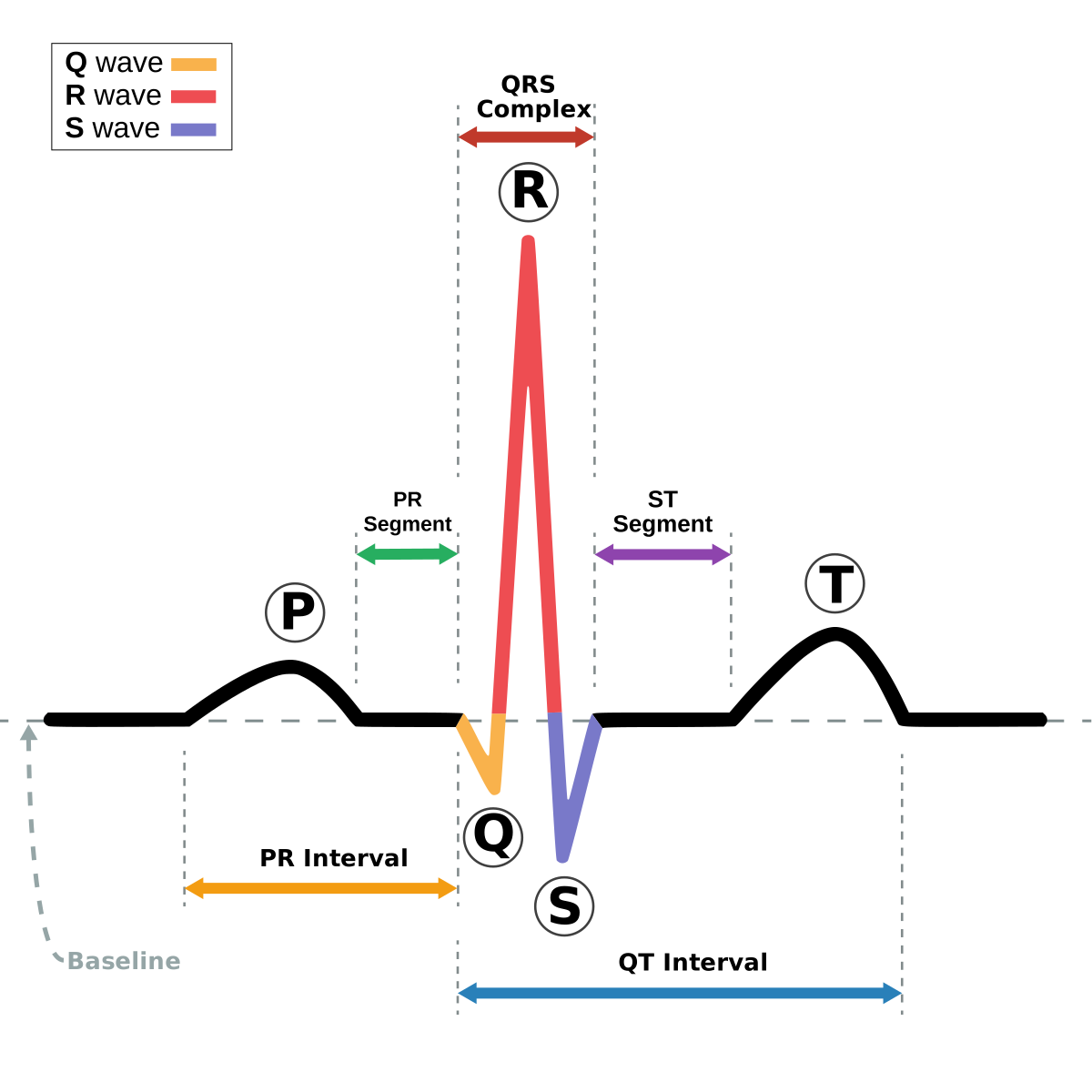
An ECG works by detecting and amplifying the tiny electrical impulses generated by the heart's muscle cells during depolarization and repolarization. Electrodes, typically 10 in number for a standard 12-lead ECG, are strategically placed on the limbs and chest. These electrodes capture the electrical potential differences between various points on the body's surface, which reflect the overall electrical activity of the heart. The machine, an electrocardiograph, records these voltage changes over time, producing a waveform. Specific components of this waveform—the P wave, QRS complex, and T wave—correspond to distinct electrical events: atrial depolarization, ventricular depolarization, and ventricular repolarization, respectively. Deviations in the shape, duration, amplitude, or timing of these waves and intervals provide crucial diagnostic clues.
📊 Key Facts & Numbers
The 12-lead ECG is the most common type of ECG. Sir Thomas Lewis was instrumental in establishing the clinical significance of ECG findings in the early 20th century. Professional societies like the American Heart Association (AHA) and the European Society of Cardiology (ESC) regularly publish guidelines and consensus statements on ECG interpretation and reporting standards. Companies such as Philips Healthcare, GE Healthcare, and Medtronic are major manufacturers of ECG equipment and associated diagnostic software. Research institutions like the Mayo Clinic and Cleveland Clinic are at the forefront of developing new algorithms and AI-driven interpretation tools.
👥 Key People & Organizations
The ECG has become an iconic symbol of medical diagnosis, appearing frequently in television dramas and films, often to signify a critical medical event or the skill of a physician. Its widespread adoption has democratized cardiac diagnostics, making sophisticated heart assessment accessible in diverse settings, from emergency rooms to primary care clinics. The ability to quickly identify life-threatening conditions like ventricular tachycardia or myocardial infarction has profoundly impacted emergency medicine protocols. Furthermore, the ECG has influenced the development of wearable health technology, with devices like the Apple Watch now incorporating single-lead ECG capabilities, bringing cardiac monitoring directly into users' hands and fostering a greater public awareness of heart health.
🌍 Cultural Impact & Influence
The current landscape of ECG interpretation is rapidly evolving, driven by advancements in artificial intelligence (AI) and machine learning (ML). AI algorithms, trained on vast datasets of ECGs, are demonstrating remarkable accuracy in detecting subtle abnormalities that might be missed by the human eye, including early signs of heart failure and hyperkalemia. Telemedicine platforms are increasingly integrating ECG capabilities, allowing for remote monitoring and faster diagnosis, especially in underserved areas. The development of portable, wearable ECG devices continues to expand, offering continuous or on-demand monitoring for individuals at risk. Regulatory bodies like the U.S. Food and Drug Administration (FDA) are actively evaluating and approving AI-based ECG interpretation software, paving the way for wider clinical integration.
⚡ Current State & Latest Developments
One of the most persistent debates in ECG interpretation revolves around the optimal interpretation criteria and the potential for overdiagnosis or underdiagnosis. Different professional bodies, such as the AHA and ESC, have published slightly varying guidelines for specific findings, leading to occasional discrepancies in interpretation. The role of AI in ECG interpretation is also a subject of intense discussion: while promising, concerns remain about algorithmic bias, the 'black box' nature of some AI models, and the ethical implications of relying on machines for critical diagnostic decisions. Furthermore, the interpretation of ECGs in specific populations, such as athletes or individuals with pacemakers, presents unique challenges and ongoing research questions regarding normal versus abnormal findings.
🤔 Controversies & Debates
The future of ECG interpretation points towards greater automation, personalization, and integration with other diagnostic modalities. AI will likely become an indispensable assistant, flagging potential issues and providing quantitative analysis, freeing up clinicians for complex cases and patient interaction. The proliferation of wearable sensors will enable continuous, long-term monitoring, allowing for the detection of intermittent arrhythmias like paroxysmal supraventricular tachycardia that are often missed on standard ECGs. Integration with other data streams, such as electronic health records, genomic information, and imaging studies, will create a more comprehensive picture of cardiac health. We can anticipate the development of predictive ECG algorithms that forecast future cardiac events based on subtle waveform characteristics, moving beyond simple diagnosis to proactive risk assessment.
🔮 Future Outlook & Predictions
ECG interpretation finds its most critical application in the diagnosis and management of a vast spectrum of cardiovascular diseases. It is indispensable in emergency departments for the rapid identification of acute myocardial infarction and pulmonary embolism. In cardiology clinics, it's used to diagnose and monitor arrhythmias, assess the effects of medications, and evaluate patients for conditions like hypertrophic cardiomyopathy. Beyond clinical settings, ECG technology is employed in pre-operative assessments, sports medicine to screen athletes, and in research studies investigating cardiac physiology and pathology. The advent of wearable ECG devices has also opened avenues for remote patient monitoring and early detection of cardiac anomalies in the general population.
💡 Practical Applications
Understanding ECG interpretation naturally leads to exploring related fields. The study of cardiac electrophysiology provides the fundamental science behind the electrical activity of the heart. Arrhythmias are a primary focus of ECG analysis, making their study a crucial adjacent topic. [[Cardiolog
Key Facts
- Category
- science
- Type
- topic