
Contents
Overview
Faith No More’s genesis can be traced back to San Francisco in 1979, initially under the moniker Sharp Young Men. The foundational members who have remained constants throughout the band’s tumultuous history are bassist Billy Gould, keyboardist Roddy Bottum, and drummer Mike Bordin. Early years were marked by frequent lineup changes, a common characteristic of bands navigating the experimental fringes of the post-punk scene. The band’s early sound was a raw, unpolished exploration of their diverse influences, laying the groundwork for the sonic alchemy that would define their later work. Their initial independent releases showcased a band still finding its voice but already hinting at the unconventionality to come, attracting the attention of Slash Records before their major label debut.
⚙️ How It Works
The 'how it works' of Faith No More is less about a rigid formula and more about a dynamic interplay of disparate musical ideas. At its core, the band’s sound is built on the rhythmic foundation laid by Billy Gould's inventive basslines and Mike Bordin's powerful, often jazz-inflected drumming. Roddy Bottum’s synthesizers and keyboards provide atmospheric textures, melodic counterpoints, and often jarring, unexpected sonic interventions. The guitar work, most famously defined by Jim Martin during their peak commercial period and later by Jon Hudson, ranges from heavy, riff-driven aggression to intricate, clean arpeggios and experimental noise. However, the true engine of Faith No More’s unique sound is the vocal delivery and lyrical content of Mike Patton. Patton’s astonishing vocal range, his ability to shift from melodic crooning to guttural screams and spoken-word passages, coupled with his often surreal and provocative lyrics, acts as the glue that binds their eclectic musical palette together, creating a sound that is simultaneously accessible and profoundly alien.
📊 Key Facts & Numbers
Faith No More’s commercial peak saw them achieve significant chart success. Their 1989 album, 'The Real Thing', sold over 3 million copies worldwide, driven by the crossover hit single 'Epic', which reached number 12 on the Billboard Hot 100 chart. The follow-up, 'Angel Dust' (1992), while critically acclaimed, achieved platinum status in the United States, selling over 1.5 million copies. Their 1997 album, 'Album of the Year', garnered a Grammy nomination for Best Hard Rock Performance for the song 'Ashes to Ashes'. Across their six studio albums released before their initial 1998 breakup, Faith No More sold an estimated 8 million records globally. Their reunion album, 'Sol Invictus' (2015), debuted at number 18 on the Billboard 200 chart, selling over 30,000 copies in its first week. The band has performed in over 50 countries throughout their career, playing to audiences numbering in the millions.
👥 Key People & Organizations
The core of Faith No More’s enduring appeal lies in its constellation of unique talents. Mike Patton, the enigmatic frontman, is arguably the most recognizable face, known for his prolific output across numerous projects like Mr. Bungle and Tomahawk. Billy Gould, the bassist and primary songwriter, has been the consistent creative force, shaping the band’s sonic direction. Roddy Bottum, the keyboardist, brought an unconventional, often avant-garde sensibility to rock music, while drummer Mike Bordin provided a powerful and versatile rhythmic backbone. Guitarists have been a revolving door, with Jim Martin defining their sound during their most commercially successful period, and Jon Hudson becoming the longest-serving guitarist in the band’s later iterations. The band’s early vocalist, Chuck Mosley, also played a crucial role in their formative years, contributing to their initial albums before his departure in 1988.
🌍 Cultural Impact & Influence
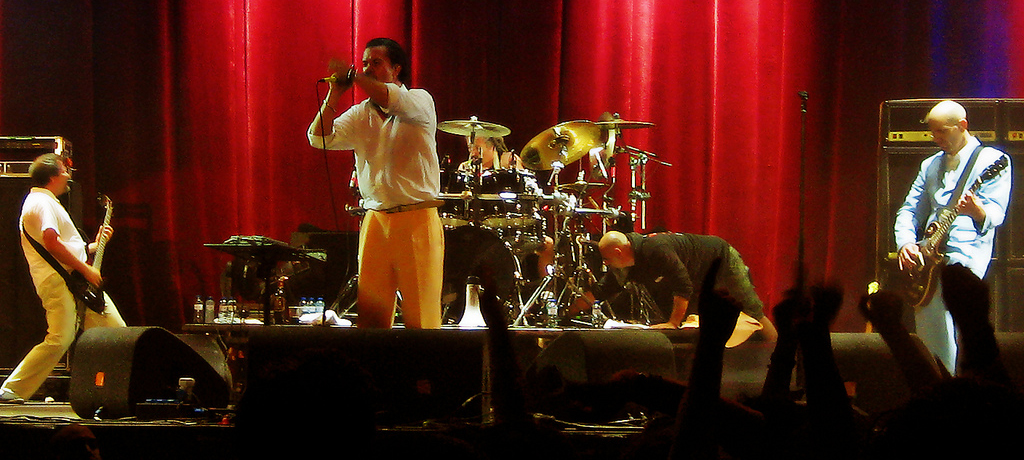
Faith No More’s influence is a complex web woven through alternative music and beyond. They are widely credited with popularizing the fusion of heavy metal with funk and hip-hop, a sound that paved the way for bands like Red Hot Chili Peppers and Rage Against the Machine to gain wider acceptance. Their willingness to experiment with genre conventions and embrace theatricality, particularly through Mike Patton’s dynamic stage presence and vocal acrobatics, inspired a generation of musicians to push creative boundaries. The band’s visual aesthetic, often characterized by surreal imagery and unconventional fashion, also left a mark on the music video era of the late 1980s and early 1990s, particularly with the iconic video for 'Epic'. Their impact can be seen in the diverse sonic palettes of artists across alternative rock, experimental music, and even nu-metal genres, demonstrating a lasting legacy of fearless artistic exploration.
⚡ Current State & Latest Developments
As of late 2024, Faith No More remains in a state of active hiatus following their reunion tour and the release of 'Sol Invictus' in 2015. While there have been no official announcements regarding new studio material or a full-scale return to touring, individual members remain active in various musical endeavors. Mike Patton continues his prolific work with bands like Dead Cross and Mondo Cane, while Billy Gould has explored solo projects and collaborations, including his work with the band The Revolution of the Mind. Roddy Bottum has been active with his band Imperial Teen and his solo project, performing under the name His Band and the Naked Truth. Despite the lack of official band activity, their music continues to be streamed and discovered by new audiences, and rumors of potential future performances or recordings occasionally surface within fan communities and music news outlets.
🤔 Controversies & Debates
One of the most persistent debates surrounding Faith No More centers on their genre classification. Critics and fans alike have long struggled to pigeonhole the band, with labels ranging from alternative metal and funk metal to experimental rock and avant-garde. This ambiguity, while a hallmark of their artistic identity, has also led to discussions about their commercial appeal and critical reception. Another point of contention has been the band's perceived unpredictability in live performances, with some shows lauded for their raw energy and improvisation, while others have been criticized for being erratic or even confrontational. The departure of Chuck Mosley and the subsequent arrival of Mike Patton in 1988 also sparked debate among early fans regarding the band's evolving sound and artistic direction.
🔮 Future Outlook & Predictions
The future of Faith No More is as uncertain as it is intriguing. While the band has maintained a consistent hiatus since their last album, the members’ continued engagement in music suggests that a full reunion, while not imminent, is not entirely out of the question. Speculation often arises around major festival appearances or anniversary tours, particularly for landmark albums like 'The Real Thing' or 'Angel Dust'. Given the band's history of unexpected returns and their established fanbase, any announcement of new music or a significant tour would likely generate considerable excitement and media attention. However, without concrete plans from the band members themselves, any predictions remain speculative, leaving fans to hope for another chapter in their unique musical journey.
💡 Practical Applications
Faith No More's music, particularly their hit single 'Epic', has found its way into various media, demonstrating its broad appeal beyond the rock scene. The song was prominently featured in the 1992 film 'Bill & Ted's Bogus Journey', exposing their sound to a wider audience. Their tracks have also been utilized in video games, co
Key Facts
- Category
- culture
- Type
- topic