Contents
Overview
Filtration technology is a fundamental separation process crucial across countless industries, from purifying drinking water to refining pharmaceuticals and manufacturing semiconductors. It involves passing a fluid (liquid or gas) through a porous medium that retains the solid particles while allowing the fluid to pass. The effectiveness of filtration hinges on factors like pore size, material properties, flow rate, and pressure. Historically, simple straining methods evolved into sophisticated membrane technologies capable of removing particles down to the nanometer scale. Modern filtration systems are engineered for specific applications, balancing efficiency, cost, and environmental impact, with ongoing innovation driven by demands for higher purity, greater sustainability, and novel material applications. The global market for filtration and separation equipment was valued at over $100 billion in 2023, underscoring its immense economic and societal importance.
🎵 Origins & History
The concept of filtration traces back to antiquity, with early civilizations using rudimentary methods like sand and gravel beds to clarify water. The invention of the microscope allowed for the observation of microscopic particles. Early filters were often simple cloth or porous ceramic materials. A significant leap occurred with the development of specialized filter papers by companies like Whatman. The 20th century saw the rise of industrial-scale filtration, driven by the demands of the chemical, pharmaceutical, and food industries, leading to innovations like activated carbon filters and early membrane technologies.
⚙️ How It Works
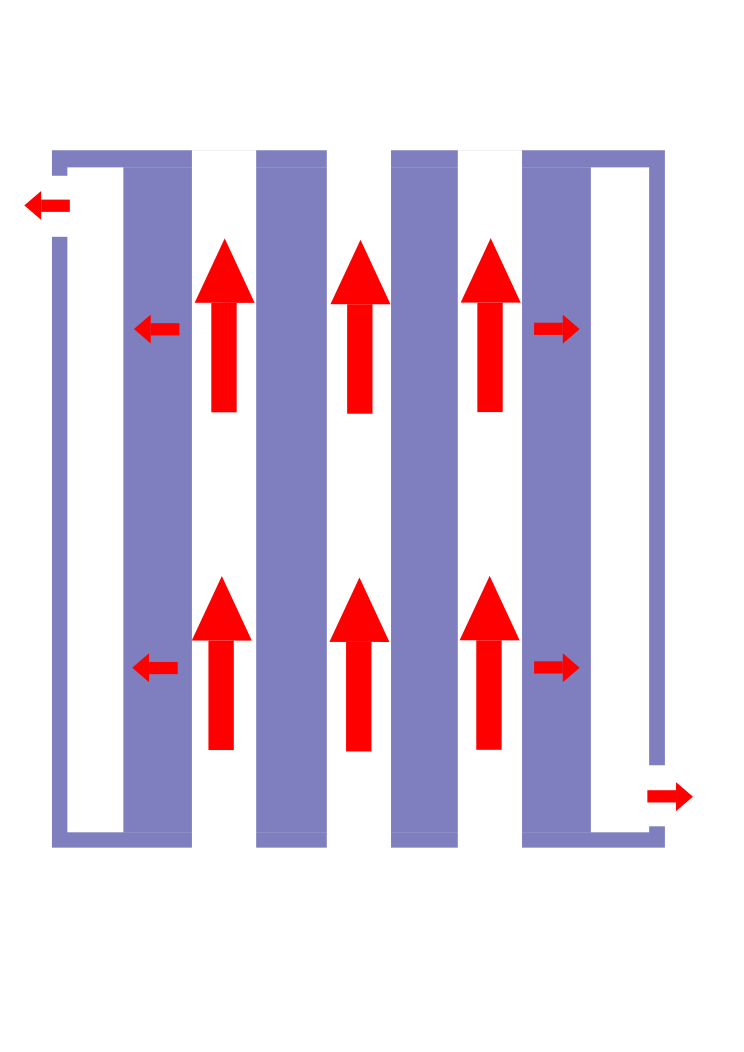
At its core, filtration operates by physically separating solid particles from a fluid stream. This is achieved using a filter medium, which can range from simple woven fabrics and porous ceramics to advanced synthetic membranes with precisely controlled pore sizes. The fluid is forced through the medium under pressure, with particles larger than the pores being retained on the surface or within the medium, forming a filter cake. The fluid that passes through is called the filtrate. Different filtration methods exist, including dead-end filtration, where the fluid flows perpendicular to the filter surface and solids accumulate, and cross-flow filtration (also known as tangential flow filtration), where the fluid flows parallel to the filter surface, continuously sweeping away retained particles to prevent blinding and extend filter life. The choice of method and medium depends on the particle size, concentration, fluid properties, and desired purity of the filtrate.
📊 Key Facts & Numbers
The global filtration market was valued at over $100 billion in 2023. The water and wastewater treatment segment accounts for a significant share of the filtration market. The pharmaceutical and biotechnology sectors represent another significant portion, with the demand for high-purity filtration solutions driving substantial investment. Microfiltration, with pore sizes typically from 0.1 to 10 micrometers, handles a substantial volume of applications, while nanofiltration and reverse osmosis, capable of removing ions and molecules, are critical for desalination and ultra-pure water production, with the global reverse osmosis market alone valued at over $5 billion.
👥 Key People & Organizations
Pioneering figures in filtration include John G. Bartram, whose work in the mid-20th century advanced membrane filtration techniques, particularly in biomedical applications. William Perrin, a key figure at Whatman, was instrumental in developing early laboratory filtration media. In the industrial realm, companies like 3M, Pall Corporation (now part of Danaher), and Sartorius AG have been at the forefront of developing and commercializing advanced filtration systems. Organizations such as the American Filtration and Separations Society (AFSS) play a crucial role in advancing research and fostering collaboration within the field.
🌍 Cultural Impact & Influence
Filtration technology has profoundly shaped modern life, enabling advancements in public health, medicine, and manufacturing. The widespread availability of clean drinking water, a direct result of effective water filtration systems like slow sand filters and membrane bioreactors, has dramatically increased global life expectancy. In medicine, sterile filtration is indispensable for producing safe injectable drugs and vaccines, a fact highlighted during the rapid development of COVID-19 vaccines. The semiconductor industry relies on ultra-pure water and air filtration to manufacture microchips, underpinning the digital revolution. Even everyday items like coffee makers and air purifiers are testament to the pervasive influence of filtration in consumer products.
⚡ Current State & Latest Developments
The current landscape of filtration technology is marked by a relentless pursuit of higher efficiency, greater selectivity, and improved sustainability. Advanced membrane materials, including graphene oxide and metal-organic frameworks (MOFs), are being explored for their superior separation capabilities. The integration of artificial intelligence and machine learning is optimizing filter performance, predicting maintenance needs, and designing novel filter configurations. There's a growing emphasis on developing reusable and biodegradable filter media to reduce environmental waste, particularly in single-use applications within the pharmaceutical sector. Furthermore, advancements in electrodialysis and forward osmosis are offering energy-efficient alternatives for water treatment and resource recovery.
🤔 Controversies & Debates
Debates surrounding filtration technology often center on cost versus performance, particularly for advanced membrane systems that can be energy-intensive and expensive to maintain. The issue of filter disposal and the environmental impact of disposable filters, especially in healthcare settings, is a significant concern, leading to calls for more sustainable alternatives. The effectiveness of certain filtration methods against emerging contaminants, such as per- and polyfluoroalkyl substances (PFAS) or microplastics, remains an active area of research and public debate. Furthermore, the potential for filter bypass or fouling in critical applications raises questions about the reliability and safety of filtration systems under extreme conditions or prolonged use.
🔮 Future Outlook & Predictions
The future of filtration technology points towards smarter, more integrated, and environmentally conscious solutions. Expect to see a surge in self-cleaning and self-monitoring filters powered by embedded sensors and AI, minimizing downtime and optimizing resource usage. The development of 'smart membranes' capable of dynamically adjusting their pore size or selectivity in response to changing conditions will revolutionize applications in pharmaceuticals and chemical processing. In water treatment, hybrid systems combining multiple filtration techniques with advanced oxidation processes will become standard for tackling complex contaminants. The drive towards a circular economy will also spur innovation in filter regeneration and the recovery of valuable materials from waste streams, potentially transforming waste into a resource.
💡 Practical Applications
Filtration technology finds ubiquitous application across a vast spectrum of industries. In water purification, it's essential for producing potable water from sources like rivers and oceans, and for treating wastewater before discharge or reuse. The pharmaceutical industry relies on sterile filtration for drug manufacturing, preventing microbial contamination. In the food and beverage industry, it's used for clarifying juices, filtering beer and wine, and purifying edible oils. The semiconductor industry demands ultra-pure water and filtered air to prevent defects in microchip production. Air filtration is critical in HVAC systems, cleanrooms, and personal protective equipment like N95 respirators to remove airborne particulates and pathogens.
Key Facts
- Category
- technology
- Type
- topic