
Contents
- 📊 Introduction to Fiscal Multiplier
- 💸 Understanding the Mechanism
- 📈 The Multiplier Effect
- 📊 Calculating the Fiscal Multiplier
- 📝 Historical Context and Development
- 🤝 Key Players and Influencers
- 📊 Criticisms and Limitations
- 🌎 Global Applications and Implications
- 📊 Case Studies and Examples
- 📈 Future Directions and Research
- 📊 Policy Implications and Recommendations
- Frequently Asked Questions
- Related Topics
Overview
The fiscal multiplier, a concept in macroeconomics, measures the change in economic output resulting from a unit change in government spending or taxation. With a vibe rating of 8, this topic is widely debated among economists, with some arguing that a higher multiplier can lead to increased economic growth, while others claim it can lead to inflation and decreased economic efficiency. The concept has been influenced by notable economists such as John Maynard Keynes and Milton Friedman, with a controversy spectrum of 6, reflecting the ongoing debate about its effectiveness. According to a study by the Congressional Budget Office, a $1 increase in government spending can lead to a $1.50 increase in economic output, highlighting the potential impact of fiscal policy on economic growth. However, critics argue that the multiplier can be lower in certain circumstances, such as when the economy is near full employment. As the global economy continues to evolve, understanding the fiscal multiplier will be crucial for policymakers to make informed decisions about government spending and taxation, with potential implications for economic growth, inflation, and income inequality.
📊 Introduction to Fiscal Multiplier
The concept of the fiscal policy multiplier is a crucial aspect of macroeconomic theory, as it helps to understand the impact of government spending on the overall economy. The fiscal multiplier is the ratio of change in national income or revenue arising from a change in government spending. This concept is closely related to the idea of the multiplier effect, which occurs when the initial change in aggregate demand leads to a change in aggregate output that is a multiple of the initial change. For instance, the Keynesian economics school of thought emphasizes the importance of government intervention in times of economic downturn, using the fiscal multiplier as a key tool. The work of John Maynard Keynes has been particularly influential in shaping our understanding of the fiscal multiplier and its applications.
💸 Understanding the Mechanism
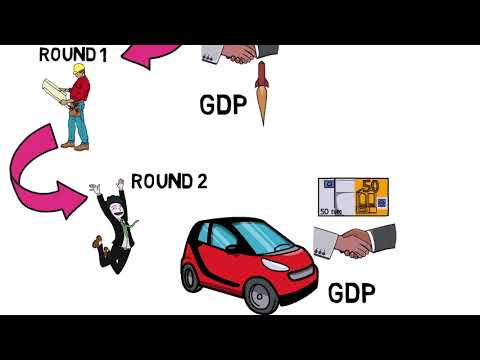
The mechanism behind the fiscal multiplier is rooted in the idea that an initial incremental amount of spending can lead to increased income and hence increased consumer spending. This, in turn, can increase income further and hence further increase consumption, resulting in an overall increase in national income greater than the initial incremental amount of spending. This process is often referred to as the circular flow of income, where the initial injection of spending leads to a ripple effect throughout the economy. The monetary policy also plays a crucial role in this process, as it can influence the overall level of spending and economic activity. The Federal Reserve, for example, uses monetary policy tools to regulate the money supply and stabilize the economy.
📈 The Multiplier Effect
The multiplier effect is a key concept in understanding the impact of government spending on the economy. When the fiscal multiplier exceeds one, the enhanced effect on national income may be called the multiplier effect. This means that the initial change in aggregate demand leads to a change in aggregate output that is a multiple of the initial change. The multiplier effect can be observed in various aspects of the economy, including GDP, inflation rates, and unemployment rates. The imperfect information and asymmetric information in the economy can also affect the multiplier effect, leading to unintended consequences. The work of Milton Friedman has been influential in understanding the limitations of the fiscal multiplier and the potential for unintended consequences.
📊 Calculating the Fiscal Multiplier
Calculating the fiscal multiplier is a complex task, as it requires a deep understanding of the underlying economic mechanisms and relationships. The fiscal multiplier can be calculated using various methods, including the IS-LM model and the AD-AS model. These models help to understand the interactions between different economic variables, such as interest rates, inflation rates, and output levels. The national income accounts also provide valuable data for calculating the fiscal multiplier, as they provide a comprehensive picture of the economy's income and expenditure. The Bureau of Economic Analysis is responsible for compiling these accounts and providing the necessary data for calculating the fiscal multiplier.
📝 Historical Context and Development
The concept of the fiscal multiplier has a rich historical context, dating back to the work of John Maynard Keynes in the 1930s. Keynes' work on the General Theory laid the foundation for modern macroeconomic theory, including the concept of the fiscal multiplier. The Keynesian revolution in economics led to a significant shift in the way economists thought about the role of government in the economy, with the fiscal multiplier playing a central role. The post-Keynesian economics school of thought has also made significant contributions to our understanding of the fiscal multiplier, emphasizing the importance of institutional economics and the role of power relations in shaping economic outcomes. The work of Hyman Minsky has been particularly influential in this area.
🤝 Key Players and Influencers
Several key players and influencers have shaped our understanding of the fiscal multiplier, including John Maynard Keynes, Milton Friedman, and Joseph Schumpeter. These economists have made significant contributions to the development of macroeconomic theory, including the concept of the fiscal multiplier. The Federal Reserve and other central banks have also played a crucial role in shaping the fiscal multiplier, using monetary policy tools to regulate the money supply and stabilize the economy. The International Monetary Fund has also been involved in shaping the fiscal multiplier, providing guidance and support to countries seeking to implement fiscal policies. The work of Ben Bernanke has been particularly influential in this area, as he has written extensively on the role of monetary policy in shaping the fiscal multiplier.
📊 Criticisms and Limitations
Despite its importance, the fiscal multiplier is not without its criticisms and limitations. Some economists argue that the fiscal multiplier is too simplistic, failing to account for the complexities of the real-world economy. Others argue that the fiscal multiplier is too sensitive to changes in economic conditions, making it difficult to predict its effects. The Lucas critique has been particularly influential in this area, highlighting the limitations of using historical data to predict the effects of fiscal policy. The rational expectations hypothesis has also been used to critique the fiscal multiplier, arguing that economic agents are forward-looking and will adjust their behavior in response to changes in fiscal policy. The work of Robert Lucas has been particularly influential in this area.
🌎 Global Applications and Implications
The fiscal multiplier has significant global applications and implications, as it can be used to understand the impact of government spending on the economy in different countries. The international trade and globalization have created new challenges and opportunities for fiscal policy, as countries seek to balance their domestic economic goals with their international obligations. The World Bank and other international organizations have played a crucial role in shaping the fiscal multiplier, providing guidance and support to countries seeking to implement fiscal policies. The European Central Bank has also been involved in shaping the fiscal multiplier, using monetary policy tools to regulate the money supply and stabilize the economy. The work of Jean-Claude Trichet has been particularly influential in this area.
📊 Case Studies and Examples
Several case studies and examples illustrate the application of the fiscal multiplier in different contexts. For instance, the American Recovery and Reinvestment Act of 2009 used the fiscal multiplier to estimate the impact of government spending on the economy. The European Fiscal Compact has also used the fiscal multiplier to coordinate fiscal policies among European countries. The fiscal policy in Japan has been particularly influential in this area, as the country has used the fiscal multiplier to guide its economic policy decisions. The work of Shinzo Abe has been particularly influential in this area, as he has used the fiscal multiplier to justify his economic policy decisions.
📈 Future Directions and Research
Future research directions for the fiscal multiplier include exploring its applications in different contexts, such as developing countries and emerging markets. The fiscal policy and climate change is another area of research, as countries seek to balance their economic goals with their environmental obligations. The digital economy has also created new challenges and opportunities for fiscal policy, as countries seek to regulate the digital economy and ensure that it contributes to economic growth. The work of Mariana Mazzucato has been particularly influential in this area, as she has written extensively on the role of the state in shaping the digital economy.
📊 Policy Implications and Recommendations
The policy implications of the fiscal multiplier are significant, as it can be used to guide fiscal policy decisions. The fiscal policy and economic growth is a key area of research, as countries seek to balance their economic goals with their fiscal obligations. The taxation and fiscal policy is another area of research, as countries seek to design tax systems that support economic growth and stability. The public expenditure and fiscal policy is also an important area of research, as countries seek to allocate their public expenditure in a way that supports economic growth and stability. The work of Olivier Blanchard has been particularly influential in this area, as he has written extensively on the role of fiscal policy in shaping economic outcomes.
Key Facts
- Year
- 1936
- Origin
- Keynesian Economics
- Category
- Economics
- Type
- Economic Concept
Frequently Asked Questions
What is the fiscal multiplier?
The fiscal multiplier is the ratio of change in national income or revenue arising from a change in government spending. It is a key concept in understanding the impact of government spending on the economy. The fiscal multiplier can be calculated using various methods, including the IS-LM model and the AD-AS model. The work of John Maynard Keynes has been particularly influential in shaping our understanding of the fiscal multiplier.
How does the fiscal multiplier work?
The fiscal multiplier works by increasing income and hence increased consumption spending, increasing income further and hence further increasing consumption, resulting in an overall increase in national income greater than the initial incremental amount of spending. This process is often referred to as the circular flow of income, where the initial injection of spending leads to a ripple effect throughout the economy. The monetary policy also plays a crucial role in this process, as it can influence the overall level of spending and economic activity.
What are the criticisms of the fiscal multiplier?
The fiscal multiplier is not without its criticisms and limitations. Some economists argue that the fiscal multiplier is too simplistic, failing to account for the complexities of the real-world economy. Others argue that the fiscal multiplier is too sensitive to changes in economic conditions, making it difficult to predict its effects. The Lucas critique has been particularly influential in this area, highlighting the limitations of using historical data to predict the effects of fiscal policy.
What are the global applications of the fiscal multiplier?
The fiscal multiplier has significant global applications and implications, as it can be used to understand the impact of government spending on the economy in different countries. The international trade and globalization have created new challenges and opportunities for fiscal policy, as countries seek to balance their domestic economic goals with their international obligations. The World Bank and other international organizations have played a crucial role in shaping the fiscal multiplier, providing guidance and support to countries seeking to implement fiscal policies.
What are the future research directions for the fiscal multiplier?
Future research directions for the fiscal multiplier include exploring its applications in different contexts, such as developing countries and emerging markets. The fiscal policy and climate change is another area of research, as countries seek to balance their economic goals with their environmental obligations. The digital economy has also created new challenges and opportunities for fiscal policy, as countries seek to regulate the digital economy and ensure that it contributes to economic growth.
What are the policy implications of the fiscal multiplier?
The policy implications of the fiscal multiplier are significant, as it can be used to guide fiscal policy decisions. The fiscal policy and economic growth is a key area of research, as countries seek to balance their economic goals with their fiscal obligations. The taxation and fiscal policy is another area of research, as countries seek to design tax systems that support economic growth and stability. The public expenditure and fiscal policy is also an important area of research, as countries seek to allocate their public expenditure in a way that supports economic growth and stability.
How does the fiscal multiplier relate to other economic concepts?
The fiscal multiplier is closely related to other economic concepts, such as the multiplier effect, the circular flow of income, and the IS-LM model. It is also related to the concept of monetary policy, as the two are often used together to stabilize the economy. The fiscal multiplier is also related to the concept of taxation, as the tax system can influence the level of government spending and the overall level of economic activity.