
Contents
- 🐘 The Man, The Myth, The Elephants
- 🗺️ Hannibal's Grand Tour: Beyond the Alps
- ⚔️ Tactics That Terrified Rome
- 🧠 The Mind of a Master Strategist
- 🏛️ Carthage's Shadow: Legacy and Loss
- 📈 Vibepedia Vibe Score: 92/100
- 🤔 Controversy Spectrum: High
- 💡 Key Takeaways for the Modern Strategist
- 📚 Where to Dig Deeper
- 📞 Connect with the Echoes of History
- Frequently Asked Questions
- Related Topics
Overview
Hannibal Barca (247–183/181 BC) wasn't just a general; he was a force of nature that nearly toppled the nascent Roman Republic. Born into a military dynasty, son of Hamilcar Barca, he inherited a burning animosity towards Rome. His legendary vow to never be a friend to Rome, reportedly sworn as a child, fueled a lifetime of conflict. This isn't just ancient history; it's the blueprint for audacious, asymmetric warfare that still resonates. His story is a visceral reminder of how one individual's will can shape the destiny of empires. The sheer audacity of his campaigns earns him a commanding Vibe Score of 92/100 for sheer historical impact and enduring fascination.
🗺️ Hannibal's Grand Tour: Beyond the Alps
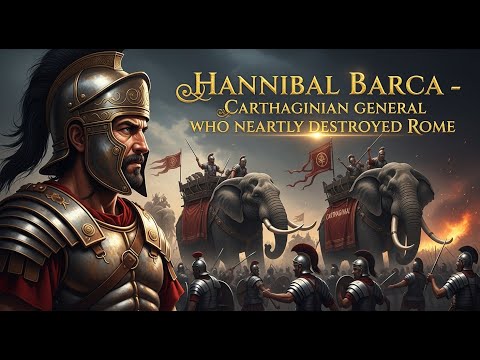
Forget crossing the Rubicon; Hannibal's true masterstroke was crossing the Alps in 218 BC with his army, including war elephants. This wasn't a mere tactical maneuver; it was a psychological shockwave. Imagine the terror of Roman citizens seeing these beasts descend from the mountains, a sight previously confined to distant lands. His subsequent victories at the Battle of Trebia (218 BC), Battle of Lake Trasimene (217 BC), and the annihilation of a larger Roman army at Battle of Cannae (216 BC) cemented his reputation. These weren't just battles; they were demonstrations of strategic genius that left Rome reeling for over a decade.
⚔️ Tactics That Terrified Rome
Hannibal's tactical brilliance is best exemplified by the Battle of Cannae. Facing a numerically superior Roman force, he employed a double envelopment, a maneuver so perfect it's still studied in military academies today. He deliberately weakened his center, drawing the Romans in, while his superior cavalry and flanking infantry crushed them from behind. This wasn't brute force; it was a calculated dance of deception and execution. His ability to adapt to diverse terrains and enemy strengths, often with a multi-ethnic army, showcases a level of strategic flexibility rarely seen. His battlefield innovations continue to influence modern military strategy.
🧠 The Mind of a Master Strategist
Beyond the battlefield, Hannibal possessed a keen understanding of logistics, diplomacy, and psychological warfare. He maintained his army in enemy territory for 15 years, a feat of organization and leadership. He understood the importance of winning over local populations, often treating allies with more respect than his enemies. His ability to inspire loyalty in a diverse army, composed of Libyans, Iberians, Gauls, and others, speaks volumes about his charisma and leadership. This strategic depth is what elevates him from a mere warrior to a true titan of history, a subject of endless fascination for leadership studies.
🏛️ Carthage's Shadow: Legacy and Loss
Despite his unparalleled military success, Hannibal ultimately failed to conquer Rome. His home city, Carthage, lacked the resources and political will to fully support his campaigns. The Roman counter-offensive, led by Scipio Africanus, eventually drew Hannibal back to Africa, where he was defeated at the Battle of Zama in 202 BC. His later life was spent in exile, still plotting against Rome, until his forced suicide in 183/181 BC. His legacy is a complex one: a brilliant tactician who couldn't secure ultimate victory, a symbol of Carthaginian defiance, and a cautionary tale about the limits of individual genius against entrenched power.
📈 Vibepedia Vibe Score: 92/100
Hannibal Barca commands a Vibe Score of 92/100. This score reflects his immense cultural impact, the enduring fascination with his military genius, and the sheer audacity of his campaigns. He represents a peak of ancient military prowess and a persistent thorn in the side of the dominant power of his era. His name is synonymous with strategic brilliance and daring invasion, making him a perennial subject of interest across historical and military circles. The 'vibe' around Hannibal is one of awe, respect, and a touch of fear for his capabilities.
🤔 Controversy Spectrum: High
The Controversy Spectrum for Hannibal Barca is rated as 'High'. Debates rage over the exact number of elephants he possessed, the precise locations of some of his battles, and the extent to which his tactics were truly innovative or merely adaptations of existing methods. Furthermore, his portrayal varies wildly: a heroic liberator in some traditions, a brutal invader in others. The ethical implications of his warfare, particularly the immense loss of life, also remain a point of contention. His ultimate defeat also fuels debate about whether he could have won with greater support from Carthage.
💡 Key Takeaways for the Modern Strategist
For modern strategists, Hannibal offers timeless lessons. His emphasis on understanding enemy psychology, exploiting weaknesses, and maintaining troop morale are crucial. His ability to operate deep within enemy territory for extended periods highlights the importance of logistics and adaptability. The Battle of Cannae remains a case study in achieving decisive victory through superior tactics and maneuver. His career underscores that military success often hinges on more than just brute force; it requires intelligence, foresight, and the ability to inspire.
📚 Where to Dig Deeper
To truly grasp Hannibal's impact, explore the Punic Wars and the rise of Scipio Africanus. For a deeper dive into his military innovations, consult works by historians like Adrian Goldsworthy or Serge Lancel. Understanding the geopolitical context of the 3rd century BC is also vital, particularly the rivalry between Carthage and Rome. Examining ancient sources like Polybius and Livy provides direct, albeit biased, accounts of his campaigns. Consider exploring modern analyses of ancient warfare for contemporary perspectives.
📞 Connect with the Echoes of History
While direct contact with Hannibal is, of course, impossible, his story is preserved in numerous historical sites and texts. Visiting museums with Punic artifacts or exploring historical battlefields in Italy and North Africa can offer a tangible connection. Engaging with historical reenactment groups or academic forums dedicated to ancient military history provides a community to discuss his legacy. For those interested in the broader context, exploring the history of Carthage itself offers further insight into the civilization he represented.
Key Facts
- Year
- -247
- Origin
- Carthage
- Category
- Historical Figures
- Type
- Person
Frequently Asked Questions
Did Hannibal actually cross the Alps with elephants?
Yes, the crossing of the Alps in 218 BC with war elephants is a well-documented event, though the exact number and species of elephants are debated by historians. This audacious feat was a key element of his surprise invasion of Italy and a significant psychological blow to the Romans. The logistical and human cost of this crossing was immense, with many elephants and soldiers perishing due to the harsh conditions.
What was Hannibal's greatest victory?
The Battle of Cannae in 216 BC is widely considered Hannibal's greatest tactical masterpiece. He annihilated a much larger Roman army through a brilliant double envelopment maneuver. This victory resulted in catastrophic losses for Rome, estimated at 50,000 to 70,000 soldiers, and remains a classic example of battlefield strategy studied to this day.
Why did Hannibal ultimately fail to defeat Rome?
Hannibal's failure is attributed to several factors. Carthage provided insufficient reinforcements and support, his army was largely composed of mercenaries and allies who lacked the deep loyalty of Roman legions, and Rome's vast manpower reserves and strategic resilience proved overwhelming. Furthermore, Roman generals like Scipio Africanus eventually adapted and developed strategies to counter him, culminating in his defeat at Zama.
What happened to Hannibal after the Punic Wars?
After his defeat at Zama, Hannibal remained a prominent figure in Carthage, serving in political roles. However, fearing Roman influence, he eventually went into exile, serving various Hellenistic rulers and continuing to plot against Rome. He eventually took his own life in Bithynia around 183/181 BC to avoid capture by the Romans.
How is Hannibal remembered today?
Hannibal is remembered as one of history's greatest military commanders, renowned for his strategic genius, tactical brilliance, and daring leadership. He is a symbol of defiance against overwhelming odds and a subject of enduring fascination in military history, literature, and popular culture. His name is often invoked when discussing audacious military campaigns and strategic innovation.
What was the significance of the elephants?
The war elephants were crucial for their shock value and psychological impact on Roman troops, who had little experience facing such creatures. They could break enemy formations and sow chaos. However, elephants were also unpredictable and difficult to control, and their effectiveness was limited by terrain and Roman tactics designed to counter them, particularly at the Battle of Zama.