
Contents
Overview
The genesis of the Hoover Dam lies in the early 20th-century struggle to harness the unpredictable Colorado River. For decades, the river's destructive floods and erratic flow threatened settlements and agriculture in the arid Southwest. Investigations into the Black Canyon and nearby Boulder Canyon, beginning around 1900, revealed their immense potential for a dam that could provide flood control, irrigation, and crucially, hydroelectric power. The Bureau of Reclamation played a pivotal role in these early studies. Congress finally authorized the ambitious project in 1928, a monumental undertaking that would require unprecedented collaboration and engineering ingenuity. The winning bid to construct this behemoth came from a consortium known as Six Companies, Inc., a group of construction firms that would face immense challenges in bringing the dam to fruition.
⚙️ How It Works
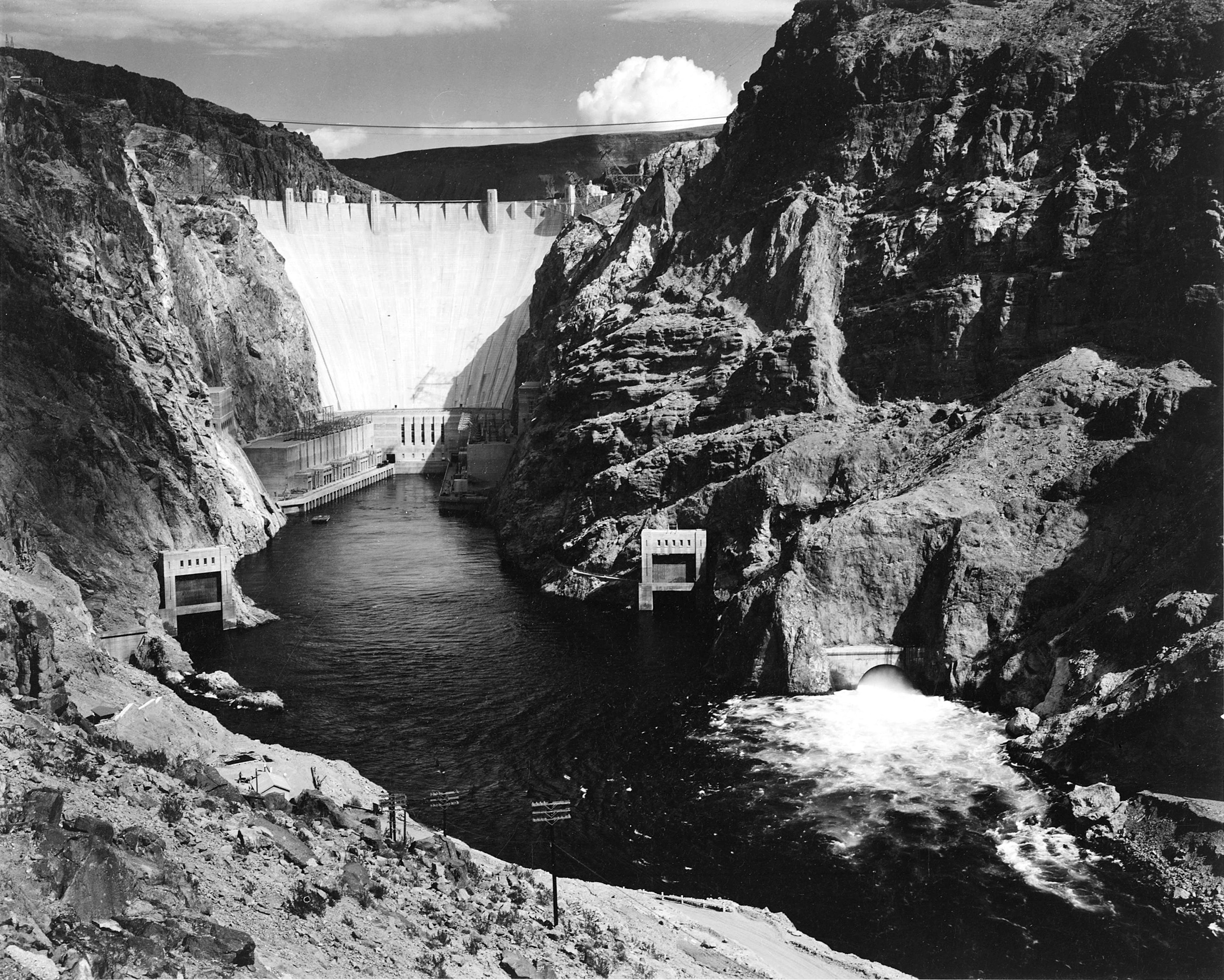
The Hoover Dam is a marvel of concrete arch-gravity engineering. Its curved shape, wider at the top than the bottom, channels the immense water pressure from Lake Mead towards the canyon walls, effectively transferring the load. The dam's concrete was poured in blocks, with internal cooling pipes to manage the heat generated by the curing process, a critical innovation to prevent cracking. Water is released through massive intake towers and conduits, driving enormous Francis turbines within the powerhouse. These turbines, connected to generators, convert the kinetic energy of the water into electrical energy, which is then transmitted through high-voltage lines across the Southwest. The spillways, designed to release excess water, are engineered to handle catastrophic flood events, ensuring the dam's integrity.
📊 Key Facts & Numbers
Standing 726.4 feet (221.4 meters) high, the Hoover Dam contains 3.25 million cubic yards (2.48 million cubic meters) of concrete, enough to pave a highway from San Francisco to New York City. Its construction cost approximately $49 million in 1930s dollars, equivalent to over $700 million today. The dam's power plant has an installed capacity of 2,080 megawatts, capable of supplying electricity to an estimated 1.3 million homes across Nevada, Arizona, and California. Lake Mead, the reservoir created by the dam, has a maximum capacity of 28,943,000 acre-feet (35.7 cubic kilometers) of water, making it the largest reservoir in the United States by volume. The dam's construction involved an estimated 21,000 workers over its five-year build, with an official death toll of 96, though unofficial counts suggest over 100 fatalities.
👥 Key People & Organizations
The vision for the Hoover Dam was championed by figures like Herbert Hoover, whose administration secured the initial authorization. The construction itself was a monumental feat orchestrated by Six Companies, Inc., a consortium formed specifically for this project, led by figures such as Harry Morrison of Morrison-Knudsen. The Bureau of Reclamation, under chief engineer John Savage, provided the design and oversight. President Franklin D. Roosevelt dedicated the completed dam in 1935. The Six Companies, Inc. consortium included companies like Utah Construction Company, Pacific Bridge Company, and W. E. Callahan Construction Company, each contributing specialized expertise.
🌍 Cultural Impact & Influence
The Hoover Dam's impact on the American Southwest is immeasurable, transforming arid desert into fertile farmland and enabling the growth of cities like Las Vegas and Los Angeles. It became an iconic symbol of American ingenuity and resilience during the Great Depression, frequently featured in films and popular culture, often depicted as a symbol of progress and control over nature. Its hydroelectric power generation has been fundamental to the region's economic development, powering industries and homes for decades. The dam's image, particularly the Winged Figures of the Republic statues at its entrance, has become synonymous with monumental American achievement. Its creation also led to the establishment of Lake Mead National Recreation Area, a major recreational hub.
⚡ Current State & Latest Developments
As of 2024, the Hoover Dam continues to be a critical component of the Western United States' power grid and water supply. However, prolonged drought conditions in the region have led to significantly reduced water levels in Lake Mead, impacting power generation and water availability. The Bureau of Reclamation is actively managing these reduced flows, implementing conservation measures and exploring strategies to ensure long-term water security for the millions who depend on the Colorado River. Ongoing maintenance and upgrades to the power plant's Francis turbines and generators are conducted regularly to ensure optimal efficiency and reliability, with the latest rehabilitation projects focusing on extending the operational life of its aging infrastructure.
🤔 Controversies & Debates
The naming of the dam itself sparked controversy, with Congress initially authorizing it as Boulder Dam, only for the Roosevelt administration to officially name it Hoover Dam. This was later reversed by Congress in 1947, restoring the name Hoover Dam, a decision that reflected the complex political landscape of the era. More recently, the dam's role in water allocation has become a point of contention, particularly as climate change exacerbates drought conditions in the Southwest. Debates rage over how to equitably distribute the diminishing water resources of the Colorado River among states like Arizona, Nevada, and California, with the dam and its reservoir, Lake Mead, at the center of these critical discussions. The sheer scale of the project also raises questions about the labor practices and safety conditions for the thousands of workers involved.
🔮 Future Outlook & Predictions
The future of the Hoover Dam is inextricably linked to the health of the Colorado River basin. With climate change projections indicating continued aridification of the Southwest, the dam's role as a water manager and power generator will face increasing strain. Experts predict further reductions in Lake Mead's water levels, potentially necessitating more stringent water rationing and impacting hydroelectric output. The Bureau of Reclamation is exploring innovative solutions, including advanced water conservation techniques and potential infrastructure upgrades to maximize efficiency. The dam's long-term viability will depend on adaptive management strategies and inter-state cooperation to address the escalating water crisis in the region.
💡 Practical Applications
The Hoover Dam's primary practical application is the generation of hydroelectric power, providing clean, renewable energy to millions of homes and businesses across Nevada, Arizona, and California. It also serves as a critical component of the Colorado River Storage Project, controlling floods and providing a reliable water supply for irrigation and municipal use in the arid Southwest. The water released from Lake Mead supports agriculture in regions like the Imperial Valley and supplies drinking water to major metropolitan areas. Furthermore, the dam and its reservoir are significant tourist attractions, drawing millions of visitors annually who come to marvel at its engineering and enjoy recreational activities on the lake.
Key Facts
- Category
- technology
- Type
- topic