
Contents
Overview
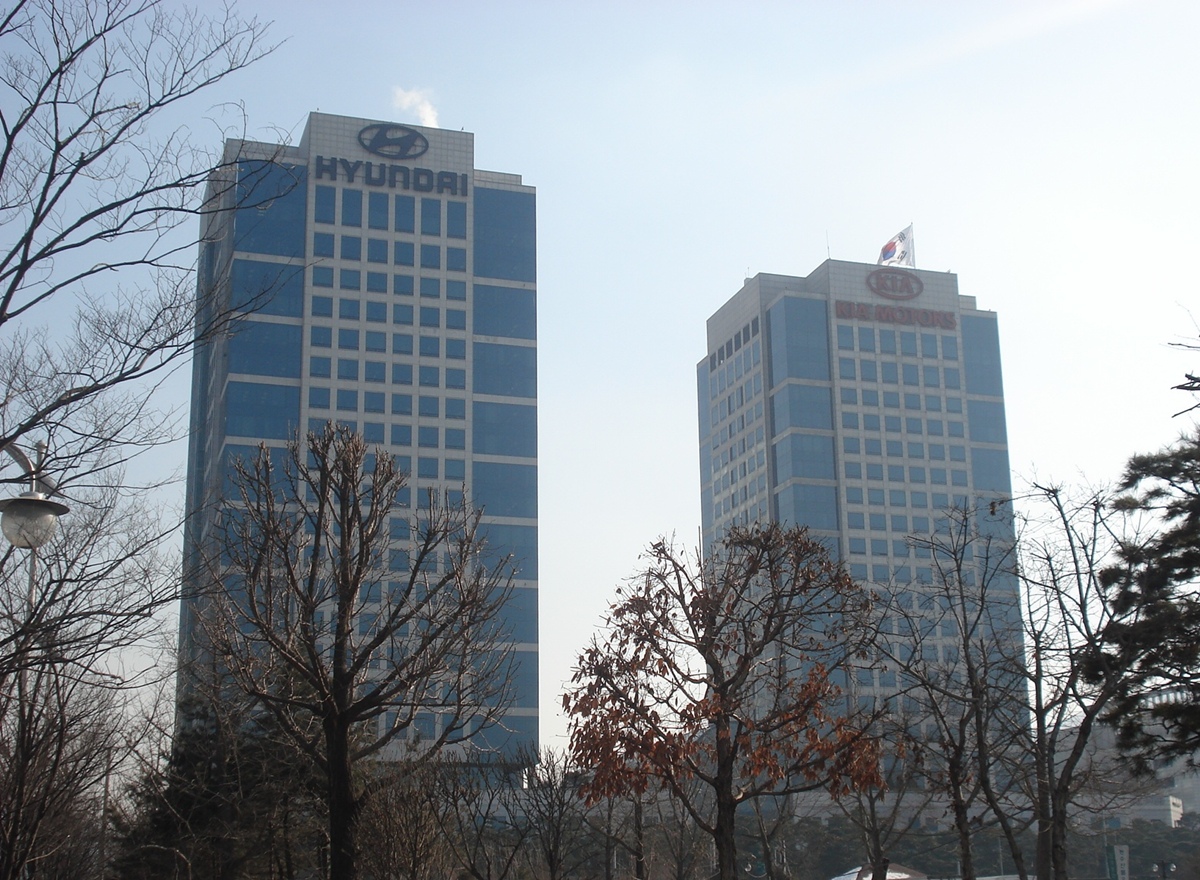
Hyundai Motor Company initially assembled vehicles under license from Ford. The pivotal moment for the group's automotive consolidation occurred when Hyundai Motor Company acquired the struggling Kia Corporation, a move that significantly expanded its manufacturing capacity and market reach. This strategic integration, alongside the spin-off of other Hyundai-affiliated businesses into distinct groups like Hyundai Heavy Industries Group and Hyundai Department Store Group, solidified the modern structure of HMG, positioning it as a formidable global automotive entity by the turn of the millennium.
⚙️ How It Works
Hyundai Motor Company and Kia Corporation share significant technological platforms, research and development resources, and manufacturing synergies. The group's product portfolio spans a wide range, from compact cars and SUVs to luxury vehicles under the Genesis Motor brand, and increasingly, electric vehicles and hydrogen fuel cell-powered cars. HMG's operational structure is characterized by a complex network of cross-shareholdings among its affiliated companies, a hallmark of the chaebol system, which centralizes control within the founding family while maintaining distinct corporate identities for its various subsidiaries like Hyundai Mobis (auto parts) and Hyundai Rotem (rail systems and defense).
📊 Key Facts & Numbers
The Hyundai Motor Group's market capitalization hovers around $50 billion USD, with significant investments directed towards its EV division, which saw a 47% year-over-year increase in sales in 2023, reaching 300,000 units. Genesis Motor, the luxury arm, has rapidly expanded its global footprint, with sales projected to exceed 200,000 units annually.
👥 Key People & Organizations
Chung Mong-koo served as chairman of Hyundai Motor Company for decades, overseeing its transformation into a global automotive leader. His son, Chung Eui-sun, currently leads the group as Chairman, driving its strategic pivot towards electrification and future mobility. Key subsidiaries like Kia Corporation are managed by their own leadership, with Song Ho-sung serving as President and CEO of Kia. Hyundai Mobis is another critical component, acting as the group's primary auto parts supplier and R&D hub, led by President and CEO Cho Sung-hwan. The group's extensive network also includes Hyundai Card, a financial services arm, and Supernal LLC, its advanced air mobility division, underscoring its diversification beyond traditional automotive manufacturing.
🌍 Cultural Impact & Influence
Hyundai Motor Group's cultural impact is most evident in its role in South Korea's economic miracle and its global brand recognition. The group's vehicles, once perceived as budget options, have evolved into stylish, technologically advanced cars that compete directly with established Japanese and European brands. The success of models like the Hyundai Sonata and Kia Sportage has cemented their place in global automotive culture. Furthermore, HMG's commitment to EVs, particularly with models like the Hyundai Ioniq 5 and Kia EV6, has positioned it as a leader in sustainable mobility, influencing consumer perceptions and industry trends. The group's influence extends to sports sponsorships, including its long-standing partnership with FIFA and UEFA, further embedding the Hyundai and Kia brands into global popular culture.
⚡ Current State & Latest Developments
In 2024, Hyundai Motor Group is aggressively pursuing its electrification strategy, aiming to become a top-three global EV provider by 2030. The group recently launched its dedicated E-GMP platform for electric vehicles, underpinning popular models like the Hyundai Ioniq 5, Hyundai Ioniq 6, Kia EV6, and Genesis GV60. Investments in Supernal LLC signal a serious push into the urban air mobility sector, with prototypes of electric vertical take-off and landing (eVTOL) aircraft being developed. HMG is also expanding its hydrogen fuel cell business, aiming to supply fuel cell systems to other automakers and industrial sectors. The group's recent partnership with Google AI to develop next-generation in-car infotainment systems highlights its commitment to integrating cutting-edge digital technologies.
🤔 Controversies & Debates
The Hyundai Motor Group faces scrutiny regarding its corporate governance structure, a common point of contention for South Korean chaebols. Critics often point to the complex cross-shareholding arrangements as potentially hindering transparency and shareholder value. Labor relations have also been a recurring issue, with historical disputes at Hyundai Motor Company and Kia Corporation impacting production. Furthermore, the group's aggressive push into EVs has not been without challenges, including supply chain disruptions for batteries and competition from established players and new entrants like Tesla. The transition away from internal combustion engines also presents a significant long-term strategic challenge, requiring continuous innovation and adaptation.
🔮 Future Outlook & Predictions
The future trajectory of Hyundai Motor Group hinges on its ability to successfully navigate the global transition to EVs and autonomous driving. Projections suggest that by 2030, HMG aims to have 100% of its new vehicles sold in South Korea and major overseas markets be zero-emission vehicles. The group is investing heavily in solid-state battery technology and advanced driver-assistance systems (ADAS), aiming to compete at the forefront of automotive innovation. Expansion into new mobility services, including robotaxis and autonomous trucking, is also on the horizon. The success of its Supernal division in the urban air mobility market could represent a significant diversification and future growth engine, though regulatory hurdles and public acceptance remain key factors.
💡 Practical Applications
Hyundai Motor Group's products are directly applied in personal transportation worldwide, with millions of Hyundai Elantras, Kia Fortes, and Genesis G80s on the road. Beyond passenger vehicles, the group's Hyundai trucks and buses serve commercial and public transportation needs across numerous countries. Hyundai Rotem manufactures advanced railway systems, including high-speed trains and subway cars for cities like Philadelphia and São Paulo. Hyundai Steel pro
Key Facts
- Category
- technology
- Type
- topic