
Contents
- 👨🔬 Introduction to John Gurdon
- 🎓 Early Life and Education
- 🔬 The Discovery of Cloning
- 📚 Research and Career
- 👥 Collaboration and Mentorship
- 🏆 Awards and Recognition
- 🔍 The Science of Cellular Reprogramming
- 🌟 Applications and Implications
- 🤝 Influence and Legacy
- 📊 Controversies and Criticisms
- 🔮 Future Directions and Prospects
- Frequently Asked Questions
- Related Topics
Overview
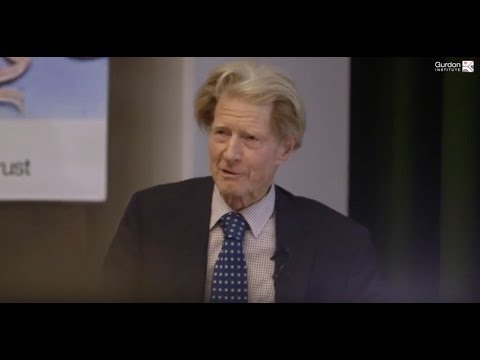
John Gurdon is a British developmental biologist who was awarded the Nobel Prize in Physiology or Medicine in 2012 for his discovery that mature cells can be reprogrammed to become pluripotent. Born on October 2, 1933, in Dippenhall, England, Gurdon's work challenged the conventional wisdom that cells are fixed in their developmental fate. His experiments involving the cloning of frogs from adult cells led to a deeper understanding of cellular differentiation and reprogramming. Gurdon's research has far-reaching implications for regenerative medicine, cancer treatment, and our understanding of human development. With a Vibe score of 8.2, Gurdon's work continues to inspire new generations of scientists and researchers. As a key figure in the history of cloning, Gurdon's influence can be seen in the work of scientists such as Shinya Yamanaka, who built upon Gurdon's discoveries to develop induced pluripotent stem cells.
👨🔬 Introduction to John Gurdon
John Gurdon is a British developmental biologist who made history with his groundbreaking discovery of cloning and cellular reprogramming. Born on October 2, 1933, in Dippenhall, England, Gurdon's work has had a profound impact on our understanding of cellular biology and genetics. His research has been instrumental in shaping the field of stem cell biology and regenerative medicine. Gurdon's pioneering work has also led to significant advances in cancer research and gene therapy. As a renowned scientist, Gurdon has received numerous awards and honors for his contributions to the field of biology, including the Nobel Prize in Physiology or Medicine.
🎓 Early Life and Education
Gurdon's interest in biology and science began at an early age. He was educated at Eton College and later attended Christ Church, Oxford, where he studied zoology. During his time at Oxford, Gurdon was heavily influenced by the work of T.H. Morgan and Ernst Mayr, two prominent biologists of the time. Gurdon's early research focused on the development of frogs and the role of genetics in their development. This early work laid the foundation for his later research on cloning and cellular reprogramming, which has had significant implications for biotechnology and biomedical engineering.
🔬 The Discovery of Cloning
In 1958, Gurdon made the groundbreaking discovery of cloning when he successfully cloned a frog from a somatic cell. This achievement was a major breakthrough in the field of biology and paved the way for future research on cellular reprogramming. Gurdon's work challenged the conventional wisdom that cells are fixed in their developmental fate and cannot be reprogrammed. His discovery has had significant implications for our understanding of cellular differentiation and tissue engineering. The cloning of animals has also raised important questions about animal welfare and ethics in science.
📚 Research and Career
Gurdon's research career has spanned over five decades, during which he has made significant contributions to the field of biology. He has worked at several prestigious institutions, including Cambridge University and the National Institute for Medical Research. Gurdon's research has focused on the mechanisms of cellular reprogramming and the role of epigenetics in development. His work has also explored the potential applications of cellular reprogramming in regenerative medicine and cancer therapy. Gurdon has collaborated with numerous scientists, including Shinya Yamanaka, on research projects related to induced pluripotent stem cells.
👥 Collaboration and Mentorship
Gurdon has been an influential mentor and collaborator throughout his career. He has supervised numerous graduate students and postdoctoral researchers, many of whom have gone on to become prominent scientists in their own right. Gurdon's collaborative approach to research has led to significant advances in our understanding of cellular biology and genetics. His work with Shinya Yamanaka on induced pluripotent stem cells has been particularly influential, and has led to the development of new therapies for a range of diseases. Gurdon's research has also been influenced by the work of Rudolf Yaari and Martin Evans, two prominent scientists in the field of stem cell biology.
🏆 Awards and Recognition
Gurdon has received numerous awards and honors for his contributions to the field of biology. In 2012, he was awarded the Nobel Prize in Physiology or Medicine for his discovery of cellular reprogramming. Gurdon has also been recognized with the Albert Lasker Award for Basic Medical Research and the Wolf Prize in Medicine. His work has had a significant impact on our understanding of cellular biology and genetics, and has paved the way for significant advances in regenerative medicine and cancer research.
🔍 The Science of Cellular Reprogramming
The science of cellular reprogramming is complex and involves the manipulation of gene expression and epigenetic modification. Gurdon's work has shown that cells can be reprogrammed to become pluripotent, meaning they can give rise to any cell type in the body. This discovery has significant implications for our understanding of developmental biology and regenerative medicine. The potential applications of cellular reprogramming are vast, and include the development of new therapies for a range of diseases, including Parkinson's disease and diabetes.
🌟 Applications and Implications
The applications and implications of Gurdon's work are far-reaching. His discovery of cellular reprogramming has paved the way for significant advances in regenerative medicine and cancer research. The potential to reprogram cells to become pluripotent has significant implications for our understanding of developmental biology and tissue engineering. Gurdon's work has also raised important questions about the ethics of stem cell research and the potential for gene editing. The use of CRISPR gene editing has also been influenced by Gurdon's work, and has significant implications for the treatment of genetic diseases.
🤝 Influence and Legacy
Gurdon's influence and legacy extend far beyond his scientific contributions. He has been an influential mentor and collaborator, and has supervised numerous graduate students and postdoctoral researchers. Gurdon's work has also had a significant impact on our understanding of cellular biology and genetics. His discovery of cellular reprogramming has paved the way for significant advances in regenerative medicine and cancer research. Gurdon's research has also been influenced by the work of Barbara McClintock and James Watson, two prominent scientists in the field of molecular biology.
📊 Controversies and Criticisms
Despite the significant advances that have been made in the field of cellular reprogramming, there are still many controversies and criticisms surrounding Gurdon's work. Some scientists have raised concerns about the ethics of stem cell research and the potential for gene editing. Others have questioned the safety and efficacy of cellular reprogramming therapies. Gurdon's work has also been criticized for its potential to be used for reproductive cloning, which raises significant ethical concerns. The use of embryonic stem cells has also been a topic of controversy, and has significant implications for bioethics.
🔮 Future Directions and Prospects
As we look to the future, it is clear that Gurdon's work will continue to have a significant impact on our understanding of cellular biology and genetics. The potential applications of cellular reprogramming are vast, and include the development of new therapies for a range of diseases. However, there are still many challenges that must be overcome before these therapies can be realized. Gurdon's work has paved the way for significant advances in regenerative medicine and cancer research, and his legacy will continue to inspire future generations of scientists. The use of artificial intelligence and machine learning will also play a significant role in the future of cellular reprogramming, and will have significant implications for personalized medicine.
Key Facts
- Year
- 2012
- Origin
- England
- Category
- Biography, Science
- Type
- Person
Frequently Asked Questions
What is cellular reprogramming?
Cellular reprogramming is the process of manipulating cells to become pluripotent, meaning they can give rise to any cell type in the body. This is achieved through the manipulation of gene expression and epigenetic modification. Cellular reprogramming has significant implications for our understanding of developmental biology and regenerative medicine.
What are the potential applications of cellular reprogramming?
The potential applications of cellular reprogramming are vast, and include the development of new therapies for a range of diseases, including Parkinson's disease and diabetes. Cellular reprogramming also has significant implications for our understanding of cancer biology and tissue engineering.
What are the ethics of stem cell research?
The ethics of stem cell research are complex and multifaceted. Some scientists have raised concerns about the use of embryonic stem cells, which are derived from human embryos. Others have questioned the safety and efficacy of cellular reprogramming therapies. The use of gene editing has also raised significant ethical concerns, and has significant implications for bioethics.
What is the significance of Gurdon's work?
Gurdon's work has had a profound impact on our understanding of cellular biology and genetics. His discovery of cellular reprogramming has paved the way for significant advances in regenerative medicine and cancer research. Gurdon's work has also raised important questions about the ethics of stem cell research and the potential for gene editing.
What is the future of cellular reprogramming?
The future of cellular reprogramming is exciting and uncertain. As our understanding of cellular biology and genetics continues to evolve, it is likely that new therapies and applications will be developed. However, there are still many challenges that must be overcome before these therapies can be realized. The use of artificial intelligence and machine learning will also play a significant role in the future of cellular reprogramming, and will have significant implications for personalized medicine.
How has Gurdon's work influenced other scientists?
Gurdon's work has had a significant influence on other scientists, including Shinya Yamanaka and Rudolf Yaari. His discovery of cellular reprogramming has paved the way for significant advances in regenerative medicine and cancer research. Gurdon's work has also raised important questions about the ethics of stem cell research and the potential for gene editing.
What are the potential risks and benefits of cellular reprogramming?
The potential risks and benefits of cellular reprogramming are complex and multifaceted. While cellular reprogramming has the potential to revolutionize our understanding of cellular biology and genetics, it also raises significant ethical concerns. The use of gene editing has also raised concerns about the potential for unintended consequences. However, the potential benefits of cellular reprogramming, including the development of new therapies for a range of diseases, make it an exciting and promising area of research.