
Contents
- 🎵 Origins & History
- ⚙️ How It Worked: The Battlefield and International Intervention
- 📊 Key Facts & Numbers
- 👥 Key People & Organizations
- 🌍 Cultural Impact & Influence
- ⚡ Current State & Latest Developments
- 🤔 Controversies & Debates
- 🔮 Future Outlook & Predictions
- 💡 Practical Applications
- 📚 Related Topics & Deeper Reading
- Frequently Asked Questions
- References
- Related Topics
Overview
The roots of the 2011 Libyan Civil War lie in the deep-seated discontent with Muammar Gaddafi's autocratic regime, which had been in power since the 1969 coup. While Gaddafi presented a facade of stability and pan-Arab leadership, his rule was marked by political repression, economic mismanagement, and international isolation, punctuated by periods of state-sponsored terrorism. The Arab Spring uprisings in Tunisia and Egypt in early 2011 provided a potent catalyst, inspiring Libyans to voice their grievances. Protests, initially small and localized, such as those in Zawiya in August 2009 and later in Benghazi on February 15, 2011, were met with brutal force by Gaddafi's security apparatus. This crackdown, rather than quelling dissent, ignited a full-blown rebellion, with the eastern city of Benghazi quickly becoming the de facto capital for the opposition, coalescing under the National Transitional Council (NTC).
⚙️ How It Worked: The Battlefield and International Intervention
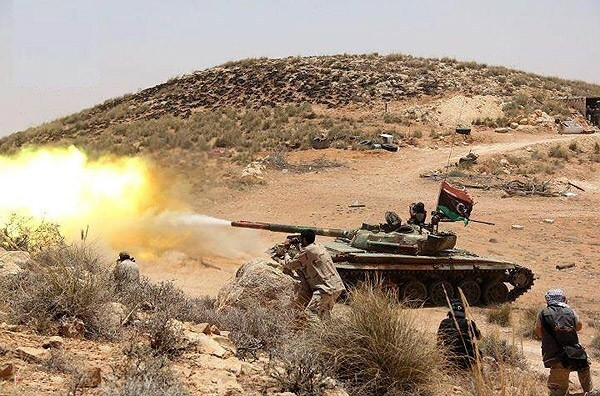
The conflict quickly evolved from street protests into a conventional civil war, pitting Gaddafi's loyalist forces, including the Jamahiriya Guard and various militias, against a heterogeneous rebel army often referred to as the Free Libyan Army. The rebels, initially outmatched in heavy weaponry, benefited significantly from the intervention of a NATO-led coalition. UN Security Council Resolution 1973, passed on March 17, 2011, authorized member states to take 'all necessary measures' to protect civilians, leading to a no-fly zone and targeted airstrikes against Gaddafi's military assets. This aerial bombardment, primarily conducted by the Royal Air Force, French Air Force, and United States Air Force, severely degraded Gaddafi's ability to wage war and provided crucial support for the advancing rebel ground forces. The rebels, in turn, received arms and training from various international actors, including Qatar and the United Arab Emirates, further tipping the scales.
📊 Key Facts & Numbers
The war's human cost was staggering. Estimates suggest that between 10,000 and 30,000 people were killed during the conflict, with tens of thousands more injured. The economic disruption was immense, with oil production, Libya's primary revenue source, plummeting by over 90% at its lowest point. Gaddafi's regime reportedly controlled approximately $70 billion in foreign assets before the conflict, much of which was subsequently frozen by international bodies. The conflict involved over 7,000 airstrikes by NATO, with coalition aircraft flying more than 26,000 sorties. The National Transitional Council, the primary opposition body, claimed to have mobilized around 50,000 fighters at its peak, though actual combatant numbers fluctuated significantly.
👥 Key People & Organizations
Colonel Muammar Gaddafi, the de facto leader of Libya for over four decades, was the central figure whose regime the war sought to dismantle. His son, Saif al-Islam Gaddafi, played a significant role in the regime's public relations and attempted to negotiate with opposition elements. On the rebel side, Mustafa Abdul Jalil emerged as the chairman of the National Transitional Council (NTC), serving as the political face of the opposition. Key military commanders within the rebel forces included Khalifa Haftar, who would later become a dominant figure in Libyan politics, and Abdel Fattah Younes, the former interior minister who defected from Gaddafi's government. International actors were also pivotal, with figures like Hillary Clinton, then U.S. Secretary of State, advocating strongly for intervention, and David Cameron, then UK Prime Minister, a key proponent of military action.
🌍 Cultural Impact & Influence
The fall of Gaddafi sent shockwaves across the Arab world and beyond, offering a potent symbol of popular uprising against entrenched dictatorships. The images of jubilant crowds celebrating in Tripoli's Green Square and the eventual capture and death of Gaddafi were broadcast globally, fueling both hope and apprehension. The war's outcome significantly altered the geopolitical landscape of North Africa, creating a power vacuum that contributed to regional instability. It also spurred debates about humanitarian intervention, the Responsibility to Protect (R2P) doctrine, and the efficacy of military action in resolving internal conflicts. The war's legacy continues to be felt in the cultural memory of Libyans, marked by narratives of liberation, betrayal, and the enduring struggle for a stable nation.
⚡ Current State & Latest Developments
In the years following the 2011 war, Libya has remained deeply fractured, failing to establish a unified, stable government. The country has been effectively divided between rival administrations, most notably the UN-recognized Government of National Accord (GNA) based in Tripoli and a rival government in the east supported by the Libyan National Army (LNA) led by Khalifa Haftar. This ongoing political stalemate has been punctuated by intermittent armed conflict, including the 2019-2020 Tripoli offensive by the LNA. The proliferation of militias, foreign interference from actors like Turkey and Russia, and the continued presence of extremist groups like ISIS and Al-Qaeda affiliates continue to destabilize the nation. Efforts towards national reconciliation and elections, such as those planned for December 2021 but postponed, have repeatedly stalled.
🤔 Controversies & Debates
The intervention in Libya remains one of the most debated aspects of the war. Critics, including former UK Foreign Secretary Jack Straw, argue that the intervention was premature and lacked a clear post-conflict strategy, leading to state collapse. The decision to intervene militarily, authorized under Chapter VII of the UN Charter, has been questioned for its scope and the subsequent lack of sustained international commitment to rebuilding. Furthermore, the extent of Gaddafi's alleged human rights abuses, including reports of widespread torture and summary executions by his forces, is a point of contention, with some arguing that these justified external intervention while others point to the civilian casualties resulting from the NATO bombing campaign. The role of various regional and international powers in arming and supporting different factions during and after the war is also a significant point of controversy.
🔮 Future Outlook & Predictions
The future of Libya remains highly uncertain, contingent on the resolution of its deep political divisions and the withdrawal of foreign influence. Prospects for a unified government and stable democratic transition appear dim in the short to medium term, with ongoing power struggles between various factions and militias. The potential for renewed large-scale conflict remains a significant risk, particularly if a political settlement cannot be reached. International efforts are focused on supporting a UN-led peace process, including the establishment of a unified interim government and the organization of national elections. However, the deep mistrust between Libyan political actors and the continued presence of foreign mercenaries pose substantial obstacles to lasting peace and stability. The long-term economic recovery of Libya, heavily reliant on oil, also hinges on resolving the internal security situation.
💡 Practical Applications
While the 2011 Libyan Civil War was a specific historical event, its dynamics offer insights into broader concepts relevant to international relations and conflict resolution. The war serves as a case study for the application of the Responsibility to Protect (R2P) doctrine, highlighting both its potential to avert mass atrocities and the challenges of its implementation without a clear exit strategy. The conflict also exemplifies the complexities of post-conflict state-building, demonstrating how the removal of an authoritarian leader can lead to prolonged instability if robust political and security frameworks are not established. Furthermore, the war underscores the impact of foreign intervention, both overt military action and covert support for proxies, on the trajectory of civil conflicts and regional power balances. The lessons learned from Libya continue to inform discussions on when and how the international community should intervene in internal crises.
Key Facts
- Year
- 2011
- Origin
- Libya
- Category
- history
- Type
- event
Frequently Asked Questions
What were the main causes of the 2011 Libyan Civil War?
The primary cause was widespread discontent with Muammar Gaddafi's authoritarian rule, which had lasted for 42 years. This discontent was fueled by political repression, economic mismanagement, and human rights abuses. The success of the Arab Spring uprisings in neighboring Tunisia and Egypt in early 2011 provided a critical catalyst, inspiring Libyans to protest and rebel against the regime. The government's violent crackdown on these initial protests, particularly in Benghazi, transformed peaceful demonstrations into a full-blown civil war.
What role did international intervention play in the war?
International intervention, primarily through a NATO-led coalition, was decisive in the outcome of the war. Authorized by UN Security Council Resolution 1973, the intervention included a no-fly zone and targeted airstrikes against Gaddafi's military assets. These airstrikes significantly weakened Gaddafi's forces, degraded their command and control, and provided crucial support for the advancing rebel ground troops. Without this external military support, it is widely believed that the rebel forces would have struggled to overcome the better-equipped Gaddafi loyalists.
What happened to Libya after the fall of Gaddafi?
The fall of Gaddafi did not bring stability to Libya. Instead, it led to a prolonged period of political fragmentation and conflict. The country has been divided between rival governments and militias, with foreign powers often backing different factions. This has resulted in ongoing instability, humanitarian crises, and the rise of extremist groups. Efforts to establish a unified government and hold national elections have repeatedly faced significant obstacles, leaving Libya in a state of protracted crisis.
Who were the key factions involved in the conflict?
The main factions were the forces loyal to Colonel Muammar Gaddafi, including the Libyan military and various pro-regime militias, and the rebel forces, who coalesced under the National Transitional Council (NTC). The NTC represented a broad coalition of opposition groups, including defectors from the military and civilian activists. Various tribal and regional militias also played significant roles on both sides. Internationally, NATO played a crucial military role in supporting the rebels.
What were the major controversies surrounding the war?
The most significant controversy revolves around the international military intervention. Critics question its legality, necessity, and the lack of a coherent post-conflict plan, which many argue contributed to Libya's subsequent state collapse. There are also debates about the extent of Gaddafi's alleged atrocities versus the civilian casualties caused by NATO airstrikes. The role of various foreign powers in arming and supporting different factions both during and after the war is another major point of contention, contributing to the ongoing instability.
How did the war impact Libya's economy and infrastructure?
The war had a devastating impact on Libya's economy and infrastructure. Oil production, the backbone of the Libyan economy, plummeted by over 90% during the conflict, leading to severe economic disruption. Infrastructure, including cities and key industrial sites, suffered extensive damage from fighting and airstrikes. The subsequent political instability and fragmentation have hindered economic recovery, with ongoing security challenges and the proliferation of armed groups continuing to deter investment and disrupt essential services.
What is the current situation in Libya following the 2011 war?
As of 2024, Libya remains deeply divided and politically unstable. The country is effectively split between rival governments and armed factions, with significant foreign interference from countries like Turkey, Russia, and the UAE. While a UN-brokered peace process aims to unify the country and hold elections, progress has been slow and fraught with challenges. Security remains precarious, and the humanitarian situation continues to be a concern, with millions of Libyans requiring assistance. The long-term prospects for stability and democratic governance remain uncertain.