
Contents
Overview
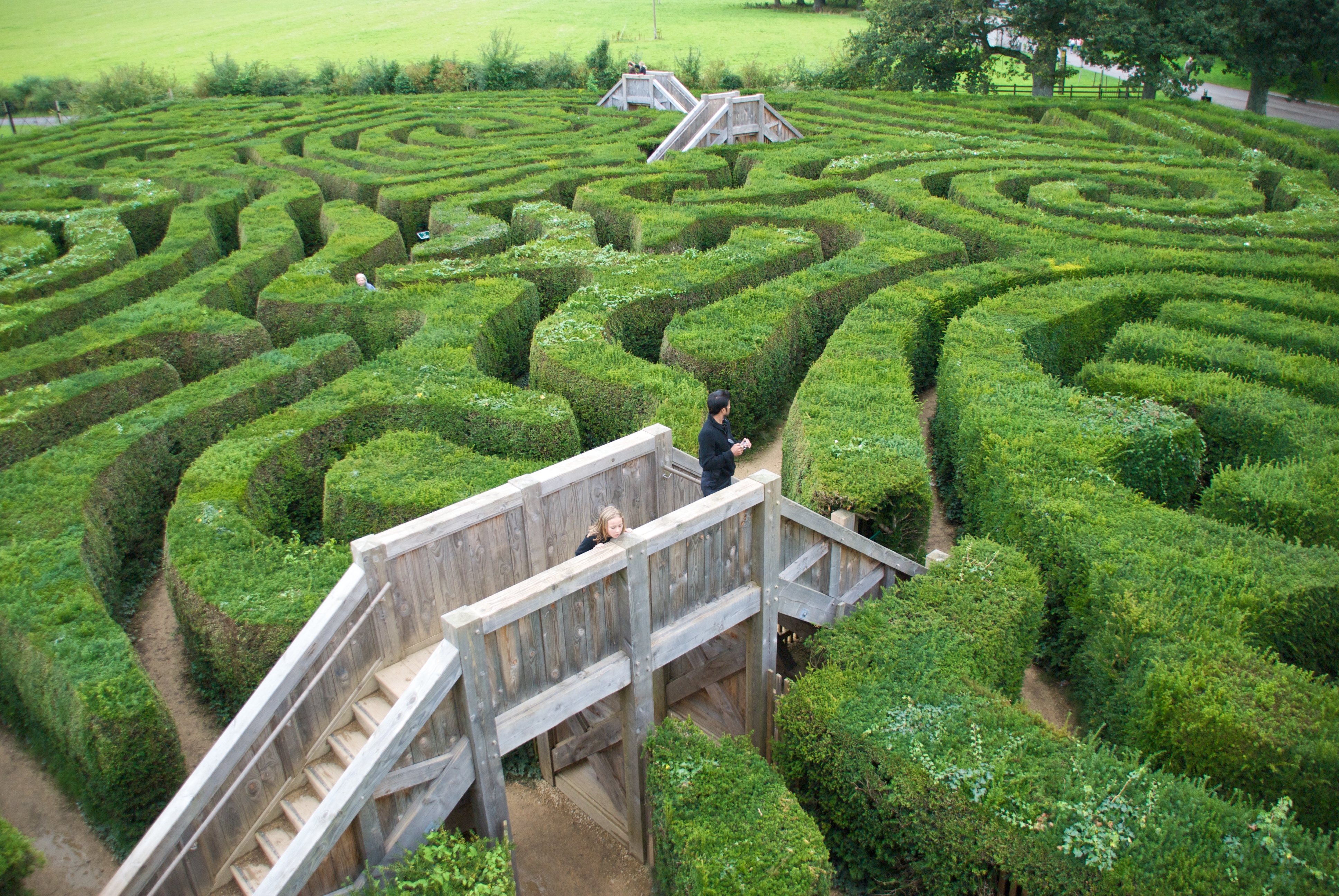
Mazes are intricate networks of paths, distinguished by their branching complexity or their singular, winding route. Historically, they have served as architectural features, symbolic representations, and recreational puzzles. From the ancient myth of the Minotaur housed within the Cretan labyrinth to modern hedge mazes and digital challenges, the concept of navigating a complex path to a predetermined goal remains a potent human fascination. The distinction between a 'maze' (with multiple branching paths and dead ends) and a 'labyrinth' (typically a single, unambiguous path) is often blurred, though both evoke a sense of journey and discovery. Their design can range from simple garden layouts to sophisticated algorithmic challenges, reflecting a timeless human engagement with spatial reasoning and problem-solving.
🎵 Origins & History
The concept of the maze, or labyrinth, traces its roots back to antiquity. The Renaissance saw a resurgence of interest in branching mazes, particularly in formal gardens, with notable examples appearing at Villa d'Este in Italy and later at Hampton Court Palace in England, which still exists today.
⚙️ How It Works
Mazes operate on fundamental principles of pathfinding and spatial logic. Branching mazes, the most common type, present a solver with choices at junctions, leading to either the correct path or dead ends. The 'left-hand rule' is a common method for solving these. Non-branching, or unicursal, mazes, conversely, feature a single, winding path from entrance to goal, with no choices to make; their complexity lies in the length and intricacy of the route, not in decision-making. The construction of mazes can be achieved through various means, from planting hedges and building walls to generating them algorithmically using techniques like random walks, Prim's algorithm, or Kruskal's algorithm in computer science. The 'perfect maze' is one with no loops and exactly one path between any two points, typically achieved through maze-generating algorithms that ensure connectivity without redundancy.
📊 Key Facts & Numbers
Globally, an estimated 500 to 1,000 permanent hedge mazes exist, with hundreds more temporary or seasonal mazes constructed annually. The largest hedge maze in the world, according to Guinness World Records, is the Fun Mazes at the City of Dreams in Manila, Philippines, covering approximately 1.5 acres (0.6 hectares). The oldest continuously maintained maze in the UK is at Hampstead Heath, dating back to the 17th century, though its original form is debated. In the digital realm, video games featuring mazes have sold millions of copies; for instance, the Pac-Man franchise, first released in 1980, has seen over 420 million units sold across various platforms. Maze tasks are used in cognitive psychology to measure spatial learning and memory in both humans and animals, with completion times varying drastically based on complexity and individual skill.
👥 Key People & Organizations
While no single individual is credited with 'inventing' the maze, figures like Daedalus are central to its mythological origins. In more recent history, garden designers like Capability Brown and Humphry Repton incorporated maze-like elements into landscape designs, though often favoring more naturalistic styles. The College of William & Mary in Williamsburg, Virginia, boasts one of the oldest surviving hedge mazes in the United States, designed in the early 18th century. In the realm of computer science, researchers like Edward F. Moore developed algorithms for maze generation and solving in the mid-20th century, laying groundwork for digital maze applications. The video game industry, particularly through companies like Namco (now Bandai Namco Entertainment), has been instrumental in popularizing digital mazes with iconic titles.
🌍 Cultural Impact & Influence
Mazes have permeated global culture as potent symbols and engaging diversions. Mythologically, they represent trials, entrapment, and the journey through the unknown, as seen in the Greek tale of the Minotaur. Architecturally, they offer unique spatial experiences, transforming landscapes into interactive puzzles. In literature and film, mazes often serve as metaphors for complex problems, psychological states, or existential journeys, appearing in works from Jorge Luis Borges's short stories to films like The Shining (1980) and Labyrinth (1986). The aesthetic appeal of mazes, whether in formal gardens, intricate patterns, or digital environments, taps into a fundamental human appreciation for order within complexity and the satisfaction of overcoming a challenge. Their presence in art, design, and entertainment underscores their enduring cultural resonance.
⚡ Current State & Latest Developments
The design and construction of mazes continue to evolve, particularly with advancements in digital technologies and landscape architecture. Contemporary maze creators are pushing boundaries with increasingly complex and interactive designs. For instance, the development of augmented reality (AR) experiences is beginning to overlay digital maze elements onto physical spaces, creating hybrid challenges. In the gaming sector, procedural generation techniques are enabling the creation of virtually infinite mazes within video games, offering novel gameplay experiences. Furthermore, there's a growing trend in creating 'escape room' style mazes that incorporate puzzles and narrative elements beyond simple pathfinding, as seen in popular attractions like The Escape Game and Lockdown Escape Rooms. The recent emergence of the video game Mazes of Fate (2006) highlights the continued interest in maze-based digital entertainment, showcasing how the classic concept is adapted for modern platforms.
🤔 Controversies & Debates
The primary controversy surrounding mazes often centers on their definition: the distinction between a true maze and a labyrinth. While scholars and puzzle enthusiasts debate the precise characteristics—branching paths versus unicursal routes, intentional confusion versus guided journey—the popular usage frequently conflates the two. Another point of contention can arise in the context of historical preservation, where debates occur over the authenticity of restored mazes or the interpretation of original designs. In digital contexts, discussions sometimes emerge regarding the fairness or solvability of procedurally generated mazes, particularly in competitive gaming environments. Ethical considerations can also surface regarding the safety and accessibility of large physical mazes, especially for individuals with mobility issues or cognitive impairments, as highlighted in accessibility reviews of attractions like Great Wolf Lodge's indoor mazes.
🔮 Future Outlook & Predictions
The future of mazes appears to be one of increasing integration with technology and a diversification of experiences. We can anticipate more sophisticated AR and VR applications that create immersive, dynamic maze environments, blurring the lines between physical and digital exploration. The use of AI in generating mazes could lead to unprecedented levels of complexity and personalized challenges. Furthermore, expect to see mazes incorporated into urban planning and educational tools, serving not just as entertainment but as interactive learning platforms for spatial reasoning and problem-solving. The continued exploration of historical labyrinths, potentially aided by advanced scanning technologies like LiDAR, may also reveal new insights into ancient design principles and cultural practices. The potential for mazes to serve as therapeutic tools, aiding in mindfulness and cognitive rehabilitation, also represents a promising avenue for future development.
💡 Practical Applications
Mazes find practical application across a surprising range of fields. In education, they are invaluable tools for teaching spatial reasoning, problem-solving, and algorithmic thinking to students of all ages, from elementary school exercises to university-level computer science courses. Architects and urban planners sometimes use ma
Key Facts
- Category
- aesthetics
- Type
- topic