
Contents
Overview
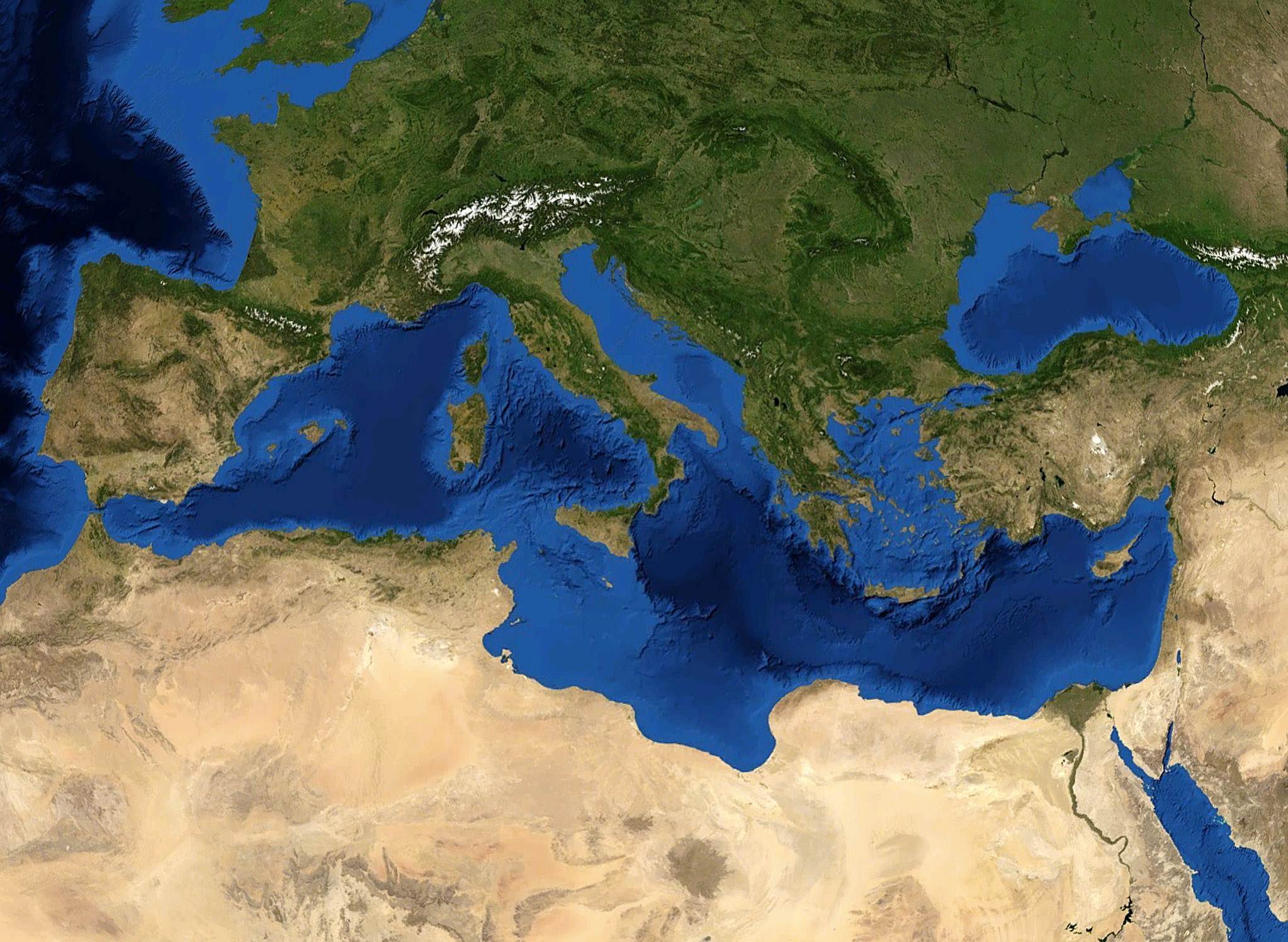
The Mediterranean Sea's geography is a direct consequence of its tumultuous geological past, primarily shaped by the collision of the African and Eurasian tectonic plates. This ongoing process has created a complex bathymetry, characterized by deep basins and extensive continental shelves. The sea's very existence is punctuated by dramatic events, most notably the Messinian Salinity Crisis (MSC) between 5.96 and 5.33 million years ago. During this period, the Strait of Gibraltar closed, effectively isolating the Mediterranean from the Atlantic Ocean and leading to its near-complete desiccation. Vast salt deposits, some several kilometers thick, were laid down on the basin floor, a geological testament to this cataclysmic event. The subsequent Zanclean flood, when the strait reopened, refilled the basin in a matter of months or years, a hydrological event of staggering proportions. This dynamic history has left an indelible mark on the seabed and the surrounding landmasses, influencing the distribution of resources and the patterns of human settlement for millennia, from the ancient Phoenicians to the modern EU.
⚙️ How It Works
The Mediterranean Sea functions as a semi-enclosed sea, with limited exchange of water with the Atlantic Ocean primarily through the narrow Strait of Gibraltar. This restricted circulation pattern contributes to its distinct hydrological characteristics: higher salinity (averaging around 38-39 PSU, parts per thousand) and warmer surface temperatures compared to the Atlantic. Water enters the Mediterranean from the Atlantic as a surface current, flows eastward, becomes saltier and warmer, and then exits as a deeper, saltier undercurrent. This thermohaline circulation is crucial for the marine ecosystem, influencing nutrient distribution and oxygen levels. The sea is also fed by numerous rivers, such as the Nile, Po, and Ebro, which bring freshwater and sediment, creating fertile deltas along its coasts. Its complex bathymetry, with depths reaching over 5,000 meters in the Ionian Sea, also plays a significant role in oceanographic processes and the distribution of marine life, impacting fisheries managed by organizations like the GFCM.
📊 Key Facts & Numbers
The Mediterranean Sea covers an immense area of approximately 2.5 million square kilometers, representing about 0.7% of the global ocean surface. It contains fifteen marginal seas, including the significant Adriatic Sea, Aegean Sea, and Tyrrhenian Sea. The average depth is around 1,500 meters, but it plunges to over 5,267 meters at its deepest point in the Calypso Deep, located in the Ionian Sea. Over 46,000 kilometers of coastline frame this basin, shared by 21 countries. Approximately 150 million people live along its shores, with major coastal cities like Marseille, Naples, and Alexandria hosting millions. Annually, over 200 million tourists visit its shores, contributing significantly to the regional economy, with countries like Spain and Italy seeing the highest numbers. The sea handles an estimated 30% of the world's maritime trade, with over 220,000 commercial vessels transiting its waters each year, according to the IMO.
👥 Key People & Organizations
While no single individual can be credited with 'discovering' the Mediterranean's geography, countless geographers, geologists, and explorers have contributed to our understanding. Early cartographers like Claudius Ptolemy, in his 2nd-century work 'Geography', provided foundational maps and descriptions of the Mediterranean world. Modern geological understanding owes much to scientists like Alfred Wegener, whose theory of continental drift laid the groundwork for plate tectonics, explaining the sea's formation. Oceanographic research has been advanced by institutions such as the National Oceanography Centre in the UK and the Woods Hole Oceanographic Institution in the US, which have conducted numerous expeditions. The UNEP's Mediterranean Action Plan (MAP), established in 1975, coordinates environmental efforts among the 21 Mediterranean countries, highlighting the collaborative nature of managing this shared resource. The EEA also plays a crucial role in monitoring and reporting on the Mediterranean's environmental status.
🌍 Cultural Impact & Influence
The Mediterranean Sea's geography has profoundly shaped human history and culture, acting as a crucible for civilizations. Its central location facilitated the rise of maritime empires like the Roman Empire, the Byzantine Empire, and the Ottoman Empire, enabling trade, conquest, and the exchange of ideas across vast distances. The sea facilitated the spread of religions, including Christianity, Islam, and Judaism, connecting diverse populations. Its diverse coastlines and islands provided fertile ground for agriculture and the development of distinct cultural identities, from the Minoan culture on Crete to the Greek city-states of the Aegean. The unique climate, characterized by hot, dry summers and mild, wet winters, has influenced agricultural practices and lifestyles, giving rise to the famed Mediterranean diet. The sea's strategic importance has also made it a theater for numerous conflicts, from the Punic Wars between Rome and Carthage to modern geopolitical tensions.
⚡ Current State & Latest Developments
In 2024-2025, the Mediterranean Sea faces escalating environmental pressures and geopolitical complexities. Climate change is intensifying, leading to rising sea levels, increased water temperatures, and more frequent extreme weather events, impacting coastal communities and marine ecosystems. The ongoing refugee crisis, often involving perilous sea crossings from North Africa and the Middle East, continues to highlight the sea's role as a barrier and a transit route, drawing the attention of organizations like the IOM. Maritime security remains a concern, with ongoing efforts to combat piracy and illegal fishing, particularly in the eastern Mediterranean. The development of offshore energy resources, including wind and gas fields, is also a significant trend, creating new economic opportunities but also potential environmental risks, as seen in the ongoing discussions around the EMGF.
🤔 Controversies & Debates
The geography of the Mediterranean Sea is a subject of ongoing debate, particularly concerning environmental management and resource allocation. A major controversy revolves around the impact of shipping and pollution on marine biodiversity, with scientific bodies like the IUCN frequently reporting on declining fish stocks and the proliferation of invasive species. The management of shared resources, such as fisheries and water, often sparks tension between the 21 bordering nations, as evidenced by disputes over fishing rights in the Adriatic and Aegean Seas. The geopolitical implications of energy exploration in the eastern Mediterranean, involving countries like Turkey, Greece, and Cyprus, have led to significant diplomatic friction. Furthermore, the ethical and logistical challenges of managing the humanitarian crisis of refugees crossing the sea remain a deeply divisive issue, with differing national policies and international responsibilities.
🔮 Future Outlook & Predictions
The future of Mediterranean geography is inextricably linked to climate change and geopolitical stability. Projections suggest continued sea-level rise, potentially inundating low-lying coastal areas and delta regions like the Nile Delta by the end of the century. Warming sea temperatures are expected to drive further shifts in marine species distribution, potentially impacting fisheries and increasing the prevalence of heat-sensitive organisms. The ongoing transition to renewable energy sources, particularly offshore wind farms, could reshape coastal landscapes and maritime activities. Geopolitically, the region's strategic importance is likely to persist, with potential for both increased cooperation on environmental issues an
Key Facts
- Category
- nature
- Type
- topic