
Contents
Overview
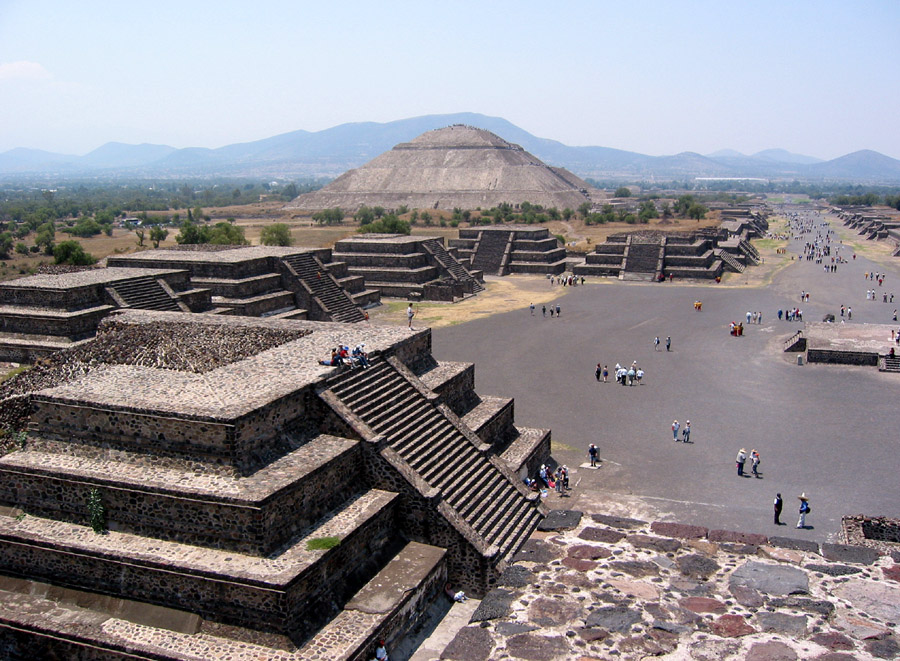
The story of Mesoamerican civilizations involves the rise of sedentary agricultural communities, laying the groundwork for more complex societies. The Olmec, often called the "mother culture," developed colossal head sculptures and influencing later cultures with their art, religion, and calendrical systems. Following the Olmec decline, the Classic period witnessed the zenith of the Maya in the Yucatán Peninsula and surrounding regions, characterized by city-states like Tikal and Palenque, hieroglyphic writing, and sophisticated astronomical observations. Simultaneously, the massive city of Teotihuacan dominated central Mexico, its influence extending far beyond its urban core. The Postclassic period saw the rise of the Toltec and, most famously, the Aztec (Mexica), who established their capital at Tenochtitlan on Lake Texcoco, building a vast empire through military might and tribute.
⚙️ How It Worked: Society & Governance
Mesoamerican societies were typically hierarchical, with a ruling elite of priests and nobles, followed by merchants, artisans, farmers, and slaves. Governance often revolved around city-states, each with its own ruler, though larger empires like the Aztec exerted control over vast territories through tribute systems and military garrisons. Religion permeated all aspects of life, with complex pantheons, elaborate rituals, and a profound connection to astronomical cycles and agricultural fertility. The Mesoamerican ballgame, played with a solid rubber ball, was a significant ritual and social event, often with religious and political implications, and sometimes involving human sacrifice. The concept of zero and a vigesimal (base-20) number system were crucial for their advanced calendrical calculations, which tracked both solar and ritual cycles with remarkable accuracy.
📊 Key Facts & Numbers
Tenochtitlan was one of the largest cities in the world at the time. The Great Pyramid of Cholula, built by indigenous peoples, is the largest pyramid by volume in the world.
👥 Key People & Cultures
Key cultures include the Olmec, the Maya, Teotihuacan, the Toltec, and the Aztec. Prominent Maya rulers included Pakal the Great of Palenque and Jasaw Chan K'awiil I of Tikal. The Aztec were led by emperors such as Moctezuma II and Cuauhtémoc during the Spanish conquest. The city of Tenochtitlan was the capital of the Aztec Empire, founded by the Mexica people. The Zapotec civilization, centered at Monte Albán, also played a significant role in the region's history.
🌍 Cultural Impact & Influence
Mesoamerican civilizations left an indelible mark on global culture, particularly through their agricultural innovations, with crops like corn, beans, and squash becoming staples worldwide after the Columbian Exchange. Their artistic traditions, evident in intricate pottery, jade carvings, and monumental sculptures, continue to inspire contemporary artists. The Maya script, once deciphered, unlocked a rich literary and historical tradition. Concepts of zero and advanced calendrical systems influenced later scientific and mathematical thought, even if indirectly. The enduring presence of indigenous languages and traditions in modern Mexico and Central America is a testament to their lasting cultural impact, with many still speaking Nahuatl and various Mayan languages.
⚡ Current State & Latest Developments
Current archaeological research continues to uncover new insights into Mesoamerican societies, with ongoing excavations at sites like Chichen Itza and Teotihuacan yielding fresh discoveries about their daily lives, political structures, and religious practices. Advances in remote sensing technologies, such as LiDAR, have revealed previously unknown structures and settlements, particularly within the dense jungles of the Maya region, suggesting larger populations and more interconnected polities than previously understood. Efforts are also underway to preserve existing archaeological sites and to promote the cultural heritage of contemporary indigenous communities, ensuring their stories and traditions are recognized and valued in the 21st century. The study of paleoclimatology is also shedding light on environmental factors that may have contributed to the rise and fall of these civilizations.
🤔 Controversies & Debates
One of the most persistent debates centers on the collapse of Classic Maya civilization, with theories ranging from environmental degradation and warfare to disease and internal strife, though most scholars now favor a combination of factors. The extent of human sacrifice within these cultures, particularly among the Aztec, is another area of contention, with some arguing that Spanish accounts were exaggerated for political purposes, while others maintain the practice was widespread and integral to their religious system. The precise nature of the relationship between Teotihuacan and later cultures like the Maya and Aztec is also debated, with ongoing research exploring whether Teotihuacan exerted direct political control or primarily cultural influence. The classification and interpretation of Mesoamerican art and iconography remain subjects of scholarly discussion, particularly regarding the meaning of specific symbols and deities.
🔮 Future Outlook & Predictions
The future of Mesoamerican studies likely involves further integration of interdisciplinary approaches, combining archaeology, anthropology, linguistics, and genetics to paint a more comprehensive picture of these ancient societies. Continued technological advancements will undoubtedly lead to more discoveries, potentially rewriting our understanding of their social structures, economic networks, and environmental interactions. There is also a growing emphasis on community-based archaeology, working collaboratively with descendant indigenous communities to ensure their perspectives and knowledge are central to the interpretation of their heritage. The long-term impact of climate change on both existing archaeological sites and the cultural practices of contemporary indigenous peoples in the region will also be a critical area of focus.
💡 Practical Applications
Mesoamerican civilizations' contributions have practical applications in various fields. Their agricultural innovations, particularly the cultivation of corn, remain fundamental to global food security. The sophisticated calendrical systems and astronomical observations offer insights into ancient scientific methodologies and the human drive to understand cosmic cycles. Their architectural achievements, from pyramids to complex urban planning, provide case studies for modern engineering and urban design. Furthermore, the study of their social and political organization offers lessons in statecraft, resource management, and the dynamics of empire-building. The resilience and adaptability of these cultures in the face of environmental and social challenges offer valuable perspectives for contemporary societies grappling with simi
Key Facts
- Category
- history
- Type
- topic