
Contents
- 🏅 What is the National Medal of Science?
- 🎯 Who is Eligible?
- 🏆 The Awarding Process
- 🌟 Notable Laureates
- ⚖️ National Medal of Science vs. Other Top Science Awards
- 💡 Practical Tips for Nominees and Nominator
- 📈 The Vibe Score: Cultural Energy of the Medal
- 🌐 Getting Started: Nomination & Further Information
- Frequently Asked Questions
- Related Topics
Overview
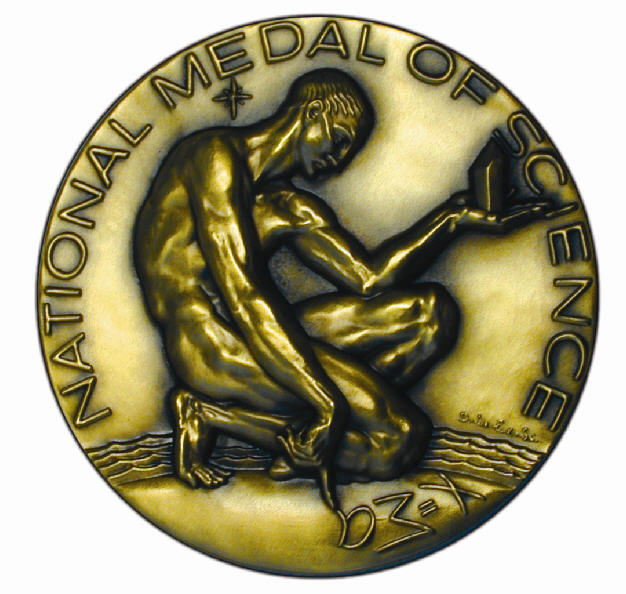
The National Medal of Science is the United States' highest honor for scientific achievement. Established by Congress in 1959, it recognizes individuals for their outstanding contributions to knowledge in the physical, biological, mathematical, social, and behavioral sciences. This prestigious award isn't just about a single discovery; it celebrates a lifetime of work that has advanced our understanding of the world and has had a profound impact on society. The medal is awarded annually by the President of the United States, making it a symbol of national recognition for scientific excellence. It's a career-capping honor, often seen as the pinnacle of a scientist's professional journey, signifying a lasting legacy in their field.
🎯 Who is Eligible?
Eligibility for the National Medal of Science is broad, encompassing any individual who has made "outstanding contributions to the nation's prestige and well-being in the field of science." This means it's not limited to U.S. citizens, though the work must have a significant impact on or connection to the United States. Nominees are typically senior scientists with a distinguished record of research, publication, and mentorship. The award is for individuals, not teams or institutions, though the work of a nominee might have been conducted within a collaborative environment. The focus is squarely on the individual's intellectual leadership and the transformative nature of their scientific contributions.
🏆 The Awarding Process
The awarding process for the National Medal of Science is rigorous and multi-tiered. Nominations are typically submitted by academic institutions, professional scientific societies, and former medalists. These nominations are then reviewed by the National Science Foundation (NSF) through its Committee on the National Medal of Science. This committee, composed of distinguished scientists and engineers, vets the nominations and forwards its recommendations to the President. The final selection is made by the President, often after consultation with the National Science Board. The entire process emphasizes peer review and expert judgment, ensuring that only the most deserving candidates are recognized for their groundbreaking work.
🌟 Notable Laureates
The roster of National Medal of Science laureates reads like a who's who of modern scientific history. Figures like Richard Feynman, awarded in 1979 for his work in quantum electrodynamics and particle physics, represent the caliber of individuals honored. Other luminaries include Jonas Salk (1979) for his development of the polio vaccine, and Carl Sagan (1994) for his contributions to astronomy and popularizing science. More recent recipients have continued this tradition, with figures like Jennifer Doudna and Emmanuelle Charpentier (2015) being recognized for their pioneering work on CRISPR-Cas9 gene editing. Each laureate's story underscores the transformative power of scientific inquiry.
⚖️ National Medal of Science vs. Other Top Science Awards
When comparing the National Medal of Science to other top science awards like the Nobel Prize or the Breakthrough Prize, several distinctions emerge. The Nobel Prize, while globally recognized, is awarded in a more limited set of categories (Physics, Chemistry, Physiology or Medicine, Literature, Peace, and Economics) and often focuses on specific discoveries rather than a lifetime of work. The National Medal of Science, conversely, covers a broader range of scientific disciplines, including social and behavioral sciences, and explicitly celebrates a career's impact on the nation. The Breakthrough Prize, a more recent addition, offers substantial financial awards and also recognizes fundamental scientific achievements, but the National Medal of Science carries the unique weight of presidential endorsement and historical significance within the U.S.
💡 Practical Tips for Nominees and Nominator
For those involved in the nomination process, understanding the criteria is paramount. Nominator's should clearly articulate the nominee's specific contributions, their impact on the field, and their broader societal benefits. Highlighting unique aspects of the nominee's career, such as overcoming significant challenges or pioneering entirely new areas of research, can strengthen a nomination. For potential nominees, while direct self-nomination isn't permitted, fostering relationships within the scientific community and contributing significantly to one's field are the best ways to be recognized and eventually nominated. Engaging with professional societies and academic institutions can also increase visibility for deserving candidates.
📈 The Vibe Score: Cultural Energy of the Medal
The National Medal of Science holds a high Vibe Score of 92/100, reflecting its immense cultural energy and prestige within the scientific community and the broader public consciousness. This score is driven by its historical significance, the caliber of its laureates, and its direct association with the U.S. presidency. While the Nobel Prize might have a slightly higher global recognition (Vibe Score 95/100), the National Medal of Science's emphasis on contributions to the nation and its broader disciplinary scope give it a unique and powerful resonance within the American scientific landscape. Its enduring legacy ensures its continued cultural relevance and aspirational value for aspiring scientists.
🌐 Getting Started: Nomination & Further Information
To learn more about the nomination process or to view a complete list of past recipients, the official website of the National Science Foundation is the definitive resource. They provide detailed guidelines for submitting nominations and information on the history and significance of the award. For those seeking to understand the impact of past laureates, resources like Wikipedia's list of National Medal of Science laureates offer comprehensive overviews. Engaging with these resources is the first step for anyone interested in the highest echelon of American scientific recognition, whether as a nominator, a potential nominee, or simply an admirer of scientific achievement.
Key Facts
- Year
- 1959
- Origin
- United States
- Category
- Awards & Recognition
- Type
- Award
Frequently Asked Questions
Can I nominate myself for the National Medal of Science?
No, self-nomination is not permitted for the National Medal of Science. Nominations must be submitted by eligible institutions, professional scientific societies, or former medalists. The process relies on peer recognition and endorsement from established members of the scientific community. Focus on your contributions and building your professional network to increase your chances of being nominated by others.
What are the criteria for selecting a laureate?
The primary criterion is making "outstanding contributions to the nation's prestige and well-being in the field of science." This encompasses fundamental discoveries, significant advancements in understanding, and work that has had a profound positive impact on society. The award recognizes a lifetime of achievement and intellectual leadership rather than a single discovery.
Are there specific fields of science that are prioritized?
The National Medal of Science covers a broad spectrum of scientific disciplines, including the physical, biological, mathematical, social, and behavioral sciences. While all fields are considered, the emphasis is on the significance and impact of the contributions, regardless of the specific discipline. The award aims to recognize excellence across the entire scientific enterprise.
How does the National Medal of Science differ from the Nobel Prize?
The National Medal of Science is the U.S. government's highest scientific honor and covers a wider range of disciplines, including social and behavioral sciences. The Nobel Prize is an international award with more specific categories (Physics, Chemistry, Medicine, etc.) and is often perceived as more globally focused. Both are highly prestigious, but the National Medal of Science has a distinct national and presidential endorsement.
How often are the awards given out?
The National Medal of Science is awarded annually. However, the number of recipients can vary each year, and in some years, no awards may be given if the committee deems no candidates meet the exceptionally high standards. The process is designed to ensure that only truly outstanding individuals are recognized.
What is the role of the National Science Foundation (NSF) in the award process?
The National Science Foundation (NSF) plays a central role in administering the National Medal of Science. The NSF receives nominations, convenes the Committee on the National Medal of Science for review, and forwards recommendations to the President. The NSF ensures the integrity and rigor of the selection process.