
Contents
Overview
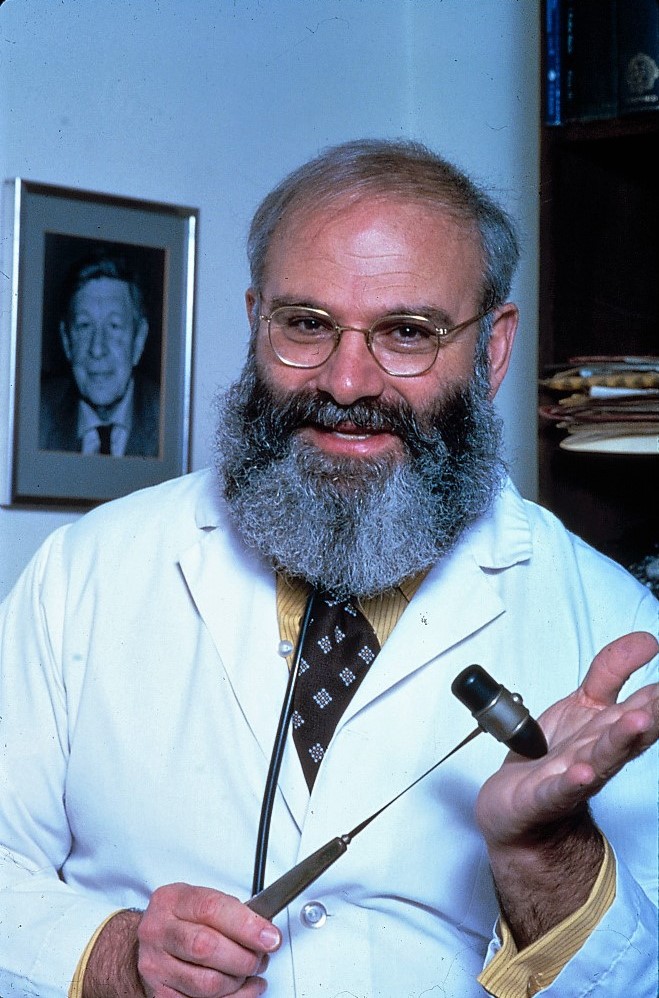
Oliver Sacks was a British-born neurologist, naturalist, and writer whose work illuminated the profound and often bizarre connections between the brain, the mind, and human experience. Eschewing dry clinical reports, Sacks transformed complex neurological conditions into compelling narratives, drawing readers into the lives of his patients and, often, himself. His seminal work, Awakenings, chronicled his treatment of encephalitis lethargica survivors, later adapted into a celebrated film. Through bestsellers like The Man Who Mistook His Wife for a Hat and Musicophilia, Sacks explored phenomena such as synesthesia, Tourette syndrome, and the neurological basis of music appreciation, earning him global acclaim and a Vibe score of 88 for his unique blend of scientific rigor and humanistic storytelling. He left behind a legacy that redefined neurological literature and fostered a deeper public understanding of the brain's intricate workings.
🎵 Origins & History
Born Oliver Wolf Sacks in London, his early life was steeped in medicine and science, with both parents being physicians. He attended St. Paul's School and The Queen's College, Oxford, where he studied medicine. His formative years were also marked by a profound interest in chemistry and a fascination with the natural world, influences that would later permeate his writing. After completing his medical training in the UK, he undertook internships at Mount Zion Hospital in San Francisco and later his neurology residency at UCLA. This transatlantic journey set the stage for a career that bridged British scientific tradition with American clinical innovation, ultimately establishing him as a global voice in neurological literature.
⚙️ How It Works
Sacks' approach to neurology was fundamentally narrative. He didn't just diagnose conditions; he inhabited them with his patients, meticulously documenting their subjective experiences. His method involved deep listening, empathetic observation, and a relentless curiosity about the 'neurological peculiarities' that defined his subjects. He saw the brain not as a mere biological machine, but as the seat of identity, memory, and consciousness, where even the most unusual symptoms could reveal universal truths about human existence. This qualitative, case-study-driven methodology, exemplified in works like A Leg to Stand On, allowed him to translate complex neurological phenomena into accessible and moving stories for a broad audience, bridging the gap between the scientific and the human.
📊 Key Facts & Numbers
His seminal work, Awakenings, first published, detailed his work with patients suffering from the residual effects of encephalitis lethargica; the book was later adapted into a critically acclaimed film starring Robin Williams. His collection, The Man Who Mistook His Wife for a Hat, was a bestseller. Sacks received numerous prestigious awards, including the Guggenheim Fellowship. He was also affiliated with Columbia University.
👥 Key People & Organizations
Key figures in Sacks' professional life included his mentors at UCLA and his long-time editor, Robert Giroux, at Farrar, Straus and Giroux, who championed his unique literary style. His patients, such as J.M. in The Man Who Mistook His Wife for a Hat and Christina in Musicophilia, were central collaborators in his work, their stories forming the bedrock of his narratives. Sacks also engaged with prominent scientists and thinkers, often referencing the work of Sigmund Freud and Charles Darwin in his explorations of the mind. His later career saw him affiliated with Albert Einstein College of Medicine and Columbia University, where he continued to teach and inspire students.
🌍 Cultural Impact & Influence
Oliver Sacks profoundly reshaped public perception of neurology and the human brain. His empathetic storytelling demystified complex neurological conditions, transforming patients' 'abnormalities' into windows of understanding about human consciousness and identity. His work inspired countless individuals, including medical professionals, artists, and writers, fostering a more humanistic approach to medicine. The film adaptation of Awakenings brought his work to a massive global audience, while his books became staples in literature and science courses worldwide. Sacks' legacy is evident in the continued popularity of his writings and the ongoing interest in the intersection of neuroscience and narrative, a field he largely pioneered and popularized through platforms like The New York Times, where he was a regular contributor.
⚡ Current State & Latest Developments
Even after his passing, Oliver Sacks' influence endures. His literary estate continues to manage his works, with new essays and collections occasionally being published. His writings remain essential reading for students of neurology, psychology, and literature, and his unique approach continues to inspire contemporary medical practitioners and science communicators. The Oliver Sacks Foundation was established to preserve his legacy and promote understanding of neurological conditions. His work is frequently cited in discussions about consciousness, perception, and the human condition, ensuring his voice remains relevant in the 21st century.
🤔 Controversies & Debates
Sacks' work, while widely celebrated, occasionally drew criticism for its potential for sensationalism or for blurring the lines between clinical observation and literary license. Some critics questioned whether his narrative approach, while engaging, might oversimplify complex neurological mechanisms or pathologize experiences that could be viewed through different lenses, such as cultural or psychological frameworks. However, Sacks consistently defended his method, emphasizing his deep respect for his patients and his aim to convey the profound humanity within their unique neurological states. The debate centers on the ethical considerations of representing neurological conditions in popular literature and the potential for misinterpretation by a lay audience.
🔮 Future Outlook & Predictions
The future of neurological literature, heavily influenced by Sacks' pioneering work, points towards an increased emphasis on patient narrative and the subjective experience of illness. We can anticipate more interdisciplinary approaches, blending neuroscience with psychology, philosophy, and the arts to create richer understandings of the brain. Sacks' legacy encourages a move away from purely mechanistic views of the brain towards a more holistic appreciation of consciousness and identity. Future works may explore emerging fields like neuroplasticity and the impact of artificial intelligence on our understanding of the mind, always seeking to connect scientific discovery with the lived human experience, much as Sacks himself did.
💡 Practical Applications
Sacks' writings have numerous practical applications, primarily in education and empathy-building within the medical field. His case studies serve as invaluable teaching tools for medical students and practicing physicians, illustrating the diverse manifestations of neurological disorders and emphasizing the importance of patient-centered care. Beyond medicine, his books offer profound insights for anyone interested in the human mind, consciousness, and the nature of reality. They can help individuals understand their own experiences or those of loved ones facing neurological challenges, fostering greater compassion and reducing stigma. His work is also referenced in fields ranging from philosophy of mind to film studies, demonstrating its broad applicability.
Key Facts
- Category
- culture
- Type
- topic