
Contents
Overview
The open design movement champions the collaborative creation and dissemination of blueprints for physical products, machines, and systems. Mirroring the ethos of free and open-source software, it extends these principles to tangible goods, fostering a culture of co-creation where users, rather than solely corporations, drive innovation. Facilitated by the internet, this movement often operates on principles of shared knowledge and community contribution, sometimes without direct monetary compensation. It democratizes the design process, enabling anyone with the means to access, modify, and manufacture products, from simple tools to complex machinery, fundamentally challenging traditional industrial models.
🎵 Origins & History
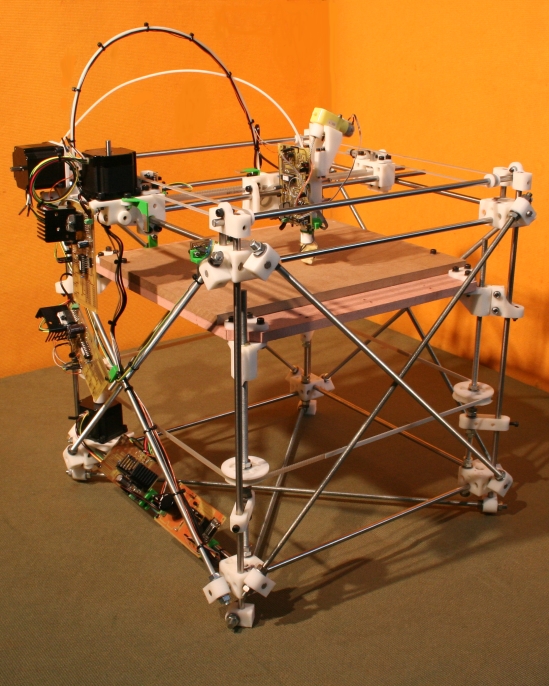
The seeds of open design were sown long before the digital age, with historical precedents like the shared knowledge of medieval guilds and the open-source ethos of early computing. The RepRap project aimed to create self-replicating 3D printers, demonstrating the potential for distributed manufacturing. The concept gained significant traction with the rise of platforms like Thingiverse, providing a central repository for user-generated designs. This period saw a growing recognition that the principles of open-source software could be applied to physical objects, leading to the formalization of open-source hardware initiatives.
⚙️ How It Works
At its core, open design operates on the principle of making design information freely available. This typically involves publishing detailed specifications, blueprints, CAD files, and assembly instructions under permissive licenses, such as Creative Commons licenses or specific open-source hardware licenses like Tapr. These licenses grant users the freedom to study, modify, distribute, and manufacture the designs. The process is often facilitated by online communities and platforms where designers can share their work, receive feedback, and collaborate on improvements. Digital fabrication technologies, including 3D printing, CNC machining, and laser cutting, are crucial enablers, allowing individuals and small groups to produce physical objects directly from these shared designs.
📊 Key Facts & Numbers
The global market for 3D printing hardware and materials, a key enabler of open design, is experiencing massive growth. Platforms like Thingiverse host millions of downloadable 3D models, with millions of active users contributing and accessing designs. The RepRap project has seen numerous printers built worldwide based on its open designs. Studies suggest that the economic impact of the Maker Movement, which heavily overlaps with open design, could reach hundreds of billions of dollars annually through increased local production and innovation.
👥 Key People & Organizations
Key figures in the open design movement include Bre Pettis, co-founder of MakerBot Industries, who popularized desktop 3D printing and open-source hardware. Adam Savage, host of MythBusters and Tested.com, has been a vocal proponent and practitioner of open design principles in his personal projects. Organizations like Wikifactory and Tapr provide crucial platforms and infrastructure for sharing and managing open hardware projects. The Free Software Foundation and the Open Source Initiative have provided philosophical and licensing frameworks that have influenced the broader open design ethos. Early academic contributions from researchers at institutions like MIT also laid foundational groundwork.
🌍 Cultural Impact & Influence
Open design has profoundly influenced how we think about manufacturing, intellectual property, and consumerism. It has fueled the Maker Movement, empowering individuals to become creators rather than just consumers. This democratization of design has led to innovations in diverse fields, from affordable medical devices in developing nations to custom prosthetics and open-source agricultural tools. The philosophy has also seeped into mainstream product development, with some companies adopting more transparent design processes. Furthermore, it has sparked critical discussions about sustainability and repairability, as open designs often facilitate easier maintenance and upgrades, countering planned obsolescence.
⚡ Current State & Latest Developments
As of 2024, the open design movement continues to evolve, driven by advancements in additive manufacturing and collaborative online platforms. Wikifactory has seen a surge in projects focused on sustainable solutions and humanitarian aid. The integration of AI into design tools is beginning to offer new possibilities for generative design and automated optimization within open frameworks. Furthermore, there's a growing trend towards specialized open hardware communities focusing on areas like robotics, renewable energy, and scientific instrumentation, moving beyond hobbyist applications. The increasing accessibility of powerful simulation software also allows for more rigorous testing and refinement of open designs before physical prototyping.
🤔 Controversies & Debates
The open design movement is not without its controversies. A primary debate centers on intellectual property and commercialization: while many designs are shared freely, how can creators or contributors be fairly compensated? This tension is evident in the licensing debates, with some arguing that Creative Commons ShareAlike licenses are too restrictive for commercial ventures, while others believe proprietary models undermine the core ethos. Another significant debate revolves around quality control and safety. Unlike proprietary products, open designs may lack rigorous testing or standardized safety certifications, raising concerns about product reliability and potential misuse, particularly for complex or critical applications like medical devices or structural components. The environmental impact of widespread distributed manufacturing also remains a point of contention.
🔮 Future Outlook & Predictions
The future of open design appears increasingly integrated with advanced manufacturing and global collaboration. We can anticipate more sophisticated AI-driven design tools that empower users with limited technical expertise to create complex products. The rise of decentralized autonomous organizations (DAOs) may offer new models for funding and managing open design projects, potentially solving some of the compensation challenges. Expect to see a greater focus on circular economy principles, with open designs inherently facilitating repair, refurbishment, and recycling. Furthermore, as augmented reality and virtual reality technologies mature, they could revolutionize how open designs are visualized, shared, and assembled, making the process even more intuitive and accessible globally.
💡 Practical Applications
Open design principles are finding practical applications across a vast spectrum of industries. In healthcare, initiatives like open-source medical devices provide low-cost, accessible solutions for clinics in underserved regions. The agricultural sector benefits from open-source farm equipment designs, enabling smallholder farmers to build and repair their own tools. In education, open design projects serve as powerful STEM learning tools, allowing students to engage directly with engineering and manufacturing concepts. Researchers are utilizing open hardware for scientific instrumentation, enabling reproducible experiments and reducing research costs. Even in consumer electronics, the concept is influencing modular designs that allow for easier upgrades and repairs, such as Fairphone's approach to modular smartphones.
Key Facts
- Category
- movements
- Type
- topic