
Contents
Overview
Jean-Antoine Nollet demonstrated osmosis by filling a pig's bladder with alcohol and immersing it in water; water moved into the bladder, causing it to swell, while alcohol did not exit. This early experiment highlighted the selective nature of the membrane. Jacobus Henricus van 't Hoff established the relationship between osmosis, chemical potential, and solute concentration, drawing parallels to gas laws. This foundational work laid the groundwork for understanding osmosis not just as a curiosity but as a quantifiable physical process with broad scientific implications.
⚙️ How It Works
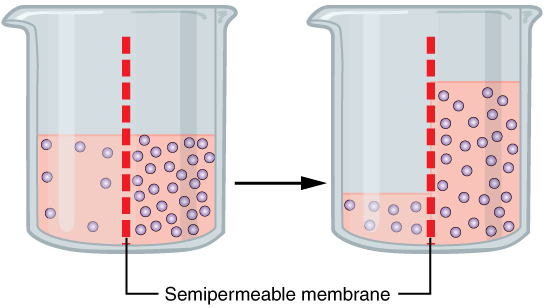
Osmosis operates on the principle of diffusion. Imagine a semipermeable membrane separating two solutions: one with a high concentration of solute (e.g., salt or sugar) and low water concentration, and another with a low solute concentration and high water concentration. Water molecules, in constant random motion, will move from the region where they are more abundant (the dilute solution) to the region where they are less abundant (the concentrated solution). This net flow continues until the concentration of solute is equal on both sides.
📊 Key Facts & Numbers
Current research in osmosis is rapidly advancing, particularly in the field of membrane science and nanotechnology. Graphene oxide membranes are being developed for desalination and water purification. Innovations in forward osmosis are exploring its potential for wastewater treatment and energy generation. Companies like Water Revolution Holding GmbH are commercializing advanced osmotic technologies. The development of aquaporin biomimetic membranes, inspired by the water channels in cell membranes, promises even more efficient and selective water transport, with pilot projects demonstrating their viability for industrial-scale applications.
👥 Key People & Organizations
While osmosis is a well-established physical principle, debates persist regarding the precise mechanisms at the molecular level, particularly concerning the role of quantum effects and the exact nature of water-membrane interactions. Some fringe theories propose that osmosis might not be solely driven by thermodynamic potential but involve other, less understood forces, though these lack widespread scientific acceptance. A more practical debate revolves around the energy efficiency and cost-effectiveness of various desalination technologies, including reverse osmosis versus thermal methods, with ongoing discussions about the environmental impact of brine disposal from large-scale RO plants. The ethical implications of water scarcity and access, exacerbated by climate change and population growth, also frame discussions around the deployment of osmotic technologies.
🌍 Cultural Impact & Influence
The future of osmosis technology is poised for significant growth, driven by the global demand for clean water and sustainable energy solutions. Advancements in nanomaterials and artificial intelligence-driven membrane design are expected to yield membranes with unprecedented selectivity and efficiency, potentially reducing the energy cost of desalination by up to 50% within the next decade. Pressure-retarded osmosis (PRO) systems are being developed as a viable source of renewable energy, with pilot plants demonstrating power generation capabilities. Furthermore, osmosis is likely to play a larger role in bioremediation and targeted drug delivery systems, leveraging its ability to control molecular transport across biological barriers. The integration of osmotic processes with other technologies, such as electrodialysis and nanofiltration, will create hybrid systems offering enhanced performance.
⚡ Current State & Latest Developments
Osmosis finds widespread application across numerous fields. In desalination, reverse osmosis (RO) plants convert seawater and brackish water into potable water, a critical technology for arid regions and islands. In the food industry, osmosis is used for food preservation (e.g., making jams, curing meats) and dehydration of fruits and vegetables, improving shelf life and concentrating flavors. Biologically, it's essential for maintaining cell turgor in plants, enabling them to stand upright.
Key Facts
- Category
- science
- Type
- topic