
Contents
- 🔍 Introduction to Particle Colliders
- 🌐 History of Particle Colliders
- 🔌 How Particle Colliders Work
- 🎯 Applications of Particle Colliders
- 🔬 The Science Behind Particle Colliders
- 🌈 Particle Acceleration and Detection
- 📊 Challenges and Limitations of Particle Colliders
- 🔮 Future of Particle Colliders
- 🌟 Notable Particle Colliders
- 👥 Key Players in Particle Collider Research
- 📚 Controversies and Debates in Particle Collider Research
- 🔜 Conclusion and Future Prospects
- Frequently Asked Questions
- Related Topics
Overview
Particle colliders, such as the Large Hadron Collider (LHC), have revolutionized our understanding of the universe, from the discovery of the Higgs boson to the exploration of dark matter. The LHC, operated by CERN, has a circumference of approximately 27 kilometers and can accelerate protons to nearly the speed of light, resulting in collisions that produce an enormous amount of data, with over 600 million collisions per second. The next-generation collider, the Future Circular Collider (FCC), is expected to have a circumference of around 100 kilometers and will be capable of reaching energies of up to 100 TeV, potentially leading to breakthroughs in our understanding of the universe, including the discovery of new particles and forces. However, the development of particle colliders is not without controversy, with concerns over cost, safety, and the potential for unintended consequences. As physicists continue to push the boundaries of what is possible, the future of particle colliders looks promising, with potential applications in fields such as medicine and materials science. With a vibe score of 8, particle colliders are a topic of significant cultural energy, reflecting our collective fascination with the mysteries of the universe.
🔍 Introduction to Particle Colliders
Particle colliders are complex machines that have revolutionized our understanding of the universe, from the Standard Model of particle physics to the discovery of the Higgs boson. The concept of particle colliders dates back to the early 20th century, with the first collider being built in the 1960s. Since then, particle colliders have become increasingly sophisticated, with the most recent being the Large Hadron Collider (LHC). The LHC is a massive machine that smashes protons together at nearly the speed of light, allowing physicists to study the fundamental nature of matter and the universe. For more information on the LHC, visit the CERN website.
🌐 History of Particle Colliders
The history of particle colliders is a rich and fascinating one, with numerous milestones and breakthroughs. One of the earliest particle colliders was the Stanford Linear Collider (SLC), which was built in the 1980s. The SLC was a linear collider that collided electrons and positrons, allowing physicists to study the properties of subatomic particles. The Electron-Positron Collider (EPC) was another notable collider, which was built in the 1990s. The EPC was a circular collider that collided electrons and positrons, allowing physicists to study the properties of quarks and gluons. For more information on the history of particle colliders, visit the Particle Data Group website.
🔌 How Particle Colliders Work
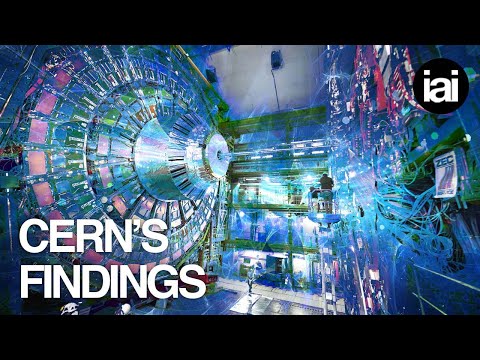
Particle colliders work by accelerating charged particles to incredibly high speeds and then colliding them with other particles. The collisions produce a vast array of subatomic particles, which are then detected and analyzed by sophisticated detectors. The detectors use complex algorithms and machine learning techniques to identify the particles and measure their properties. The ATLAS experiment and the CMS experiment are two of the most notable detectors at the LHC. For more information on how particle colliders work, visit the Particle Collider website.
🎯 Applications of Particle Colliders
Particle colliders have numerous applications in fields such as medicine, materials science, and astrophysics. One of the most significant applications is in the development of new medical treatments, such as proton therapy. Proton therapy uses high-energy protons to destroy cancer cells, and particle colliders are used to accelerate the protons to the required energies. Particle colliders are also used to study the properties of materials at the atomic level, allowing physicists to develop new materials with unique properties. For more information on the applications of particle colliders, visit the Materials Science website.
🔬 The Science Behind Particle Colliders
The science behind particle colliders is based on the principles of quantum mechanics and relativity. The collisions produce a vast array of subatomic particles, which are then detected and analyzed by sophisticated detectors. The detectors use complex algorithms and machine learning techniques to identify the particles and measure their properties. The Quantum Field Theory (QFT) is a fundamental theory that describes the behavior of subatomic particles, and it is used to analyze the data from particle colliders. For more information on the science behind particle colliders, visit the Theoretical Physics website.
🌈 Particle Acceleration and Detection
Particle acceleration and detection are critical components of particle colliders. The acceleration process involves using powerful magnetic fields to accelerate the particles to incredibly high speeds. The detection process involves using sophisticated detectors to identify the particles and measure their properties. The superconducting magnet is a critical component of particle colliders, as it is used to steer the particles around the collider. For more information on particle acceleration and detection, visit the Accelerator Physics website.
📊 Challenges and Limitations of Particle Colliders
Particle colliders face numerous challenges and limitations, including the high cost of construction and operation, the complexity of the detectors, and the need for highly sophisticated algorithms and machine learning techniques. The LHC upgrade is a notable example of the challenges faced by particle colliders, as it requires significant upgrades to the collider and the detectors. The upgrade will allow physicists to study the properties of subatomic particles at even higher energies, but it also poses significant technical challenges. For more information on the challenges and limitations of particle colliders, visit the High Energy Physics website.
🔮 Future of Particle Colliders
The future of particle colliders is exciting and uncertain, with numerous new projects and upgrades in the works. The Future Circular Collider (FCC) is a proposed collider that will be even larger and more powerful than the LHC. The FCC will allow physicists to study the properties of subatomic particles at even higher energies, and it will also provide new opportunities for discoveries. The Compact Linear Collider (CLIC) is another proposed collider that will be a linear collider, allowing physicists to study the properties of subatomic particles in a different way. For more information on the future of particle colliders, visit the Particle Physics website.
🌟 Notable Particle Colliders
Notable particle colliders include the LHC, the Tevatron, and the HERA. The Tevatron was a circular collider that collided protons and antiprotons, allowing physicists to study the properties of subatomic particles. The HERA was a circular collider that collided electrons and protons, allowing physicists to study the properties of quarks and gluons. For more information on notable particle colliders, visit the Particle Collider website.
👥 Key Players in Particle Collider Research
Key players in particle collider research include Stephen Hawking, Leon Lederman, and Fabiola Gianotti. Stephen Hawking was a renowned physicist who made significant contributions to our understanding of black holes and the universe. Leon Lederman was a physicist who discovered the muon neutrino and was awarded the Nobel Prize in Physics. Fabiola Gianotti is a physicist who is the current director-general of CERN and has made significant contributions to the discovery of the Higgs boson. For more information on key players in particle collider research, visit the Physics website.
📚 Controversies and Debates in Particle Collider Research
Controversies and debates in particle collider research include the Higgs boson discovery, the supersymmetry theory, and the string theory. The Higgs boson discovery was a significant breakthrough, but it also raised questions about the nature of the universe and the role of the Higgs boson. The supersymmetry theory is a theory that proposes the existence of supersymmetric particles, which could help explain the properties of subatomic particles. The string theory is a theory that proposes that the fundamental building blocks of the universe are strings rather than particles. For more information on controversies and debates in particle collider research, visit the Theoretical Physics website.
🔜 Conclusion and Future Prospects
In conclusion, particle colliders are complex machines that have revolutionized our understanding of the universe. From the discovery of the Higgs boson to the study of the properties of subatomic particles, particle colliders have opened up new avenues of research and discovery. As we look to the future, it is clear that particle colliders will continue to play a critical role in our understanding of the universe, and new projects and upgrades will provide new opportunities for discoveries. For more information on particle colliders, visit the Particle Collider website.
Key Facts
- Year
- 1959
- Origin
- European Organization for Nuclear Research (CERN)
- Category
- Physics
- Type
- Scientific Instrument
Frequently Asked Questions
What is a particle collider?
A particle collider is a complex machine that accelerates charged particles to incredibly high speeds and then collides them with other particles, allowing physicists to study the fundamental nature of matter and the universe. The collisions produce a vast array of subatomic particles, which are then detected and analyzed by sophisticated detectors. For more information on particle colliders, visit the Particle Collider website.
What is the purpose of a particle collider?
The purpose of a particle collider is to study the properties of subatomic particles and to understand the fundamental nature of matter and the universe. Particle colliders allow physicists to study the behavior of particles at incredibly high energies, which can help us understand the properties of particles and the forces that govern their behavior. For more information on the purpose of particle colliders, visit the Particle Physics website.
What are some notable particle colliders?
Notable particle colliders include the Large Hadron Collider (LHC), the Tevatron, and the HERA. The LHC is a massive machine that smashes protons together at nearly the speed of light, allowing physicists to study the fundamental nature of matter and the universe. The Tevatron was a circular collider that collided protons and antiprotons, allowing physicists to study the properties of subatomic particles. The HERA was a circular collider that collided electrons and protons, allowing physicists to study the properties of quarks and gluons. For more information on notable particle colliders, visit the Particle Collider website.
What are some challenges and limitations of particle colliders?
Particle colliders face numerous challenges and limitations, including the high cost of construction and operation, the complexity of the detectors, and the need for highly sophisticated algorithms and machine learning techniques. The LHC upgrade is a notable example of the challenges faced by particle colliders, as it requires significant upgrades to the collider and the detectors. The upgrade will allow physicists to study the properties of subatomic particles at even higher energies, but it also poses significant technical challenges. For more information on the challenges and limitations of particle colliders, visit the High Energy Physics website.
What is the future of particle colliders?
The future of particle colliders is exciting and uncertain, with numerous new projects and upgrades in the works. The Future Circular Collider (FCC) is a proposed collider that will be even larger and more powerful than the LHC. The FCC will allow physicists to study the properties of subatomic particles at even higher energies, and it will also provide new opportunities for discoveries. The Compact Linear Collider (CLIC) is another proposed collider that will be a linear collider, allowing physicists to study the properties of subatomic particles in a different way. For more information on the future of particle colliders, visit the Particle Physics website.
Who are some key players in particle collider research?
Key players in particle collider research include Stephen Hawking, Leon Lederman, and Fabiola Gianotti. Stephen Hawking was a renowned physicist who made significant contributions to our understanding of black holes and the universe. Leon Lederman was a physicist who discovered the muon neutrino and was awarded the Nobel Prize in Physics. Fabiola Gianotti is a physicist who is the current director-general of CERN and has made significant contributions to the discovery of the Higgs boson. For more information on key players in particle collider research, visit the Physics website.
What are some controversies and debates in particle collider research?
Controversies and debates in particle collider research include the Higgs boson discovery, the supersymmetry theory, and the string theory. The Higgs boson discovery was a significant breakthrough, but it also raised questions about the nature of the universe and the role of the Higgs boson. The supersymmetry theory is a theory that proposes the existence of supersymmetric particles, which could help explain the properties of subatomic particles. The string theory is a theory that proposes that the fundamental building blocks of the universe are strings rather than particles. For more information on controversies and debates in particle collider research, visit the Theoretical Physics website.