
Contents
- 🎵 Origins & History
- ⚙️ How It Worked: Royal Administration and Warfare
- 📊 Key Facts & Numbers
- 👥 Key People & Organizations
- 🌍 Cultural Impact & Influence
- ⚡ Current State & Latest Developments
- 🤔 Controversies & Debates
- 🔮 Future Outlook & Predictions
- 💡 Practical Applications
- 📚 Related Topics & Deeper Reading
- References
Overview
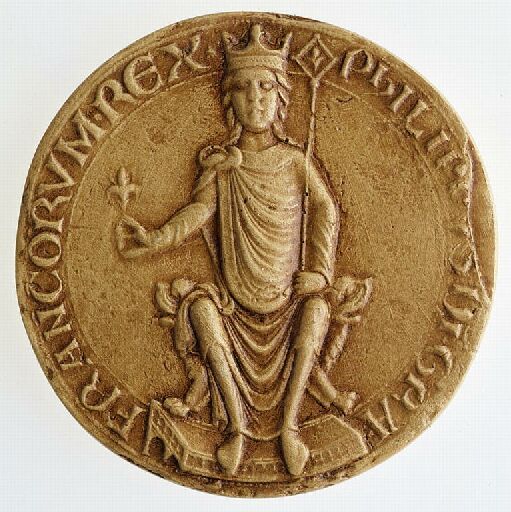
Philip II was born on August 21, 1165, in Paris, the long-awaited son of King Louis VII and his third wife, Adela of Champagne. His birth, occurring late in his father's life, earned him the nickname 'Dieudonné' (God-given), a testament to the dynastic hopes pinned upon him. Philip's early life was marked by his father's efforts to secure his succession, culminating in his coronation as co-king in 1179, a common practice to ensure a smooth transition of power. Upon Louis VII's death in 1180, Philip ascended to the throne, inheriting a kingdom that was significantly smaller and less powerful than the Angevin domains controlled by his main rival, Henry II of England. This stark power imbalance set the stage for Philip's ambitious agenda to consolidate royal authority and reclaim lost territories, a mission that would define his 43-year reign and fundamentally alter the trajectory of French history.
⚙️ How It Worked: Royal Administration and Warfare
Philip II's reign was characterized by a dual approach: aggressive military expansion and the systematic strengthening of royal administration. He revolutionized warfare by employing professional soldiers and siege engineers, rather than relying solely on feudal levies, allowing for more sustained campaigns. His administration saw the development of a more centralized bureaucracy, with royal officials (prévôts and baillis) directly accountable to the crown, tasked with collecting taxes, administering justice, and enforcing royal law throughout the expanding royal domain. This administrative overhaul, coupled with his strategic land acquisitions, particularly in Normandy, Anjou, and Maine, effectively chipped away at the Angevin Empire. His legal reforms also aimed to assert royal jurisdiction over feudal courts, gradually undermining the power of the great lords and consolidating judicial authority under the king. This intricate system of governance and military strategy was the engine driving his territorial ambitions and the rise of the French monarchy.
📊 Key Facts & Numbers
Philip II's reign saw the royal domain of France nearly triple in size, from approximately 10,000 square miles to over 30,000 square miles by the end of his rule. The Battle of Bouvines in 1214, a pivotal victory, involved an estimated 7,000 to 9,000 soldiers on the French side against a coalition of roughly 7,000 to 10,000 imperial and English troops. His treasury benefited immensely from the increased tax revenues generated by these expanded lands, allowing him to fund larger standing armies and invest in royal infrastructure. He commissioned the construction of the first Louvre fortress around 1190, a significant defensive and administrative stronghold. By 1223, the estimated annual revenue of the French crown had increased substantially, though precise figures are debated among historians, with some suggesting it reached hundreds of thousands of livres tournois.
👥 Key People & Organizations
Key figures surrounding Philip II included his father, Louis VII, whose reign provided the foundation and challenges Philip inherited. His primary adversaries were the powerful Plantagenet kings of England, notably Henry II, Richard I, and John Lackland. Philip's own son, Louis VIII, succeeded him, continuing the expansionist policies. The chronicler Rigord, who bestowed the epithet 'Augustus' upon Philip, played a crucial role in shaping his historical image. Powerful ecclesiastical figures, such as Stephen Langton, Archbishop of Canterbury, also interacted with Philip, often in complex political and religious contexts. The Capetian dynasty itself was the overarching political entity whose power Philip so dramatically amplified.
🌍 Cultural Impact & Influence
Philip II's most profound cultural impact lies in his role as the architect of a more unified and powerful French kingdom, laying the groundwork for the concept of modern France. His military successes and administrative reforms fostered a sense of national identity, albeit nascent, centered around the figure of the king. The epithet 'Augustus,' bestowed by Rigord, symbolized his imperial ambitions and his success in extending the royal domain, influencing how future monarchs perceived their roles. His patronage of architecture, including the expansion of the Louvre fortress, left tangible marks on the urban landscape of Paris, transforming it into a more fitting capital for a burgeoning European power. The Battle of Bouvines, celebrated in medieval chronicles and later historical narratives, became a foundational myth for French national pride, solidifying the image of a divinely favored French monarchy.
⚡ Current State & Latest Developments
While Philip II died in 1223, his legacy continues to resonate in the structures of French governance and national identity. The administrative and legal reforms he implemented formed the bedrock of the French state, influencing subsequent monarchs like Louis IX and Philip IV in their efforts to centralize power. The concept of the 'royal domain' he so assiduously expanded became a cornerstone of French territorial integrity. Modern historians continue to analyze his military strategies and diplomatic maneuvers, drawing parallels to contemporary state-building efforts. The enduring image of Philip Augustus as a formidable ruler who significantly strengthened the French crown remains a central theme in French historical discourse, making his reign a perpetual subject of study and reinterpretation.
🤔 Controversies & Debates
The primary controversy surrounding Philip II revolves around the extent of his ruthlessness and the methods he employed to achieve his territorial gains. His campaigns against the Angevin Empire were often brutal, involving scorched-earth tactics and the confiscation of vast estates. The treatment of his second wife, Ingeborg of Denmark, whom he attempted to annul and imprison for years, highlights a more personal controversy regarding his marital conduct and exercise of power. Furthermore, the long-term consequences of his consolidation of power, while strengthening the monarchy, also contributed to the eventual decline of feudal autonomy, a process viewed differently by various historical factions. Debates persist on whether his actions were primarily driven by personal ambition or a genuine vision for a unified French kingdom, and the ethical implications of his expansionist policies remain a subject of historical scrutiny.
🔮 Future Outlook & Predictions
The future trajectory of royal power in France, as shaped by Philip II, would continue to evolve, leading towards greater absolutism. His success in diminishing the power of the English monarchy on the continent set a precedent for centuries of Franco-English rivalry and French dominance in continental affairs. The administrative structures he established would be further refined by his successors, notably Louis IX, who would solidify royal justice and administration, and Philip IV, who would further centralize the state and challenge papal authority. The legacy of Philip Augustus as a king who fundamentally transformed the French monarchy suggests that future French rulers would continue to strive for centralized authority and territorial expansion, albeit within changing geopolitical landscapes and evolving concepts of kingship.
💡 Practical Applications
Philip II's reign offers practical lessons in statecraft, military strategy, and administrative reform that remain relevant for understanding the development of powerful nation-states. His systematic approach to expanding the royal domain and strengthening central authority provides a case study for leaders seeking to consolidate power and build effective governance structures. The development of a professional bureaucracy and direct royal taxation, as implemented by Philip, are foundational concepts in public administration. His military innovations, such as the use of professional soldiers and advanced siege warfare, influenced subsequent military thinking. The enduring impact of his reign on the concept of French sovereignty and national identity serves as a powerful example of how a single ruler's vision and actions can profoundly shape a nation's destiny.
Key Facts
- Category
- history
- Type
- topic