
Contents
- 🎵 Origins & History
- ⚙️ How It Works
- 📊 Key Facts & Numbers
- 👥 Key People & Organizations
- 🌍 Cultural Impact & Influence
- ⚡ Current State & Latest Developments
- 🤔 Controversies & Debates
- 🔮 Future Outlook & Predictions
- 💡 Practical Applications
- 📚 Related Topics & Deeper Reading
- Frequently Asked Questions
- References
- Related Topics
Overview
The story of the Porsche 356 begins in the ashes of World War II, a period of immense challenge and creative resurgence. Ferdinand Porsche, already a legendary automotive engineer, and his son Ferry Porsche envisioned a sports car that embodied performance and purity. The initial concept, codenamed Type 356, took shape in Gmünd, Austria, where approximately 50 hand-built cars were produced between 1948 and 1949 by the Austrian firm Porsche Konstruktionen GesmbH. These early models, often featuring a split-V windscreen, were built using a modified Volkswagen Beetle chassis and engine. In 1950, production shifted to the more established industrial hub of Zuffenhausen, Germany, under the newly formed Dr. Ing. h. c. F. Porsche GmbH. This move allowed for scaled production and further refinement of the design, laying the groundwork for decades of automotive excellence.
⚙️ How It Works
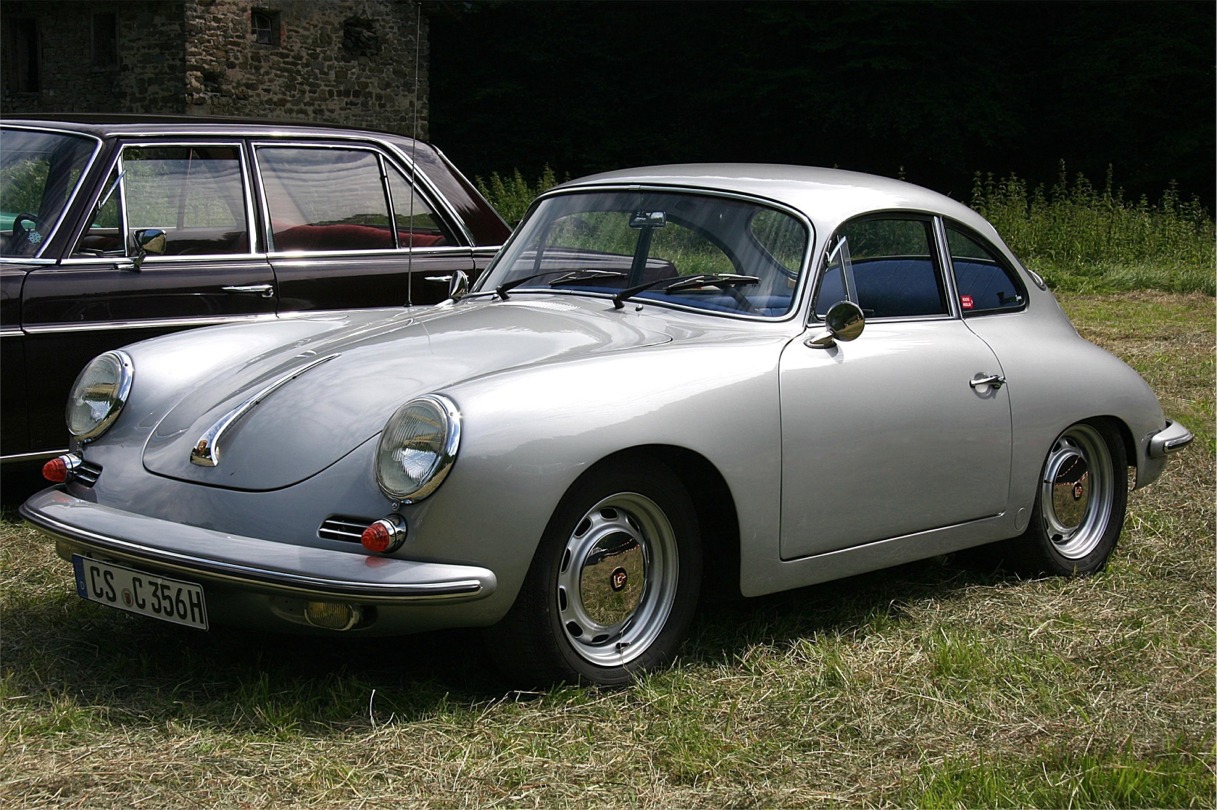
At its heart, the Porsche 356 is a masterpiece of functional design and engineering simplicity. Its defining characteristic is the rear-engine, rear-wheel-drive layout, a configuration inherited from the Volkswagen Beetle but optimized for sports car performance. This placement of the engine behind the rear axle contributes to the car's exceptional traction and unique handling dynamics. The chassis, a robust steel backbone, supports a lightweight, aerodynamically sculpted body, available in both coupé and convertible forms. Power typically came from air-cooled, horizontally opposed four-cylinder boxer engines, ranging in displacement from 1.1 to 2.0 liters across various models like the 356 A, 356 B, and 356 C. The transmission was a four-speed manual, offering direct engagement with the mechanicals.
📊 Key Facts & Numbers
The Porsche 356's production run spanned nearly two decades, from 1948 to 1965, during which approximately 76,000 units were manufactured. Today, it's estimated that around 37,000 to 40,000 of these vehicles still exist, making them relatively common among classic car collectors compared to other rare marques. The initial Gmünd production accounted for only about 50 cars, while the Zuffenhausen factory produced the vast majority. Early 356 models could achieve top speeds of around 90 mph (145 km/h), while later, more powerful variants, like the Carrera 2, could exceed 120 mph (193 km/h). The price of a new 356 in the 1950s was roughly equivalent to a modest family home, underscoring its premium positioning.
👥 Key People & Organizations
The Porsche 356's existence is inextricably linked to the Porsche family and their engineering prowess. Ferry Porsche, son of Ferdinand Porsche, was the driving force behind the car's conception and development, leading the company through its formative years. Ferdinand Porsche himself, though largely retired by the time of the 356's inception, provided crucial engineering guidance and oversight. Key figures in its production and refinement included Ernst Fuhrmann, who later became CEO and was instrumental in developing the Carrera engine, and Ferdinand Alexander Porsche (Ferry's son), who would later design the iconic Porsche 911. The manufacturing was initially handled by Porsche Konstruktionen GesmbH in Austria and later by Dr. Ing. h. c. F. Porsche GmbH in Germany.
🌍 Cultural Impact & Influence
The Porsche 356 carved out a significant niche in automotive culture, becoming synonymous with elegant design, sporting prowess, and a certain joie de vivre. Its success on the racetrack, particularly in endurance events like the 24 Hours of Le Mans and the Mille Miglia, cemented its reputation as a serious performance machine. Celebrities and discerning enthusiasts alike were drawn to its distinctive silhouette and engaging driving experience. The car's influence can be seen in subsequent Porsche models, particularly the enduring Porsche 911, which inherited the rear-engine philosophy. Its timeless design continues to inspire automotive stylists and collectors worldwide, making it a perennial favorite at classic car shows and auctions.
⚡ Current State & Latest Developments
In 2024, the Porsche 356 remains a highly desirable classic car, with values continuing to appreciate. Enthusiast clubs and specialized restoration shops dedicated to the 356 are active globally, ensuring the preservation and continued enjoyment of these vehicles. While new production ceased in 1965, the aftermarket for parts and services is robust, catering to owners who meticulously maintain their cars. Recent auction results, such as those facilitated by Bring a Trailer and RM Sotheby's, consistently show strong demand for well-maintained examples, with pristine models fetching prices well into six figures. The ongoing interest in vintage sports cars, coupled with the 356's historical significance, ensures its continued relevance in the classic car market.
🤔 Controversies & Debates
One of the primary debates surrounding the Porsche 356 centers on its relationship with the Volkswagen Beetle. While undeniably sharing mechanical components and the rear-engine layout, the extent to which the 356 was merely a 'hot-rodded Beetle' versus a distinct engineering achievement is a point of contention among purists. Some critics argue that its early reliance on Volkswagen parts limited its initial performance potential, while proponents highlight Ferry Porsche's innovative chassis and body design that transformed the humble components into a true sports car. Another ongoing discussion revolves around authenticity and originality, with the classic car market placing a premium on unrestored or period-correct examples, leading to debates about the ethics and aesthetics of extensive modifications or restorations.
🔮 Future Outlook & Predictions
The future for the Porsche 356 appears secure, driven by its established place in automotive history and the enduring appeal of classic sports cars. As collector markets mature, the 356 is likely to maintain its strong value, potentially seeing further appreciation as fewer examples remain in pristine condition. The rise of electric vehicle technology has also sparked interest in the possibility of electric conversions for classic cars, a trend that may see some 356s being retrofitted with modern powertrains, though this remains a controversial topic among traditionalists. The ongoing efforts of dedicated clubs and restoration specialists will continue to ensure that the 356's legacy is preserved for future generations of enthusiasts.
💡 Practical Applications
The primary practical application of the Porsche 356 today is as a collector's item and a classic automobile for spirited driving. Its lightweight construction and balanced chassis make it an engaging car on winding roads, offering a pure, analog driving experience. For those seeking to participate in vintage racing or historic rallies, the 356 is a well-regarded and competitive choice, with specialized racing variants available. Furthermore, its iconic design has made it a muse for automotive artists and designers, influencing contemporary automotive aesthetics. The car also serves as an educational tool, demonstrating fundamental engineering principles of lightweight construction and optimal weight distribution.
Key Facts
- Year
- 1948-1965
- Origin
- Austria / Germany
- Category
- culture
- Type
- product
Frequently Asked Questions
What makes the Porsche 356 significant in automotive history?
The Porsche 356 is significant as it was the very first production car manufactured by Porsche AG, establishing the brand's identity as a maker of high-performance sports cars. Its innovative rear-engine, rear-wheel-drive layout, lightweight construction, and distinctive styling, pioneered by Ferry Porsche, set a precedent for future Porsche models, most notably the Porsche 911. The car's success in both road and track applications validated Porsche's engineering philosophy and laid the foundation for its enduring global reputation in motorsport and automotive excellence.
How much did a Porsche 356 cost when new, and what is its value today?
When new in the 1950s, a Porsche 356 was a premium automobile, with prices often comparable to a modest family home, typically in the range of $3,000 to $4,000 USD, which was a substantial sum at the time. Today, the value of a Porsche 356 varies dramatically based on model, condition, originality, and provenance. Well-maintained or restored examples, particularly rare variants like the Carrera models, can command prices from $100,000 to well over $500,000 at auctions held by firms like RM Sotheby's and Bonhams. Even less pristine examples typically fetch prices in the tens of thousands, reflecting its status as a highly sought-after collector's item.
What are the main differences between the various Porsche 356 models?
The Porsche 356 evolved through several distinct series, each with notable differences. The earliest models, produced in Gmünd, Austria, often featured a split-windscreen and were more closely related to the Volkswagen Beetle chassis. The subsequent 356 A (1955-1959) introduced a curved windscreen and improved engine options. The 356 B (1959-1963) featured revised styling, including higher-mounted headlights and bumpers, and further engine enhancements. The final iteration, the 356 C (1963-1965), notably introduced disc brakes as standard equipment across the range, significantly improving stopping power. Performance variants, such as the Carrera models, featured more potent, twin-cam engines developed by Ernst Fuhrmann.
Where was the Porsche 356 manufactured, and why did the location change?
The Porsche 356 was initially manufactured in Gmünd, Austria, by Porsche Konstruktionen GesmbH starting in 1948. This location was chosen due to the post-war industrial landscape and the availability of resources. However, in 1950, production was relocated to Zuffenhausen, Germany, a more established industrial center with greater manufacturing capacity. This move was facilitated by Dr. Ing. h. c. F. Porsche GmbH, the main Porsche company, allowing for scaled production and integration with other Volkswagen-related manufacturing activities, ultimately leading to higher production volumes and greater market reach.
Is it true that the Porsche 356 shares parts with the Volkswagen Beetle?
Yes, it is true that the early Porsche 356 shared significant mechanical components with the Volkswagen Beetle. This was a deliberate engineering choice by Ferry Porsche and his team, leveraging the robust and readily available parts from the Volkswagen Type 1 platform, which was also designed by Ferdinand Porsche. Key shared elements included the chassis structure, suspension components, and the air-cooled flat-four engine. However, the 356 distinguished itself with a bespoke, aerodynamically superior body designed by Ferry Porsche himself, a more performance-oriented engine tune, and a refined interior, transforming the basic mechanicals into a distinct and capable sports car.
How can one identify an original Porsche 356 versus a replica or heavily modified car?
Identifying an original Porsche 356 involves scrutinizing several key areas. Originality is primarily determined by the chassis number, engine number, and gearbox number, which should correspond to the car's build date and model series, verifiable through Porsche's own documentation or specialized registries like the Porsche Club of America's technical committees. Visual cues include the specific body contours, correct badging, original interior materials (like',['leather', 'vinyl', 'Perlon']), and period-correct details such as glass manufacturers, chrome trim, and wheel styles. Many replicas are built on Volkswagen Beetle chassis or custom frames, often exhibiting subtle differences in proportions, panel gaps, and interior finishes compared to factory-built cars. Expert inspection by marque specialists is often recommended for high-value acquisitions.
What is the future outlook for the Porsche 356 in the collector car market?
The future outlook for the Porsche 356 in the collector car market remains exceptionally strong. Its status as Porsche's first production car, combined with its timeless design and engaging driving dynamics, ensures enduring desirability. Values are expected to continue appreciating, particularly for rarer models and those in exceptional original or expertly restored condition. The growing global interest in classic automobiles, especially European sports cars from the mid-20th century, further bolsters its market position. While the trend towards electrification might see some conversions, the core market for authentic, gasoline-powered 356s is projected to remain robust, supported by dedicated enthusiast communities and ongoing demand from collectors worldwide.