
Contents
- ✨ What Are Prime Numbers, Really?
- 🔢 The Prime Number Theorem: A Statistical Glimpse
- 💡 Why Primes Matter: From Cryptography to Cosmic Questions
- 🔍 Finding Primes: Algorithms and the Hunt for Giants
- 🤔 The Twin Prime Conjecture: An Unsolved Enigma
- 📈 Prime Distribution: Patterns in the Chaos
- 📚 Historical Roots: Euclid's Enduring Legacy
- 🌐 Primes in the Digital Age: Security and Beyond
- Frequently Asked Questions
- Related Topics
Overview
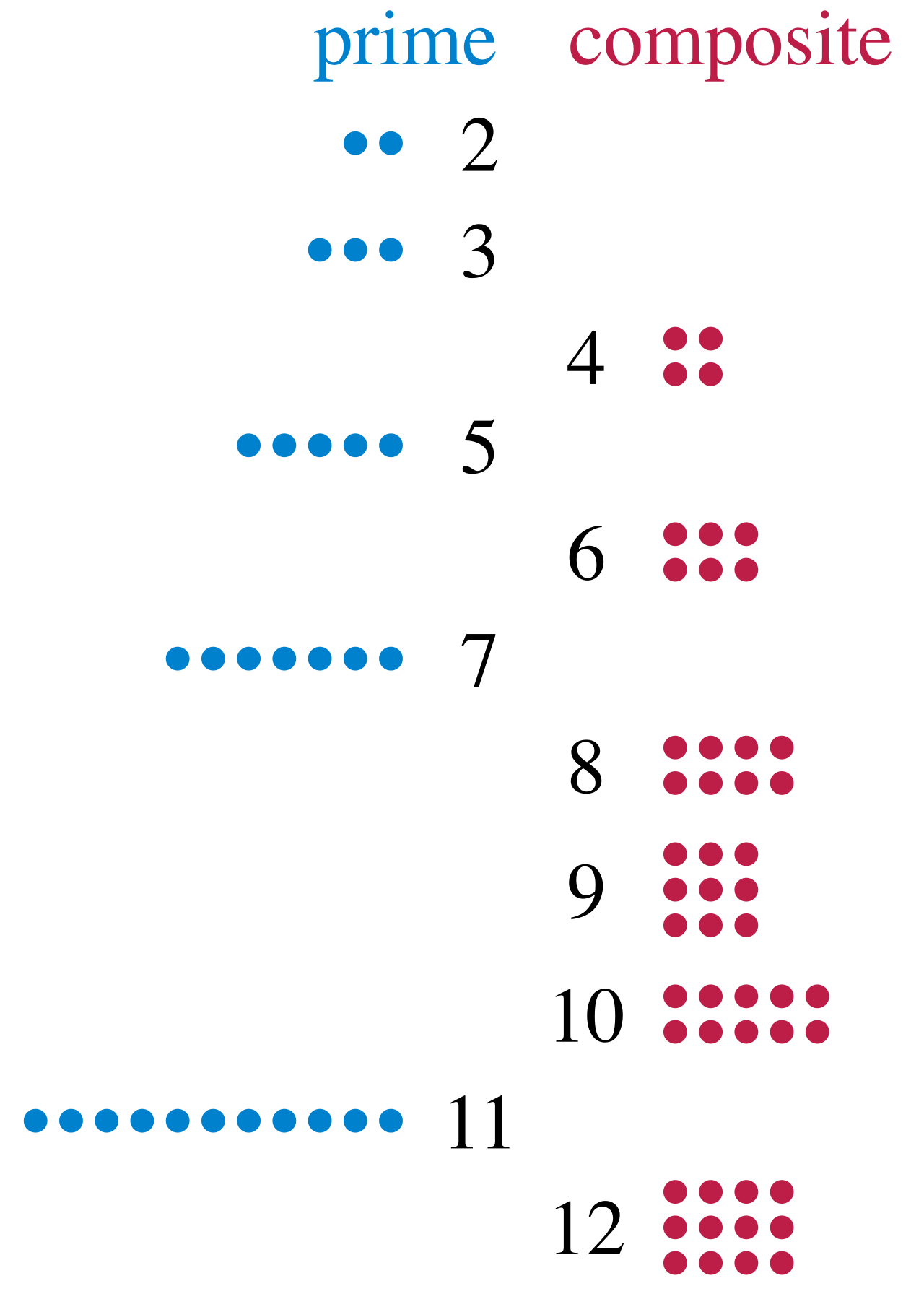
Prime numbers are the fundamental atoms of arithmetic, defined as natural numbers greater than 1 that can only be divided evenly by 1 and themselves. Think of them as indivisible building blocks. For instance, 7 is prime; you can't break it down into smaller whole number multiplications. Numbers like 4 (2x2) or 6 (2x3) are composite, meaning they can be factored. This seemingly simple definition underpins the entire structure of number theory, thanks to the fundamental theorem of arithmetic, which states every integer greater than 1 is a unique product of primes. Understanding this uniqueness is key to grasping their importance in fields far beyond basic arithmetic.
🔢 The Prime Number Theorem: A Statistical Glimpse
While primes appear irregularly, the Prime Number Theorem offers a statistical roadmap. It tells us that the density of prime numbers decreases as numbers get larger. Specifically, the probability that a randomly chosen integer near a large number 'x' is prime is approximately 1/ln(x), where ln(x) is the natural logarithm of x. This theorem, independently proven by Jacques Hadamard and Charles Jean de la Vallée Poussin in 1896, provides a powerful predictive tool for estimating the distribution of primes, even if it doesn't pinpoint their exact locations. It's a statistical comfort in a seemingly chaotic sequence.
💡 Why Primes Matter: From Cryptography to Cosmic Questions
The significance of prime numbers extends far beyond academic curiosity. Their unique multiplicative properties make them indispensable for modern cryptography, particularly in algorithms like RSA, which secures online transactions and communications. Without primes, the internet as we know it would be far less secure. Beyond practical applications, primes also fuel deep mathematical questions, such as the Riemann Hypothesis, which, if proven, would unlock profound secrets about prime distribution and have ripple effects across physics and pure mathematics.
🔍 Finding Primes: Algorithms and the Hunt for Giants
Identifying prime numbers, especially large ones, is a computational challenge. The Sieve of Eratosthenes is an ancient, efficient method for finding all primes up to a specified integer, by iteratively marking as composite the multiples of each prime. For detecting primality in very large numbers, probabilistic tests like the Miller-Rabin primality test are used, which offer a high degree of certainty. The ongoing search for Mersenne primes (primes of the form 2^p - 1) drives the development of faster primality testing algorithms, pushing the boundaries of computational power.
🤔 The Twin Prime Conjecture: An Unsolved Enigma
One of the most tantalizing unsolved problems in mathematics is the Twin Prime Conjecture. This conjecture posits that there are infinitely many pairs of prime numbers that differ by 2, such as (3, 5), (5, 7), and (11, 13). While mathematicians have proven that there are infinitely many prime pairs with a bounded gap, the specific gap of 2 remains elusive. Proving this conjecture would have significant implications for our understanding of prime distribution and the underlying structure of numbers.
📈 Prime Distribution: Patterns in the Chaos
The distribution of prime numbers is a subject of intense study. While they don't follow a simple arithmetic progression, patterns emerge when viewed statistically. The Prime Number Theorem provides a broad overview, but mathematicians also investigate prime constellations, such as twin primes, cousin primes (differing by 4), and sexy primes (differing by 6). Understanding these patterns helps refine our models of prime distribution and offers insights into the deeper arithmetic properties of integers, connecting to areas like analytic number theory.
📚 Historical Roots: Euclid's Enduring Legacy
The study of prime numbers dates back to antiquity. Euclid of Alexandria, in his seminal work Elements (circa 300 BCE), provided the first known proof that there are infinitely many prime numbers. This elegant proof, using contradiction, remains a cornerstone of number theory. Euclid also laid the groundwork for understanding prime factorization, a concept that would be formally articulated millennia later as the Fundamental Theorem of Arithmetic. His work established primes as the foundational elements of the natural number system.
🌐 Primes in the Digital Age: Security and Beyond
In the digital realm, prime numbers are the silent guardians of our data. The security of online banking, encrypted emails, and secure websites relies heavily on the computational difficulty of factoring large composite numbers into their unique prime components. Public-key cryptography systems, like RSA, exploit this. The larger the primes used, the more computationally intensive it is for an attacker to break the encryption, making the ongoing discovery of large primes a critical factor in maintaining digital security and privacy in our interconnected world.
Key Facts
- Year
- 2023
- Origin
- Ancient Greece
- Category
- Mathematics
- Type
- Concept
Frequently Asked Questions
What is the smallest prime number?
The smallest prime number is 2. It's unique because it's the only even prime number; all other even numbers are divisible by 2 and therefore composite. Its primality is fundamental to many proofs in number theory, including Euclid's proof of the infinitude of primes.
Are there infinitely many prime numbers?
Yes, it has been definitively proven that there are infinitely many prime numbers. This was first demonstrated by Euclid of Alexandria around 300 BCE using a proof by contradiction. His elegant argument shows that for any finite list of primes, one can always construct a new number that is either prime itself or divisible by a prime not on the list, thus proving the list cannot be exhaustive.
How do we know if a very large number is prime?
For very large numbers, trial division is impractical. Instead, mathematicians and computer scientists use probabilistic primality tests, such as the Miller-Rabin primality test. These tests don't guarantee primality but provide a very high probability that a number is prime. For absolute certainty, deterministic tests exist but are computationally much more intensive for extremely large numbers.
What is a Mersenne prime?
A Mersenne prime is a prime number that is one less than a power of two. They are of the form 2^p - 1, where 'p' itself must also be a prime number. Mersenne primes are of particular interest because they can be efficiently tested for primality using the Lucas-Lehmer test, and they are often the largest known prime numbers discovered.
Why are prime numbers important for internet security?
Prime numbers are the bedrock of public-key cryptography, most notably the RSA algorithm. This system relies on the fact that it is computationally very difficult to find the two large prime factors of a very large composite number. This asymmetry in difficulty—easy to multiply primes, hard to factor their product—allows for secure key exchange and digital signatures, protecting online communications and transactions.
What is the difference between a prime and a composite number?
A prime number is a natural number greater than 1 that has only two distinct positive divisors: 1 and itself. A composite number, conversely, is a natural number greater than 1 that has more than two distinct positive divisors. For example, 13 is prime (divisors are 1 and 13), while 12 is composite (divisors are 1, 2, 3, 4, 6, and 12).