
Contents
Overview
Roger Sperry (1913-1994) was an American neuropsychologist whose groundbreaking work on split-brain patients fundamentally altered our understanding of brain lateralization. His experiments, particularly with patients who had undergone corpus callosotomy, revealed how the two hemispheres of the brain process information differently, leading to the concept of 'left-brain' and 'right-brain' functions. Sperry's research earned him the Nobel Prize in Physiology or Medicine in 1981, yet it also sparked debates about the oversimplification of brain functions in popular culture. As neuroscience continues to evolve, Sperry's legacy raises questions about the implications of his findings on artificial intelligence and cognitive science.
🧠 What is Roger Sperry's Legacy?
Roger Sperry (1913-1994) stands as a titan in neuroscience, most celebrated for his Nobel Prize-winning work on the lateralization in the human brain. His pioneering split-brain research fundamentally altered our understanding of how the left and right hemispheres of the brain specialize in different cognitive tasks. This research, conducted primarily at the University of Chicago and later at the California Institute of Technology (Caltech), provided compelling evidence that the two hemispheres, while interconnected, operate with distinct capabilities, influencing everything from language and logic to spatial awareness and creativity.
🔬 The Groundbreaking Split-Brain Studies
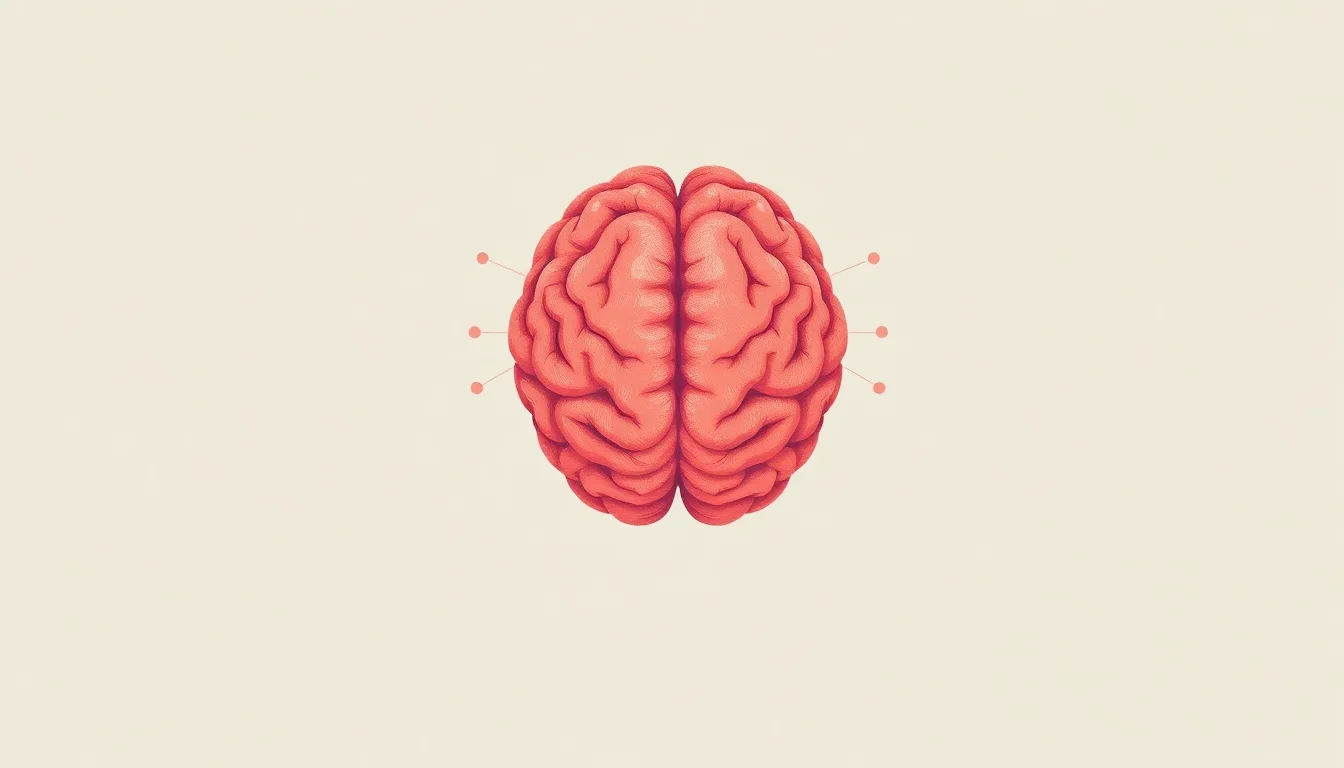
Sperry's most famous experiments involved patients who underwent corpus callosotomy, a surgical procedure to sever the corpus callosum—the thick band of nerve fibers connecting the two cerebral hemispheres. This was often a last resort for severe epilepsy. By presenting visual or tactile information to one hemisphere at a time, Sperry and his colleagues, notably Ronald Myers, demonstrated remarkable differences in how each hemisphere processed information. For instance, information shown to the right visual field (processed by the left hemisphere) could be verbally identified, while information shown to the left visual field (processed by the right hemisphere) could not, though the patient could often point to or draw the object with their left hand.
🏆 Nobel Prize & Lasting Impact
In 1981, Roger Sperry was awarded the Nobel Prize for his discoveries concerning the functional specialization of the cerebral hemispheres. This recognition cemented his place in scientific history and brought widespread attention to the concept of brain lateralization. His work not only advanced neuroscience but also had profound implications for psychology, philosophy, and even education, sparking discussions about individual differences in cognitive styles and the potential for enhancing learning through understanding hemispheric strengths.
🤔 Key Concepts & Theories
Beyond the split-brain findings, Sperry developed the theory of psychoneural parallelism, proposing that mental events and neural events are intrinsically linked and occur in parallel. He also contributed significantly to developmental neuroscience with his earlier work on nerve growth factors and neural plasticity in amphibians, demonstrating how nerve connections are established and maintained. His conceptual framework suggested that consciousness itself might be an emergent property of complex neural interactions, a view that continues to be debated in the philosophy of mind.
💡 How to Explore Sperry's Work
To truly grasp Sperry's contributions, engage with primary source materials and reputable secondary analyses. Visiting university archives or specialized neuroscience libraries might offer access to his original papers and lab notes. Online academic databases like PubMed and JSTOR are invaluable for finding his published research. Consider attending neuroscience conferences or public lectures that feature discussions on brain lateralization and consciousness, where his legacy is frequently invoked.
📚 Recommended Reading & Resources
For those eager to delve deeper, Roger Sperry's Nobel lecture is a must-read, offering a concise overview of his life's work. His seminal paper, "Cerebral organization and behavior" (1961), provides foundational insights. For broader context, books like "The Split Brain: The Mind Divided" by V.S. Ramachandran and Sandra Blakeslee offer accessible explanations of split-brain phenomena. Academic journals such as Cerebral Cortex and Neuropsychologia frequently publish studies that build upon or challenge Sperry's initial findings.
⚖️ Debates & Criticisms
While Sperry's work on lateralization is widely accepted, it has not been without debate. Critics sometimes argue that the popular interpretation of his findings has led to oversimplified notions of 'left-brained' vs. 'right-brained' individuals, a dichotomy Sperry himself cautioned against. Furthermore, the extent to which these hemispheric specializations are innate versus learned, and how they interact in intact brains, remains an active area of research and discussion among neuroscientists and psychologists.
🚀 The Future of Hemispheric Research
The legacy of Roger Sperry's split-brain research continues to inform modern neuroscience. Current research explores the intricate communication pathways between hemispheres, the role of interhemispheric inhibition, and how disruptions in these connections contribute to various neurological and psychiatric conditions. Advances in neuroimaging techniques like fMRI and MEG allow researchers to study brain activity in vivo, offering new perspectives on hemispheric specialization and integration that complement Sperry's foundational insights.
Key Facts
- Year
- 1981
- Origin
- United States
- Category
- Neuroscience
- Type
- Person
Frequently Asked Questions
What is the main takeaway from Roger Sperry's split-brain research?
The primary takeaway is that the left and right hemispheres of the human brain are specialized for different functions. The left hemisphere typically handles language, logic, and analytical tasks, while the right hemisphere is more involved in spatial processing, facial recognition, and emotional understanding. This was dramatically demonstrated in patients whose corpus callosum was severed.
Did Sperry believe people were strictly 'left-brained' or 'right-brained'?
No, Sperry himself cautioned against such oversimplification. While his work highlighted specialization, he emphasized that the hemispheres constantly interact and collaborate in a healthy brain. The popular 'left-brained/right-brained' personality types are a misinterpretation of his findings.
What was the surgical procedure involved in Sperry's studies?
The procedure was called a corpus callosotomy, where the corpus callosum, the main bundle of nerve fibers connecting the two cerebral hemispheres, was surgically severed. This was primarily performed to treat severe, intractable epilepsy by preventing seizures from spreading from one hemisphere to the other.
How did Sperry test the separated hemispheres?
Sperry used a clever setup where visual information could be presented to only one visual field at a time (e.g., a word flashed to the right visual field, processed by the left hemisphere). Similarly, objects could be placed in one hand and felt without being seen, allowing for testing of tactile processing by a specific hemisphere. Patients were then asked to identify or respond to the stimuli verbally or by using their hands.
What other contributions did Roger Sperry make to neuroscience?
Before his split-brain work, Sperry made significant contributions to developmental neuroscience, particularly in understanding how nerve connections are formed and maintained, using studies on amphibians. He also proposed the theory of psychoneural parallelism, linking mental events with neural processes.
Where can I find more information about Roger Sperry's work?
You can explore his Nobel lecture, original research papers available through academic databases like PubMed and JSTOR, and books that discuss split-brain research, such as those by V.S. Ramachandran. University libraries and neuroscience archives are also excellent resources.