
Contents
- 🎵 Origins & History
- ⚙️ How It Works
- 📊 Key Facts & Numbers
- 👥 Key People & Organizations
- 🌍 Cultural Impact & Influence
- ⚡ Current State & Latest Developments
- 🤔 Controversies & Debates
- 🔮 Future Outlook & Predictions
- 💡 Practical Applications
- 📚 Related Topics & Deeper Reading
- Frequently Asked Questions
- References
- Related Topics
Overview
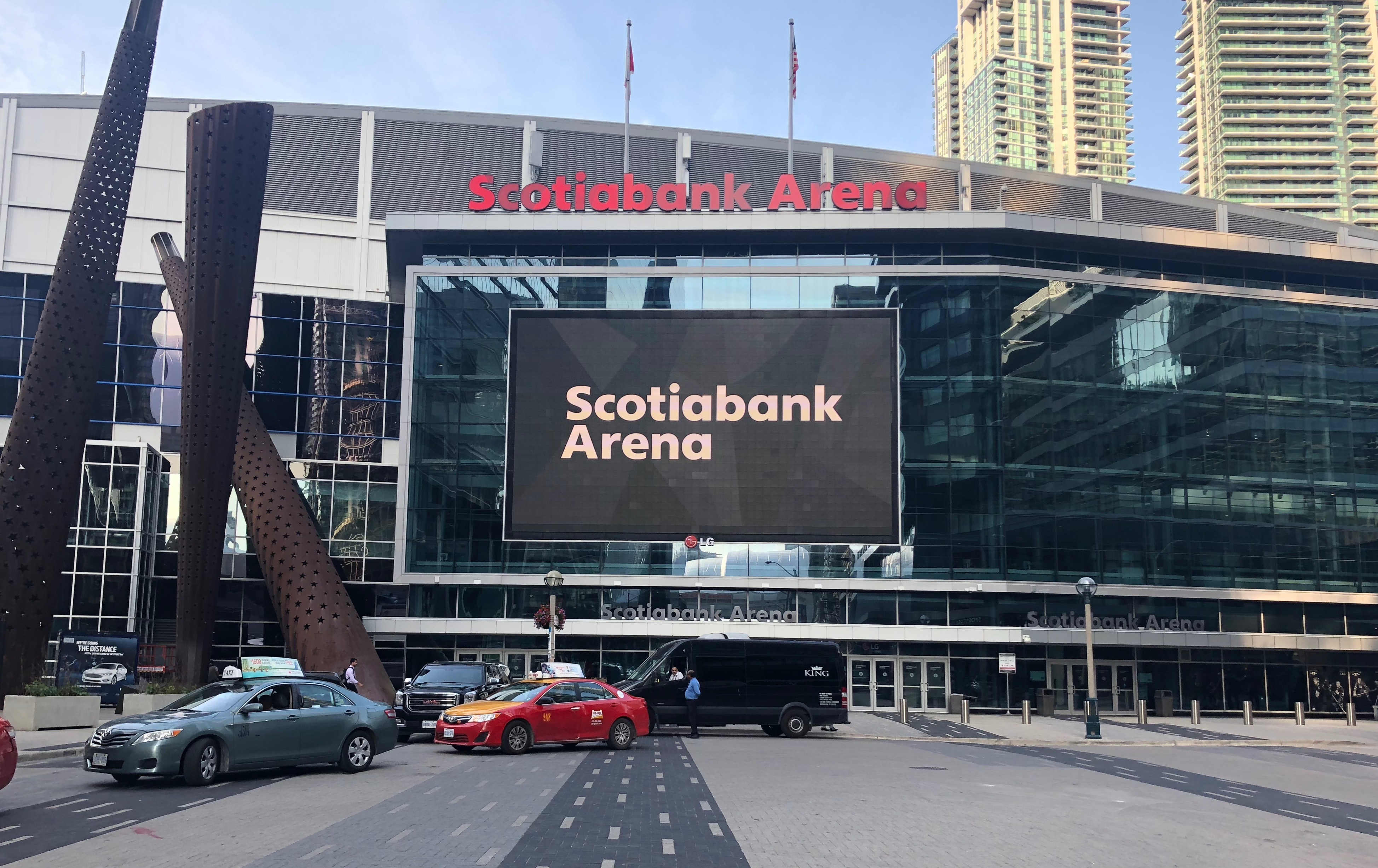
The genesis of Scotiabank Arena, initially christened the Air Canada Centre (ACC), traces back to the late 1990s, a period of significant urban development in Toronto. The project, spearheaded by Maple Leaf Sports & Entertainment Ltd. (MLSE), aimed to replace the aging Maple Leaf Gardens with a state-of-the-art facility. Construction commenced in 1997, with the arena officially opening its doors on February 19, 1999. This massive undertaking, costing an estimated $265 million CAD, was a bold statement of intent from MLSE, which sought to consolidate its sports franchises under one roof and create a premier destination for entertainment. The choice of location, adjacent to Union Station, was strategic, ensuring accessibility for a vast fan base and integrating the arena into the city's transit network. The naming rights deal with Air Canada for $30 million over 20 years was a significant financial component, reflecting the growing trend of corporate sponsorship in major sports venues.
⚙️ How It Works
Scotiabank Arena operates as a complex, multi-faceted entertainment venue designed for maximum flexibility and spectator experience. Its primary function is hosting NHL and NBA games, featuring retractable seating, advanced ice-making technology, and a high-definition center-hung scoreboard. For concerts and other events, the arena can be reconfigured rapidly, accommodating various stage setups and audience layouts, with a capacity that can fluctuate between 15,000 and 19,800. The venue's infrastructure includes a robust network of concessions, luxury suites, and premium seating areas, managed by a dedicated food and beverage provider. Furthermore, its integration with Union Station allows for seamless pedestrian flow, a critical engineering feat for managing crowds of tens of thousands during peak events. The arena's operational backbone relies on sophisticated building management systems, ensuring climate control, security, and efficient crowd movement.
📊 Key Facts & Numbers
The physical scale of Scotiabank Arena is impressive: it spans approximately 62,000 square meters (665,000 square feet) and stands as a significant landmark in downtown Toronto. Since its inception in 1999, it has hosted an average of over 150 events per year, attracting more than 1.5 million guests annually. The naming rights deal with Scotiabank, secured in 2017 for $800 million over 20 years, underscores the venue's commercial value. The arena's primary tenants, the Toronto Maple Leafs and Toronto Raptors, have seen considerable success within its walls, contributing to its reputation. In terms of economic impact, Scotiabank Arena generates an estimated $100 million annually in direct economic activity for the city of Toronto, supporting thousands of jobs.
👥 Key People & Organizations
The operational and ownership structure of Scotiabank Arena is tightly controlled by Maple Leaf Sports & Entertainment Ltd. (MLSE), a subsidiary of OMERS. MLSE's portfolio includes not only the Maple Leafs and Raptors but also the Toronto Marlies (AHL) and Raptors 905 (NBA G League), creating a powerful synergy within the Toronto sports landscape. Key figures in MLSE's history, such as former CEO Charles Bransons and current President Keith Pelley, have overseen significant developments and strategic decisions regarding the arena. The naming rights partner, Scotiabank, represented by its CEO Scotiabank CEO Name, plays a crucial role in the arena's branding and financial stability. The arena's management team, led by General Manager Arena GM Name, is responsible for the day-to-day operations, event booking, and patron experience.
🌍 Cultural Impact & Influence
Scotiabank Arena is more than just a venue; it's a cultural touchstone for Toronto and a significant player in the global sports and entertainment scene. It has served as the backdrop for countless iconic moments in NHL and NBA history, from playoff battles to championship celebrations. The arena's influence extends to music, having hosted legendary performers like The Rolling Stones, Beyoncé, and Taylor Swift, drawing international artists and their fans to the city. Its role in hosting major esports tournaments, such as League of Legends Championship events, highlights its adaptability to emerging entertainment trends. The arena's presence has also spurred considerable development in the surrounding Entertainment District, transforming the area into a vibrant hub for nightlife, dining, and tourism, significantly boosting the city's appeal and economic output.
⚡ Current State & Latest Developments
In 2024, Scotiabank Arena continues its reign as a premier entertainment destination, consistently hosting a packed schedule of events. MLSE has been actively investing in upgrades, including enhanced Wi-Fi capabilities and modernized concession technologies, to improve the fan experience. The arena recently underwent a significant renovation of its premium seating areas, aiming to attract and retain high-spending clientele. Furthermore, MLSE is exploring opportunities to integrate more sustainable practices, such as improved waste management and energy efficiency, aligning with broader corporate social responsibility goals. The ongoing success of the Maple Leafs and Raptors in recent seasons continues to drive ticket demand and maintain the arena's status as a must-visit destination for sports enthusiasts. The arena also remains a key venue for major touring musical acts, with a robust concert schedule planned through 2025.
🤔 Controversies & Debates
The naming rights deal itself has been a point of discussion, with some critics arguing that the commercialization of public spaces can detract from their civic identity. The initial deal with Air Canada and the subsequent, significantly larger deal with Scotiabank highlight the immense financial power of corporate sponsorship in professional sports venues. Debates also arise regarding the arena's impact on local traffic and public transit during major events, with ongoing discussions about infrastructure improvements. Furthermore, the economic benefits of such large venues are sometimes questioned, with arguments that the revenue generated doesn't always trickle down effectively to the wider community. The cost of tickets and concessions within the arena also remains a perennial topic of discussion among fans, with many finding them prohibitively expensive.
🔮 Future Outlook & Predictions
The future of Scotiabank Arena appears robust, driven by MLSE's continued investment and Toronto's status as a major global city. Anticipated developments include further technological integrations, such as augmented reality fan experiences and advanced data analytics for operational efficiency. MLSE has also expressed interest in expanding the arena's event portfolio to include more international sporting events and cultural festivals, potentially leveraging its prime location and capacity. There is also speculation about further renovations to enhance sustainability and accessibility, ensuring the arena remains competitive and compliant with evolving environmental standards and accessibility mandates. The long-term naming rights deal with Scotiabank provides financial stability, allowing for strategic planning and capital improvements well into the 2040s.
💡 Practical Applications
Scotiabank Arena serves as a critical platform for a wide array of practical applications beyond its primary sports and concert functions. It is frequently utilized for large-scale corporate events, product launches, and trade shows, offering a versatile space for businesses to engage with clients and employees. The arena also plays a role in civic life, having hosted significant political rallies and public forums, demonstrating its capacity to accommodate large public gatherings. In the realm of esports, it has become a sought-after venue for major tournaments, attracting global audiences and contributing to the burgeoning competitive gaming industry. Its advanced audiovisual capabilities and adaptable seating arrangements make it ideal for conferences, award ceremonies, and even televised broadcasts, showcasing its utility across diverse sectors.
Key Facts
- Year
- 1999
- Origin
- Toronto, Canada
- Category
- places
- Type
- place
Frequently Asked Questions
What is Scotiabank Arena formerly known as?
Scotiabank Arena was formerly known as the Air Canada Centre (ACC). This name was in place from its opening in 1999 until 2017, when Scotiabank acquired the naming rights. The transition from Air Canada Centre to Scotiabank Arena marked a significant financial shift, reflecting the increasing value of naming rights in major sports and entertainment venues. The change also coincided with MLSE's strategic vision to modernize the facility and enhance its brand partnerships.
Who owns and operates Scotiabank Arena?
Scotiabank Arena is owned and operated by Maple Leaf Sports & Entertainment Ltd. (MLSE), a prominent Canadian sports and entertainment company. MLSE is a subsidiary of OMERS, the pension fund manager for Ontario's municipal employees. This ownership structure provides significant financial backing and strategic direction for the arena's operations, event booking, and capital improvements. MLSE's control over multiple major sports franchises in Toronto, including the Maple Leafs and Raptors, allows for integrated marketing and operational efficiencies.
What major sports teams play at Scotiabank Arena?
The primary tenants of Scotiabank Arena are the Toronto Maple Leafs of the NHL and the Toronto Raptors of the NBA. These two professional teams draw the largest crowds and generate the most consistent activity at the venue. Additionally, the Toronto Marlies, the AHL affiliate of the Maple Leafs, and the Raptors 905, the NBA G League affiliate of the Raptors, occasionally play select games at Scotiabank Arena, further solidifying its role as a central hub for Toronto's professional sports scene.
How large is Scotiabank Arena?
Scotiabank Arena is a substantial venue, covering approximately 62,000 square meters (665,000 square feet) of space. Its seating capacity varies depending on the event, typically ranging from around 15,000 for concerts to over 19,000 for NBA and NHL games. This considerable size allows it to host major international sporting events, large-scale concerts by global music superstars like Taylor Swift, and significant public gatherings, making it one of Canada's premier entertainment facilities.
What is the economic impact of Scotiabank Arena on Toronto?
Scotiabank Arena is a significant economic driver for the city of Toronto, generating an estimated $100 million annually in direct economic activity. This impact stems from ticket sales, concessions, merchandise, hotel stays, and increased business for surrounding restaurants and bars. The arena supports thousands of jobs, both directly and indirectly, through its operations, event staffing, and the broader hospitality sector. Its role as a major tourist attraction further enhances the city's economy by drawing visitors from across Canada and internationally, contributing to Toronto's reputation as a global entertainment capital.
What kind of events, besides sports, are held at Scotiabank Arena?
Beyond its primary role as home to the Maple Leafs and Raptors, Scotiabank Arena hosts a diverse range of events. It is a premier destination for major concerts, attracting world-renowned artists from various genres. The arena also frequently hosts family shows, professional wrestling events, and significant esports tournaments, catering to a broad spectrum of entertainment interests. Furthermore, its capacity and infrastructure make it suitable for large-scale corporate functions, political conventions, and other public gatherings, demonstrating its versatility as a multi-purpose venue.
What are the future plans for Scotiabank Arena?
MLSE has indicated ongoing plans for Scotiabank Arena, focusing on technological enhancements and sustainability initiatives. Future developments may include further integration of augmented reality fan experiences, upgrades to digital infrastructure for improved connectivity, and enhanced sustainability measures to reduce the venue's environmental footprint. MLSE is also keen on expanding the types of events hosted, potentially attracting more international sporting competitions and cultural festivals. The long-term naming rights agreement with Scotiabank provides a stable financial foundation for these planned improvements and strategic growth initiatives.