
Contents
Overview
Ancient texts from civilizations like Egypt and Mesopotamia detail rudimentary horticultural practices, implying an awareness of the stages of plant development. Early botanical studies in the Renaissance by figures like Andrea Cesalpino began to systematically classify plants, indirectly addressing seedling morphology. A rigorous scientific understanding of germination and early growth accelerated with the advent of microscopy and experimental botany in the 17th and 18th centuries, notably through the work of Robert Hooke and Nehemiah Grew, who first described plant tissues and reproductive structures, laying the groundwork for modern plant physiology.
⚙️ How It Works
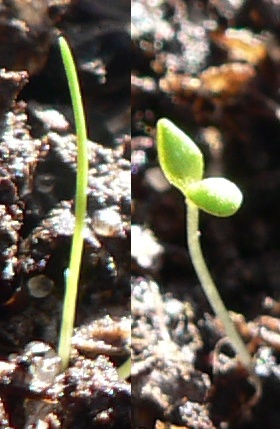
The embryonic root, the radicle, emerges and anchors the nascent plant, absorbing water and nutrients. Following this, the embryonic shoot, the hypocotyl, elongates, pushing the cotyledons (seed leaves) upwards towards sunlight. Above the cotyledons, the plumule develops into the first true leaves, which are morphologically distinct from the cotyledons and are responsible for sustained photosynthesis, marking the transition to autotrophic independence. This entire sequence is governed by complex hormonal signaling and gene expression.
📊 Key Facts & Numbers
The time from sowing to the emergence of the first true leaves can range from a few days for fast-growing species like radishes to several months for slow-growing trees.
👥 Key People & Organizations
Seedling growth is a potent symbol of hope, new beginnings, and potential across cultures, frequently appearing in literature, art, and religious symbolism.
🌍 Cultural Impact & Influence
Innovations include advanced seed priming techniques, such as hydropriming and hormone treatments, designed to accelerate germination and improve seedling vigor.
⚡ Current State & Latest Developments
A significant debate revolves around the definition and classification of seedlings, particularly concerning the role and fate of cotyledons. The ethics and long-term ecological impact of genetically modified seedlings designed for rapid growth or pest resistance are subjects of ongoing discussions. The optimal conditions for germination also remain a point of contention, as environmental factors can vary dramatically, leading to differing best practices for specific species and regions.
🤔 Controversies & Debates
We can anticipate the development of 'smart' seeds engineered to germinate only when optimal conditions are met, potentially reducing waste and improving success rates in challenging environments. Predictive modeling, powered by AI and machine learning, will offer hyper-localized germination forecasts, guiding planting decisions with unprecedented accuracy.
🔮 Future Outlook & Predictions
Seedling growth is fundamental to numerous practical applications. In agriculture, billions of seedlings are cultivated annually for staple crops like rice, wheat, and corn, forming the backbone of global food supply chains. Horticulture relies on seedlings for ornamental plants, fruits, and vegetables, driving the nursery and landscaping industries. Forestry uses seedlings for reforestation and timber production, with millions planted each year to restore degraded lands or manage timber resources. The pharmaceutical industry also derives compounds from various plant species, often cultivated from seedlings for consistent quality and yield. Even in ecological restoration projects, carefully selected seedlings are crucial for re-establishing native plant communities.
💡 Practical Applications
Understanding seedling growth provides a gateway to comprehending broader biological principles. It is intrinsically linked to plant physiology, exploring how plants manage energy and resources. The study of germination is a key component, detailing the biochemical triggers and environmental cues that awaken dormant seeds. Furthermore, it connects to plant genetics, as inherited traits dictate a seedling's potential for growth and resilience. For those interested in practical application, exploring seed saving techniques and propagation methods offers hands-on experience. The ecological role of seedlings in ecosystem restoration highlights their importance in biodiversity conservation and climate change mitigation.
Key Facts
- Category
- nature
- Type
- concept