
Contents
- 🎵 Origins & History
- ⚙️ How It Works
- 📊 Key Facts & Numbers
- 👥 Key People & Organizations
- 🌍 Cultural Impact & Influence
- ⚡ Current State & Latest Developments
- 🤔 Controversies & Debates
- 🔮 Future Outlook & Predictions
- 💡 Practical Applications
- 📚 Related Topics & Deeper Reading
- Frequently Asked Questions
- References
- Related Topics
Overview
The origins of Shiva worship are ancient and debated, with roots tracing back to the Indus Valley Civilization and the Vedic period. Early Vedic texts mention a deity named Rudra, often associated with storms and destruction, who is considered a precursor to Shiva. By the Gupta period (c. 320–550 CE), Shiva had emerged as a major deity, with the Puranic literature solidifying his theological position. The development of Shaivism as a distinct philosophical and devotional tradition, particularly through texts like the Shiva Purana and the Lingam Purana, further established his paramountcy. The worship of the Shiva lingam, an abstract representation of Shiva, became a central practice, signifying the formless, omnipresent nature of the divine. This evolution reflects a gradual synthesis of various indigenous traditions and Vedic influences, culminating in the complex deity recognized today.
⚙️ How It Works
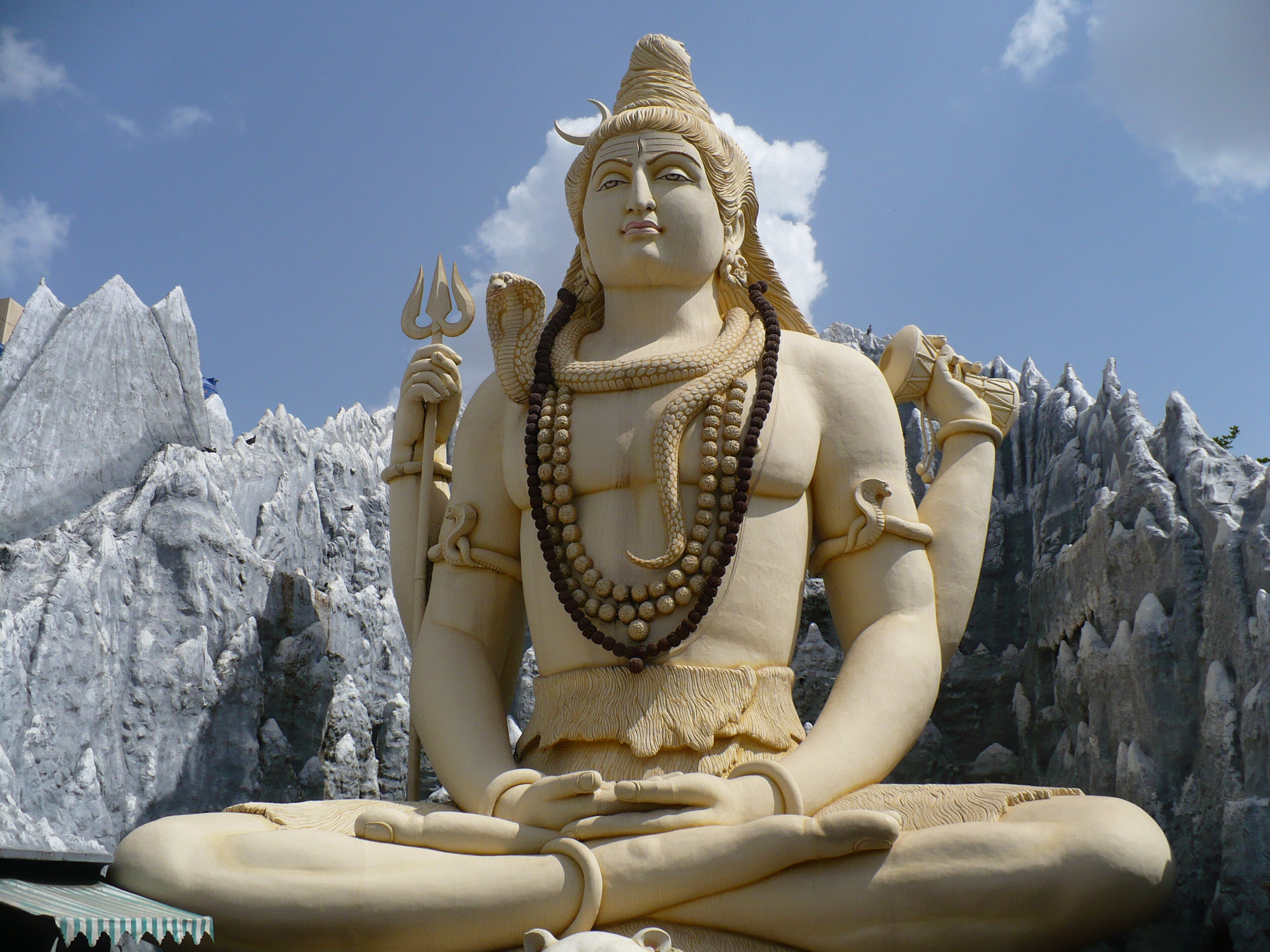
Shiva's cosmic functions are multifaceted, encompassing creation, preservation, and destruction, though his primary role in the Trimurti is that of the Destroyer. He is also the Lord of Yoga and meditation, the patron of ascetics, and the master of the dance (Nataraja). His consort is Parvati, and their children include Ganesha and Kartikeya. Shiva's divine power is often depicted through his third eye, which can incinerate anything it beholds, and the crescent moon adorning his forehead, symbolizing control over time. The sacred river Ganges flowing from his matted locks represents purification and divine grace. His association with the Himalayas, particularly Mount Kailash, signifies his ascetic detachment from the material world.
📊 Key Facts & Numbers
Devotion to Shiva is widespread, with an estimated 1.2 billion Hindus worldwide, a significant portion of whom identify as Shaivites. There are over 10 million temples dedicated to Shiva globally, with prominent ones like the Varanasi's Kashi Vishwanath Temple and the Somnath Temple in Gujarat attracting millions of pilgrims annually. The annual celebration of Maha Shivaratri is observed by an estimated 100 million devotees. The global market for religious tourism related to Shiva sites is valued in the billions of dollars, with significant economic impact in regions like Varanasi and Ujjain.
👥 Key People & Organizations
Key figures in the development and propagation of Shaivism include the Shaiva Agamas, a body of scripture that forms the theological basis for many Shaivite traditions. The Nayanars, a group of 63 Tamil poet-saints from the 6th to 8th centuries CE, composed devotional hymns to Shiva that are central to South Indian Shaivism. Philosophers like Adi Shankara, founder of the Advaita Vedanta school, incorporated Shiva into the Panchayatana puja, acknowledging his supreme status. Modern organizations like the Ramakrishna Mission and various ISKCON centers also play a role in disseminating Hindu philosophy, including aspects of Shiva worship, to a global audience.
🌍 Cultural Impact & Influence
Shiva's influence permeates Indian culture and extends globally through yoga, meditation, and the arts. His depiction as Nataraja, the cosmic dancer, is an iconic representation of creation and destruction, inspiring countless artworks, sculptures, and performances. The practice of yoga, deeply rooted in Shiva's yogic traditions, has become a global phenomenon, with millions practicing it for physical and spiritual well-being. His stories and mythology are retold in literature, film, and television, reaching audiences far beyond the Indian subcontinent. The concept of detachment and asceticism, embodied by Shiva, continues to resonate with spiritual seekers worldwide.
⚡ Current State & Latest Developments
In contemporary times, Shiva worship remains vibrant and dynamic. The global spread of yoga and meditation practices has introduced millions to Shiva's philosophical underpinnings. Online platforms and social media have become significant avenues for disseminating Shiva-related content, from devotional songs and discourses to philosophical discussions. Major festivals like Maha Shivaratri are increasingly celebrated by diaspora communities, fostering a sense of cultural continuity. The tourism industry around prominent Shiva temples, such as the Kedarnath Temple in Uttarakhand, continues to grow, attracting both pilgrims and secular tourists.
🤔 Controversies & Debates
One of the primary debates surrounding Shiva concerns his representation and the interpretation of his destructive aspect. Some critics, particularly from outside Hinduism, misinterpret his role as solely destructive, overlooking his creative and preservative functions. The practice of Bhairava worship, a fierce manifestation of Shiva, has also drawn criticism for its perceived association with extreme practices. Furthermore, the theological distinctions between various Shaivite sub-traditions, such as Pashupata, Shaiva Siddhanta, and Kashmir Shaivism, can lead to internal debates regarding doctrine and practice. The interpretation of the Shiva lingam itself has also been a subject of discussion, with some viewing it as phallic and others as a symbol of cosmic energy.
🔮 Future Outlook & Predictions
The future of Shiva worship is likely to be shaped by the ongoing globalization of Hindu practices and the increasing accessibility of spiritual teachings through digital media. We can anticipate a continued rise in the global adoption of yoga and meditation, further embedding Shiva's philosophical legacy into mainstream wellness culture. The development of virtual reality VR experiences may offer new ways to engage with Shiva's mythology and sacred sites. Furthermore, interfaith dialogues may lead to greater understanding and appreciation of Shiva's role within the broader spectrum of world religions. The adaptability of Shaivism, as evidenced by its historical evolution, suggests it will continue to resonate with new generations.
💡 Practical Applications
Shiva's teachings on yoga, meditation, and detachment are widely applied in modern wellness and self-help industries. The principles of mindfulness and present moment awareness, central to yogic philosophy, are now integrated into corporate training programs and therapeutic practices. His iconography, particularly Nataraja, serves as inspiration for artists and designers. The concept of cyclical destruction and renewal, inherent in Shiva's cosmic role, is explored in literature and film as a metaphor for personal transformation and societal change. The reverence for nature, exemplified by Shiva's dwelling in the Himalayas and his association with the Ganges, aligns with contemporary environmental movements.
Key Facts
- Year
- Ancient origins, prominent by Gupta period (c. 320–550 CE)
- Origin
- Indian subcontinent
- Category
- culture
- Type
- concept
Frequently Asked Questions
Who is Shiva in Hinduism?
Shiva is one of the principal deities of Hinduism, revered as the Supreme Being in the Shaivism tradition. He is part of the Trimurti, the Hindu trinity, where he represents the destructive aspect, crucial for cosmic renewal. Beyond destruction, he is also seen as the Lord of Yoga, meditation, and asceticism, embodying profound spiritual wisdom and detachment. His worship is widespread, with millions of devotees across India and globally, often through the symbolic representation of the Shiva Lingam.
What are the main symbols associated with Shiva?
Key symbols of Shiva include the Shiva lingam, representing his formless, omnipresent nature; the crescent moon on his forehead, symbolizing control over time; the third eye, capable of incinerating anything; the Ganges flowing from his matted locks, signifying purification; and the Damaru drum, whose sound creates the universe. His depiction as Nataraja, the cosmic dancer, symbolizes the eternal cycle of creation and destruction.
What is Shiva's role in the Trimurti?
In the Trimurti, the Hindu trinity comprising Brahma, Vishnu, and Shiva, Shiva represents the destructive aspect. This destruction is not merely annihilation but a necessary precursor to creation and renewal. While Brahma is the creator and Vishnu the preserver, Shiva's role as the destroyer is vital for the cyclical nature of the universe, ensuring that old forms are dissolved to make way for new ones. This function highlights his role in transformation and cosmic balance.
Where did the worship of Shiva originate?
The origins of Shiva worship are ancient, with scholars tracing its roots to the Indus Valley Civilization and the Vedic deity Rudra. Rudra, associated with storms and destruction, is considered an early form of Shiva. By the Gupta period (c. 320–550 CE), Shiva had solidified as a major deity, with his worship becoming more formalized through the compilation of Puranic literature and the development of Shaivism as a distinct tradition. The worship of the Shiva lingam became a central practice during this era.
Is Shiva only worshipped as a destroyer?
No, Shiva is far more than just a destroyer. While his role in the Trimurti is destruction, this is understood as a transformative force essential for cosmic cycles, not mere annihilation. He is also revered as the Lord of Yoga, meditation, and asceticism, embodying profound wisdom, self-discipline, and detachment from worldly pleasures. His benevolent aspects include being a protector, a healer, and the source of spiritual knowledge, making him a complex deity with multifaceted roles.
How is Shiva worshipped today?
Shiva is worshipped in various ways today, most commonly through the Shiva lingam, an aniconic representation. Devotees offer water, milk, fruits, and flowers to the lingam, chant mantras like 'Om Namah Shivaya,' and observe fasts, especially on Mondays and during Maha Shivaratri. His images, such as the Nataraja form, are also worshipped. His teachings on yoga and meditation are widely practiced globally, often seen as a form of devotion in itself.
What are the main philosophical schools associated with Shiva?
The primary philosophical tradition centered on Shiva is Shaivism, which has several major schools. These include Pashupata, one of the oldest; Shaiva Siddhanta, prevalent in South India, which emphasizes devotion and grace; and Kashmir Shaivism, a non-dualistic philosophy that views Shiva as the immanent consciousness of the universe. Adi Shankara's Advaita Vedanta also acknowledges Shiva's supreme status within the broader Hindu framework.