
Contents
Overview
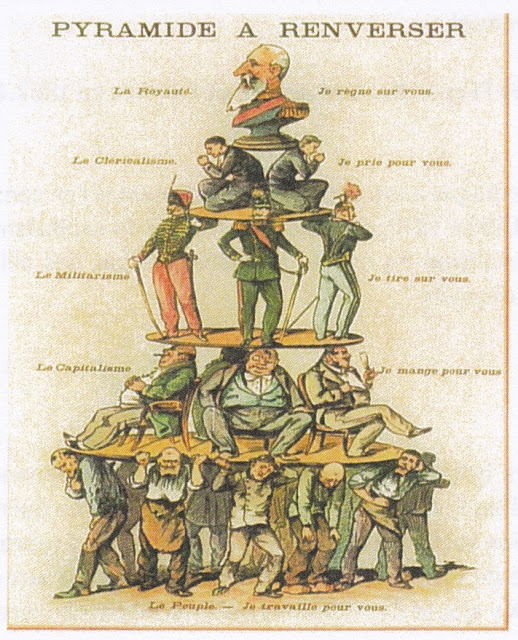
The concept of social structure, while formalized in the early 20th century, traces its intellectual lineage back to classical thinkers like Aristotle, who analyzed the polis and its constituent parts, and Karl Marx, whose theories of class struggle and historical materialism posited economic relations as the bedrock of societal organization. Early sociological pioneers like Émile Durkheim emphasized 'social facts'—ways of acting, thinking, and feeling external to the individual—as the building blocks of social order, distinguishing between mechanical solidarity in simpler societies and organic solidarity in more complex ones. Max Weber further refined the understanding by focusing on social action, bureaucracy, and the stratification of society into classes, statuses, and parties. The mid-20th century saw the rise of structural functionalism, championed by figures like Talcott Parsons, who viewed society as a complex system whose parts work together to promote solidarity and stability, and structuralism, notably advanced by Claude Lévi-Strauss, which sought universal underlying structures in myth, kinship, and language.
⚙️ How It Works
Social structures operate through a complex interplay of norms, roles, institutions, and power dynamics. Norms define expected behaviors within specific contexts, while roles prescribe the actions associated with particular social positions (e.g., parent, employee, citizen). Institutions—such as the family, education system, legal system, and economy—provide established patterns of social behavior and are often codified through laws and regulations. Power is a critical component, determining who has the authority to define norms, assign roles, and control resources. These elements are not static; they are constantly reinforced through socialization, where individuals learn the rules and expectations of their society, and are subject to negotiation and contestation by individuals and groups. The aggregate of these patterned arrangements forms the 'social structure' that both enables and constrains human agency, creating predictable patterns in social life, from marriage rates to voting behavior.
📊 Key Facts & Numbers
Globally, common patterns emerge across diverse social structures. The influence of religious institutions, like the Catholic Church with over 1.3 billion adherents worldwide, continues to shape moral and social structures in many regions. Reportedly, the World Bank indicated a significant number of people living in poverty globally, highlighting persistent economic inequality. Similarly, the United Nations has noted a trend of increasing urbanization, driven by economic structures that concentrate opportunities. Data consistently shows significant gender pay gaps across most developed economies, with women earning, on average, less than men. These figures illustrate the pervasive nature of economic and social stratification.
👥 Key People & Organizations
Key figures in understanding social structures include Karl Marx, whose theories on class conflict and historical materialism provided a foundational critique of capitalist social structures. Émile Durkheim, often considered one of the founders of sociology, introduced the concept of 'social facts' and explored social solidarity. Max Weber offered a multi-dimensional view of stratification, emphasizing class, status, and power, and analyzed the rise of bureaucratic structures. Later theorists like Talcott Parsons developed structural functionalism, viewing society as an integrated system, while Pierre Bourdieu introduced concepts like habitus and cultural capital to explain how social structures are internalized and reproduced. Organizations like the American Sociological Association and the International Sociological Association serve as crucial hubs for research and dissemination of knowledge on social structures.
🌍 Cultural Impact & Influence
Social structures profoundly influence culture by shaping values, beliefs, and practices. The structure of the family, for example, dictates norms around marriage, child-rearing, and inheritance, which vary dramatically across cultures and historical periods. Economic structures, particularly capitalism, have fostered a culture of consumerism and individualism in many parts of the world, as evidenced by the global reach of brands like Apple and Nike. Political structures, such as democracy or authoritarianism, directly impact freedom of expression, civic participation, and the distribution of rights and responsibilities. The pervasive influence of media structures, exemplified by platforms like Facebook and Google, shapes public discourse, disseminates cultural trends, and can reinforce or challenge existing social hierarchies. Even seemingly minor structures, like the design of public spaces or the layout of online forums, can subtly guide social interaction and cultural norms.
⚡ Current State & Latest Developments
In 2024, social structures are undergoing rapid transformation, largely driven by technological advancements and globalization. The increasing prevalence of remote work, accelerated by the COVID-19 pandemic, is altering traditional workplace structures and urban planning. Globalized communication networks, facilitated by platforms like X (formerly Twitter) and TikTok, enable the rapid formation of transnational social movements and cultural exchanges, challenging established national and cultural boundaries. Debates around identity politics and intersectionality continue to highlight how multiple social structures (race, gender, class, sexuality) interact to create unique experiences of privilege and oppression, pushing for a more nuanced understanding of social stratification.
🤔 Controversies & Debates
The study of social structures is fraught with controversy, particularly concerning determinism versus agency. A central debate revolves around the extent to which individuals are products of their social structures versus their capacity to act independently and effect change. Structural functionalists, like Talcott Parsons, have been criticized for overemphasizing social stability and downplaying conflict and inequality, potentially justifying the status quo. Conversely, conflict theorists, heavily influenced by Karl Marx, are sometimes accused of overemphasizing conflict and neglecting the sources of social cohesion. The role of culture in either reinforcing or challenging dominant structures is another contentious area, with debates on whether culture is a reflection of underlying economic structures or an independent force. Furthermore, the very definition and measurement of social structures, such as 'class,' remain subjects of ongoing academic dispute.
🔮 Future Outlook & Predictions
The future of social structures is likely to be characterized by increasing complexity and fluidity, driven by technological innovation and demographic shifts. We may see the emergence of new forms of social organization facilitated by blockchain technology and decentralized autonomous organizations (DAOs), challenging traditional corporate and governmental structures. The ongoing impact of climate change will undoubtedly reshape global social structures, potentially leading to mass migrations, resource conflicts, and new forms of international cooperation or division. As AI becomes more integrated into daily life, it could fundamentally alter social interac
Key Facts
- Category
- culture
- Type
- topic