
Contents
Overview
The theoretical underpinnings of stimulated emission were laid out by Albert Einstein in his seminal 1917 paper, 'On the Quantum Theory of Radiation.' Building upon Max Planck's quantum hypothesis and Niels Bohr's atomic model, Einstein introduced the concept of three fundamental processes governing the interaction of light and matter: absorption, spontaneous emission, and stimulated emission. He meticulously derived the coefficients (A and B coefficients) that describe the rates of these processes, demonstrating that for light amplification to occur, a state where more atoms are in an excited state than in a lower energy state (population inversion) must be achievable. This radical idea, initially met with skepticism, was experimentally confirmed decades later, paving the way for the invention of the maser by Charles Townes, James P. Gordon, and Herbert Zeiger in 1954, and subsequently the laser by Theodore H. Maiman in 1960.
⚙️ How It Works
Stimulated emission is a quantum optical process that occurs when a photon with energy precisely matching the difference between two energy levels of an atom or molecule encounters an atom already in the higher energy state. Instead of waiting for the atom to decay spontaneously, the incident photon acts as a catalyst, inducing the excited atom to transition to the lower energy state. This transition releases the atom's excess energy as a second photon. Crucially, this newly emitted photon is an exact replica of the incident photon: it shares the same frequency (and thus color), polarization, and direction of propagation, and is in phase with the original photon. This coherent amplification is the essence of laser light, distinguishing it from the incoherent light emitted spontaneously by sources like incandescent bulbs or LEDs. The probability of stimulated emission is directly proportional to the intensity of the incident radiation and the number of atoms in the excited state, as quantified by Einstein's B coefficient.
📊 Key Facts & Numbers
The concept of stimulated emission is central to understanding light amplification, with lasers being the most prominent application. The first working laser, a ruby laser developed by Theodore H. Maiman in 1960, emitted light at a wavelength of 694.3 nanometers, producing a pulsed output of approximately 1 kilowatt peak power. Modern fiber optic communication systems rely on erbium-doped fiber amplifiers (EDFAs), which utilize stimulated emission to boost optical signals over long distances, with typical amplification gains exceeding 30 decibels. The global laser market was valued at an estimated $15.1 billion in 2023 and is projected to grow to $25.6 billion by 2030, underscoring the vast economic impact of technologies enabled by stimulated emission. Approximately 10^19 photons per second are generated in a typical pulsed laser system.
👥 Key People & Organizations
The theoretical foundation of stimulated emission is inextricably linked to Albert Einstein, whose 1917 work on quantum theory of radiation introduced the concept and its governing coefficients. In the experimental realm, Charles Townes, James P. Gordon, and Herbert Zeiger were instrumental in building the first maser at Columbia University in 1954, demonstrating the practical application of stimulated emission. Later, Theodore H. Maiman at Hughes Research Laboratories successfully constructed the first working laser using a synthetic ruby crystal in 1960. Key organizations like Bell Labs and IBM have also played significant roles in advancing laser technology and understanding stimulated emission through extensive research and development.
🌍 Cultural Impact & Influence
Stimulated emission is the invisible engine behind much of modern technology and scientific inquiry. The laser, a direct consequence of this phenomenon, has revolutionized industries from retail and medicine to manufacturing and data storage. Fiber optic cables, carrying the internet and global communications, depend on erbium-doped fiber amplifiers that amplify light via stimulated emission. In science, lasers are indispensable tools for spectroscopy, interferometry, and high-energy physics experiments, enabling discoveries that would otherwise be impossible. The ability to generate highly monochromatic and coherent light has also profoundly impacted fields like holography and quantum computing.
⚡ Current State & Latest Developments
The field of stimulated emission continues to evolve rapidly, with ongoing research focusing on new gain media and more efficient pumping mechanisms. Recent developments include advances in semiconductor lasers, such as quantum cascade lasers and diode lasers, which offer compact, efficient, and tunable light sources for a wide range of applications. Researchers are also exploring novel materials, including metamaterials and nanoparticles, for enhanced stimulated emission properties. The development of ultrafast lasers capable of generating femtosecond and attosecond pulses is pushing the boundaries of time-resolved studies in chemistry and physics. Furthermore, the integration of stimulated emission principles into quantum information science is a burgeoning area, with potential applications in secure communication and advanced computation.
🤔 Controversies & Debates
While the fundamental physics of stimulated emission is well-established, debates persist regarding the most efficient and practical methods for achieving population inversion in various laser systems. The development of high-power lasers also raises safety concerns, necessitating strict protocols for handling and operation, particularly in industrial and medical settings. Another area of discussion involves the environmental impact of laser manufacturing and disposal, prompting research into more sustainable materials and processes. The potential for misuse of laser technology, from directed-energy weapons to illicit signaling, also presents ethical considerations that continue to be debated within scientific and policy circles.
🔮 Future Outlook & Predictions
The future of stimulated emission is intrinsically tied to the advancement of laser technology and its applications. We can anticipate the development of even more powerful, efficient, and compact lasers, potentially enabling breakthroughs in areas like fusion energy, advanced materials processing, and personalized medicine. The exploration of new gain media, including exotic materials and engineered nanostructures, promises to unlock novel wavelengths and functionalities. Furthermore, the increasing role of stimulated emission in quantum computing and quantum communication suggests a future where coherent light sources are not just tools for observation but active components in next-generation information processing systems. The drive towards higher energy efficiency and reduced environmental footprint will also shape the next generation of stimulated emission devices.
💡 Practical Applications
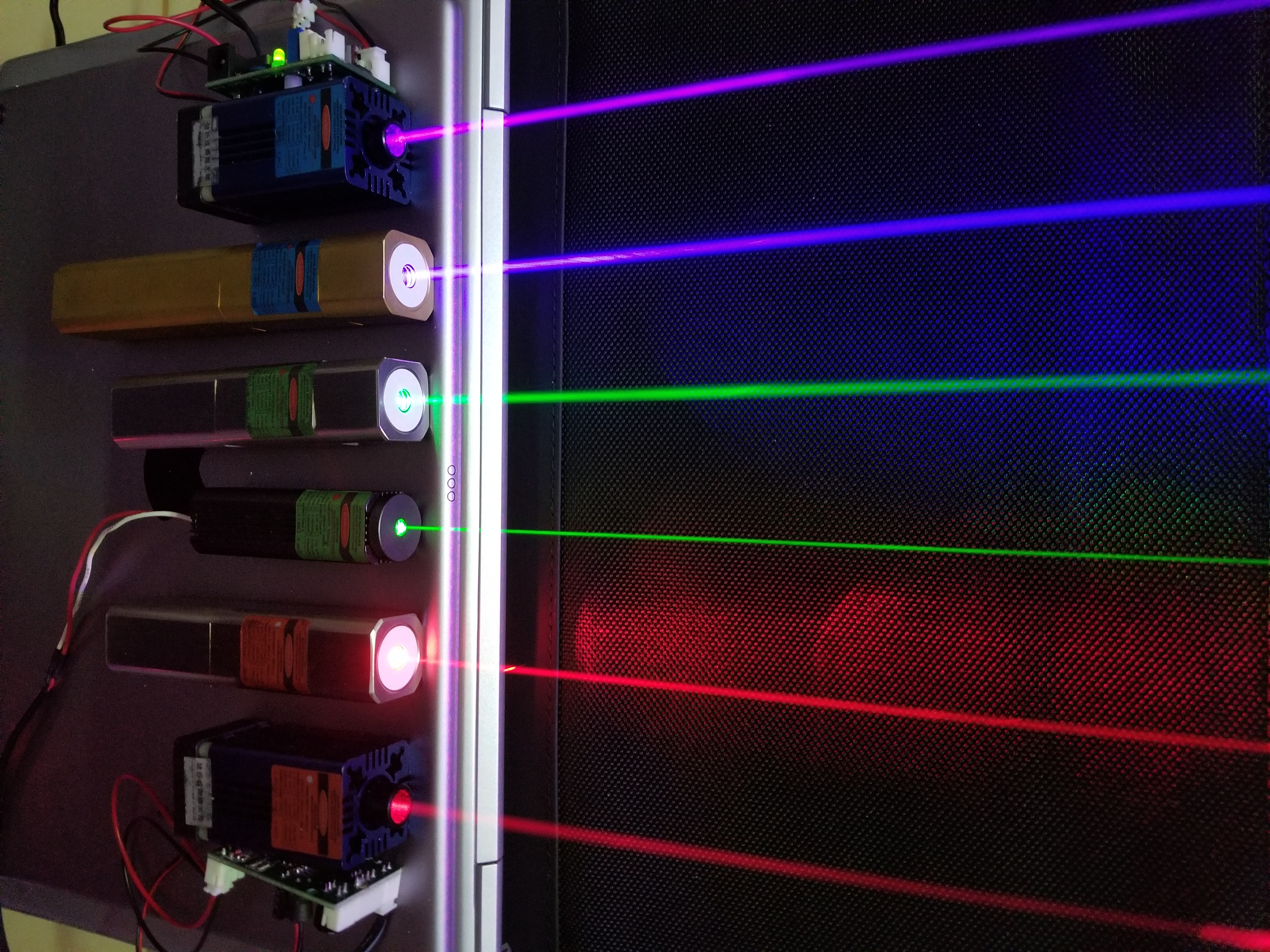
Stimulated emission is the operational principle behind a vast array of practical technologies. Laser cutting and laser welding are indispensable in automotive and aerospace manufacturing, offering precision and speed. In medicine, lasers are used for surgery (e.g., LASIK eye surgery, tumor ablation), dermatological treatments, and diagnostics. Barcode scanners in retail and logistics rely on stimulated emission to read product information. Optical data storage, such as Blu-ray discs, uses lasers to read and write information. [[Laser-pointers|Laser p
Key Facts
- Category
- science
- Type
- topic