
Contents
Overview
The quest for refrigerants began in the late 19th century with the development of early refrigeration technologies. Initial refrigerants like ammonia (NH3), sulfur dioxide (SO2), and methyl chloride were effective but toxic or flammable. The mid-20th century saw the rise of chlorofluorocarbons (CFCs) and hydrochlorofluorocarbons (HCFCs), championed by companies like DuPont under brands like Freon, due to their perceived safety and stability. The discovery of their ozone-depleting properties in the 1970s led to the landmark Montreal Protocol in 1987, phasing out CFCs and HCFCs. This paved the way for hydrofluorocarbons (HFCs), which, while ozone-friendly, proved to be potent greenhouse gases. The Kigali Amendment to the Montreal Protocol, adopted in 2016, now mandates a global phase-down of HFCs, igniting the current race for sustainable alternatives.
⚙️ How It Works
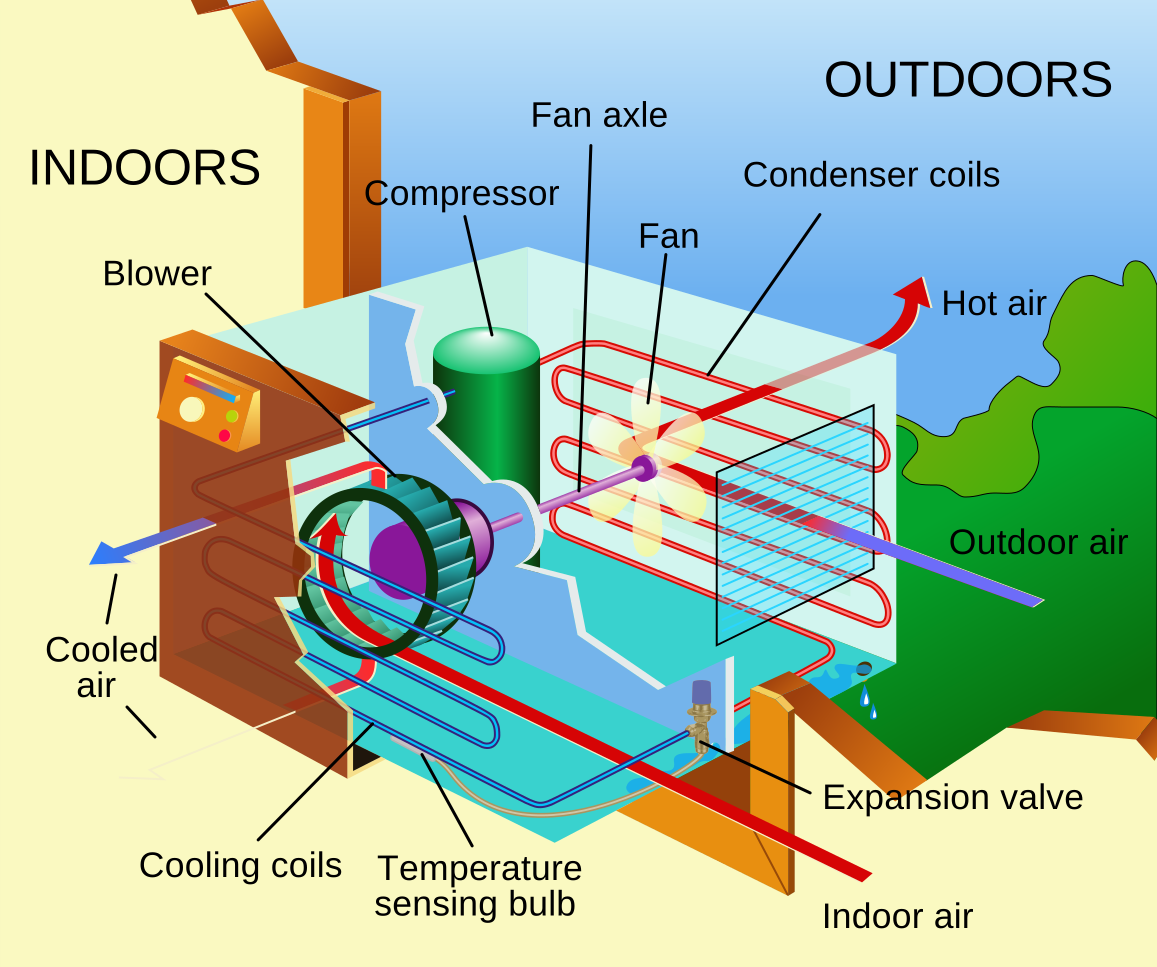
Sustainable refrigerants function on the same thermodynamic principles as their predecessors, utilizing a phase-change cycle to transfer heat. In a typical vapor-compression system, the refrigerant absorbs heat in the evaporator, turning from a liquid to a gas. This low-pressure gas is then compressed, increasing its temperature and pressure. The hot, high-pressure gas then flows into the condenser, where it releases heat to the warmer surroundings and condenses back into a liquid. This liquid then passes through an expansion valve, reducing its pressure and temperature before returning to the evaporator to repeat the cycle. The key difference with sustainable refrigerants lies in their chemical composition, prioritizing low Global Warming Potential (GWP) and minimal environmental impact, often while maintaining or improving energy efficiency compared to older HFCs. For instance, hydrofluoroolefins (HFOs) like R-1234yf have GWPs below 10, a stark contrast to HFCs like R-410A which can have GWPs exceeding 2000.
📊 Key Facts & Numbers
The global refrigerant market is projected to reach over $25 billion by 2027, with the sustainable segment experiencing rapid growth. HFCs currently account for approximately 80% of the market, but this share is expected to decline significantly. The Kigali Amendment aims to reduce HFC consumption by 80% by 2047. Hydrofluoroolefins (HFOs) are capturing a growing market share, with the global market for HFOs alone expected to surpass $3 billion by 2025. Natural refrigerants like CO2 (R-744) are seeing increased adoption in commercial refrigeration, with systems utilizing CO2 growing at an estimated 15% annually. The transition requires significant investment, with manufacturers like Carrier and Trane Technologies investing billions in developing new equipment compatible with these lower-GWP alternatives. The average GWP of refrigerants used in new equipment is projected to drop from over 1400 to below 700 by 2030.
👥 Key People & Organizations
Key figures driving the sustainable refrigerant transition include Dr. Stephen Olsen, a leading researcher in low-GWP refrigerants, and organizations like the United Nations Environment Programme (UNEP), which oversees the implementation of the Montreal Protocol and its amendments. Major chemical manufacturers such as Honeywell, Chemours, and Arkema are at the forefront of developing and producing new sustainable refrigerant blends. Equipment manufacturers like Daikin, LG, and Samsung are redesigning air conditioning and refrigeration units to accommodate these new substances. Policy advocacy groups like the Environmental Investigation Agency (EIA) play a crucial role in pushing for stricter regulations and faster phase-downs of high-GWP refrigerants.
🌍 Cultural Impact & Influence
The shift to sustainable refrigerants has a profound cultural resonance, symbolizing a global commitment to environmental stewardship and technological innovation. It's a tangible example of how scientific discovery and international cooperation can address planetary challenges. The widespread adoption of these new chemicals is reshaping industries, from HVAC manufacturing to food retail, influencing consumer choices and corporate sustainability reporting. Public awareness campaigns and educational initiatives are crucial in fostering acceptance of refrigerants that may have different handling requirements, such as flammability in hydrocarbons. This transition is becoming a key performance indicator for corporate social responsibility, influencing brand perception and investor confidence in companies like Johnson Controls.
⚡ Current State & Latest Developments
As of 2024, the global phase-down of HFCs is well underway, with developed nations leading the charge and developing nations following on a staggered schedule. New refrigerants, particularly hydrofluoroolefins (HFOs) and blends containing them, are increasingly appearing in new air conditioning and refrigeration equipment. Regulations are tightening globally, with many regions implementing bans on high-GWP refrigerants in specific applications. For example, the European Union's F-Gas Regulation continues to drive the adoption of lower-GWP alternatives. Companies are investing heavily in retrofitting existing infrastructure and developing next-generation cooling technologies. The market is also seeing a surge in demand for leak detection and servicing equipment specifically designed for these newer refrigerants.
🤔 Controversies & Debates
The primary controversy surrounding sustainable refrigerants centers on the trade-offs between environmental benefit, safety, cost, and performance. While HFOs offer low GWP, some have concerns about their potential breakdown products, such as trifluoroacetic acid (TFA), and their long-term environmental fate. Natural refrigerants like ammonia (NH3) are highly efficient and have zero GWP but are toxic and require stringent safety measures, limiting their use in occupied spaces. Hydrocarbons like propane (R-290) are highly flammable, necessitating careful system design and handling protocols, which can increase initial installation costs. Furthermore, the rapid transition places a significant economic burden on developing nations and smaller businesses to upgrade equipment and retrain technicians, leading to debates about the pace and equity of the phase-down.
🔮 Future Outlook & Predictions
The future of sustainable refrigerants points towards a diverse portfolio of solutions tailored to specific applications. We will likely see a continued dominance of hydrofluoroolefins (HFOs) in many mobile air conditioning and residential HVAC systems, while natural refrigerants gain further traction in commercial and industrial settings. Research is ongoing into novel refrigerant chemistries, including ammonia-water mixtures and advanced CO2 transcritical systems. The development of 'drop-in' or 'near drop-in' replacements for existing HFCs will remain a key focus, aiming to minimize the cost and complexity of the transition. By 2030, it's projected that over 70% of new refrigeration and air conditioning equipment globally will utilize low-GWP refrigerants, driven by regulatory mandates and technological advancements from companies like LG.
💡 Practical Applications
Sustainable refrigerants are integral to a wide array of cooling applications. In residential and commercial air conditioning, they ensure comfortable indoor environments. In the food industry, they are vital for refrigerators, freezers, and cold storage facilities, preserving perishables and reducing waste. They are also critical in transportation, from the air conditioning in cars and buses to refrigerated trucks and shipping containers that maintain the cold chain for goods. Industrial processes, suc
Key Facts
- Category
- technology
- Type
- topic