
Contents
- 🎵 Origins & History
- ⚙️ How It Works
- 📊 Key Facts & Numbers
- 👥 Key People & Organizations
- 🌍 Cultural Impact & Influence
- ⚡ Current State & Latest Developments
- 🤔 Controversies & Debates
- 🔮 Future Outlook & Predictions
- 💡 Practical Applications
- 📚 Related Topics & Deeper Reading
- Frequently Asked Questions
- References
- Related Topics
Overview
The vestibulo-ocular reflex (VOR) is a critical reflex that stabilizes gaze during head movements, ensuring that images remain steady on the retina. This reflex operates by producing eye movements in the opposite direction of head motion, allowing individuals to maintain a clear view of their surroundings. This mechanism is vital for daily activities, particularly for reading and navigating environments, as it compensates for involuntary head movements. Current research continues to explore the VOR's complexities, including its activation through various stimuli and its role in balance and spatial orientation.
🎵 Origins & History
The vestibulo-ocular reflex (VOR) has its origins in the early studies of the vestibular system, which were significantly advanced by researchers like Charles Bell in the early 19th century. By the 1970s, the importance of the VOR in clinical settings was recognized, particularly in diagnosing vestibular disorders. The reflex's role in stabilizing vision during head movements has made it a focal point in both neuroscience and ophthalmology, leading to further studies on its implications in conditions such as Meniere's disease and vestibular neuritis.
⚙️ How It Works
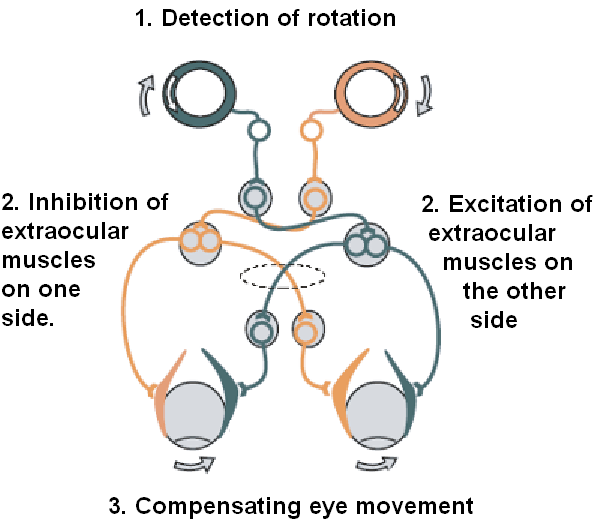
The VOR functions through a complex interaction between the vestibular system and the ocular muscles. When the head rotates, the semicircular canals in the inner ear detect this movement and send signals to the brain, which then coordinates eye movements to counteract the head's motion. This reflex operates independently of visual input, meaning it can be triggered by changes in temperature in the inner ear, such as during caloric testing used in clinical evaluations. The VOR is crucial for maintaining visual stability, especially during rapid head movements.
📊 Key Facts & Numbers
Key figures in the study of the vestibulo-ocular reflex include Robert E. McCulloch, who contributed significantly to our understanding of the reflex's mechanisms, and John M. F. McGowan, who explored its clinical implications. Organizations such as the American Academy of Otolaryngology and the Vestibular Disorders Association have been instrumental in promoting research and awareness about vestibular disorders and the VOR. Their efforts have led to improved diagnostic techniques and treatment options for individuals suffering from vestibular dysfunction, highlighting the importance of this reflex in everyday life.
👥 Key People & Organizations
The VOR has a profound cultural impact, particularly in the fields of sports and rehabilitation. Athletes in sports requiring quick head movements, like soccer and basketball, reportedly rely on an intact VOR for optimal performance. Training programs often incorporate exercises to enhance vestibular function, demonstrating the reflex's relevance beyond clinical settings. Additionally, the VOR's implications in virtual reality (VR) technology have sparked interest in how these systems can simulate real-world movements, further blurring the lines between physical and digital experiences. The cultural resonance of the VOR extends into popular media, where discussions about balance and coordination often reference its mechanics.
🌍 Cultural Impact & Influence
Advancements in neurotechnology are expected to lead to more precise assessments for vestibular disorders. Emerging technologies, such as virtual reality and augmented reality, are being explored for their potential to enhance vestibular training and improve outcomes for individuals with vestibular disorders. Recent advancements in diagnostic imaging, including functional MRI, are providing new insights into the neural pathways involved in the VOR, paving the way for innovative therapeutic approaches. The integration of these technologies into clinical practice is expected to enhance our understanding of the VOR and its applications in various fields.
⚡ Current State & Latest Developments
Controversies surrounding the vestibulo-ocular reflex often arise in discussions about its clinical assessment and treatment. Some experts argue that traditional methods of evaluating the VOR may not accurately reflect a patient's functional abilities in real-world scenarios. Others advocate for more comprehensive assessments that consider the VOR's interaction with other sensory systems, such as proprioception and vision. Additionally, debates persist regarding the effectiveness of vestibular rehabilitation therapies, with some studies showing mixed results. These discussions highlight the need for ongoing research to refine our understanding of the VOR and its clinical implications.
🤔 Controversies & Debates
Looking ahead, the future of vestibulo-ocular reflex research is promising. Experts predict that advancements in neurotechnology will lead to more precise assessments and targeted interventions for vestibular disorders. The integration of artificial intelligence in diagnostic tools may enhance our ability to predict and monitor VOR function over time. Furthermore, as our understanding of the VOR's role in neuroplasticity grows, new rehabilitation strategies may emerge, offering hope for individuals with vestibular impairments. The potential for interdisciplinary collaboration between fields such as neuroscience, engineering, and rehabilitation is likely to drive innovation in this area.
🔮 Future Outlook & Predictions
The practical applications of the vestibulo-ocular reflex extend into various fields, including medicine, sports, and rehabilitation. Rehabilitation programs often incorporate exercises designed to enhance VOR function, helping individuals regain balance and stability. In sports, coaches and trainers utilize VOR training to improve athletes' performance and reduce the risk of injury. Additionally, the VOR's principles are being applied in the development of virtual reality systems that aim to create immersive experiences while maintaining visual stability.
💡 Practical Applications
Related topics that further explore the vestibulo-ocular reflex include the vestibular system, which encompasses the anatomical structures involved in balance and spatial orientation, and nystagmus, a condition characterized by involuntary eye movements often linked to VOR dysfunction. Other relevant areas include vestibular rehabilitation, which focuses on therapeutic approaches to improve balance and reduce symptoms in individuals with vestibular disorders, and neuroplasticity, which examines how the brain adapts and reorganizes itself in response to injury or training.
Key Facts
- Year
- 2024
- Origin
- Global
- Category
- science
- Type
- concept
Frequently Asked Questions
What is the vestibulo-ocular reflex?
The vestibulo-ocular reflex (VOR) is a reflex that stabilizes gaze during head movements by producing eye movements in the opposite direction. This mechanism is crucial for maintaining visual stability, allowing individuals to focus on objects even as their heads move. The VOR operates independently of visual input.