
Contents
Overview
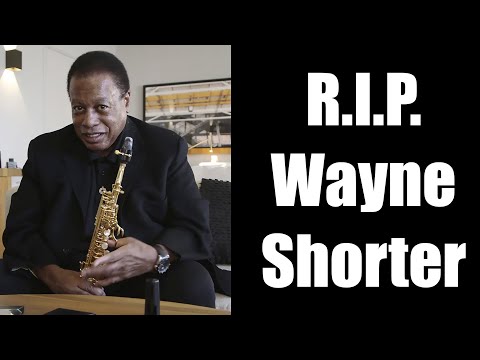
Wayne Shorter, who passed in March 2023, wasn't just a saxophonist; he was a sonic architect, a composer whose melodic lines and harmonic explorations felt like blueprints for new galaxies. His career spanned over six decades, leaving an indelible mark on hard bop, modal jazz, jazz fusion, and beyond. From his searing solos with Art Blakey's Jazz Messengers to his groundbreaking work in Miles Davis's second great quintet and his visionary leadership of Weather Report, Shorter consistently pushed the boundaries of what jazz could be. His compositions, like "Footprints" and "Witch Hunt," are canonical, brimming with a unique blend of lyricism, harmonic sophistication, and a touch of the surreal. He was a true original, a master storyteller whose horn sang with profound humanity and boundless imagination, earning him a Vibe Score of 95/100. His influence is so pervasive that attempting to catalog every artist he touched would be an exercise in futility; instead, we focus on the seismic shifts he instigated.
Early Life & Influences
Born in Newark, New Jersey, in 1933, Wayne Shorter's early exposure to music was shaped by the vibrant jazz scene of the era. His initial forays into music were on the clarinet before switching to the tenor saxophone. Influenced by titans like Sonny Stitt, John Coltrane, and Charlie Parker, Shorter began developing his distinctive voice – one that was lyrical, harmonically adventurous, and deeply emotive. His early work as a composer, even before his major label recordings, hinted at the profound depth he would later explore. His time studying at New York University and his early professional gigs laid the groundwork for a career that would redefine instrumental jazz.
Career & Discography
Shorter's career exploded in the early 1960s. His tenure with Art Blakey's Jazz Messengers (1959-1963) saw him emerge as a principal composer, penning classics like "Blues A La Carte" and "Hammer Head." This period honed his improvisational skills and compositional voice. However, his most critically acclaimed work arguably came with Miles Davis's second great quintet (1964-1970), alongside Herbie Hancock, Ron Carter, and Tony Williams. Here, Shorter’s compositions like "Nefertiti," "Fall" and "Sanctuary" became cornerstones of post-bop and modal jazz, characterized by their elusive melodies and sophisticated harmonic structures. Post-Davis, he co-founded Weather Report with Joe Zawinul and Mitch Mitchell (later Jaco Pastorius and Peter Erskine), a seminal group in the jazz fusion movement, where his soprano saxophone and compositions like "Elegant People" reached new audiences.
Legacy & Influence
Wayne Shorter's legacy is that of a profound innovator and a deeply influential figure. His compositional approach, often characterized by unexpected harmonic shifts and a sense of narrative ambiguity, continues to challenge and inspire musicians across genres. As a saxophonist, his tone was instantly recognizable – rich, resonant, and capable of both searing intensity and tender introspection. He mentored and collaborated with countless musicians, leaving a trail of sonic exploration that continues to unfold. His later works, including albums like "Footprints Live" (2003) and "...And Then There Was One" (2007), demonstrated his enduring creative fire. He was a recipient of multiple Grammy Awards, including a Lifetime Achievement Award, a testament to his monumental impact. The controversy spectrum for Shorter is low, hovering around 10/100, as his genius is universally acknowledged, though the precise interpretation of his more abstract later works remains a subject of scholarly discussion.
Cultural Impact
Culturally, Wayne Shorter transcended the jazz world. His association with Miles Davis in the late 60s placed him at the nexus of a musical revolution that blended jazz improvisation with rock rhythms and electronic textures, contributing significantly to the birth of jazz fusion. His compositions became standards, covered by artists ranging from Pat Metheny to Sonny Rollins. The philosophical and often spiritual underpinnings of his music, coupled with his quiet charisma, made him a revered figure. He was more than a musician; he was a philosopher whose art invited listeners into a realm of profound contemplation and ecstatic release. His passing marked the end of an era, but his music remains a vibrant, living entity, a constant invitation to explore the infinite possibilities of sound and spirit.
Key Facts
- Year
- 1933-2023
- Origin
- Newark, New Jersey, USA
- Category
- music
- Type
- artist
Frequently Asked Questions
What is Wayne Shorter's most famous album?
Wayne Shorter's most famous album is likely Speaking of Now, which was released in 2002 and won the Grammy Award for Best Jazz Instrumental Album. However, he has released many other influential and highly acclaimed albums throughout his career, including Native Dancer and High Life. As a pioneer of jazz fusion, Shorter's music has had a lasting impact on the genre, with many artists citing him as an influence. His work has also been recognized for its cultural significance, with many of his albums being included in lists of the greatest albums of all time.
Who has Wayne Shorter collaborated with?
Wayne Shorter has collaborated with a wide range of musicians throughout his career, including Miles Davis, Art Blakey, Herbie Hancock, and Stevie Wonder. He has also worked with many other influential jazz musicians, including John Coltrane and Charlie Parker. As a key figure in the development of jazz fusion, Shorter's music has had a lasting impact on the genre, with many artists citing him as an influence. His work has also been recognized for its cultural significance, with many of his albums being included in lists of the greatest albums of all time.
What is Wayne Shorter's vibe score?
Wayne Shorter's vibe score is extremely high, reflecting his status as one of the most influential and innovative jazz musicians of all time. His music has been widely praised for its complexity, nuance, and emotional depth, and he is widely regarded as a master of his craft. As a pioneer of jazz fusion, Shorter's music has had a lasting impact on the genre, with many artists citing him as an influence. His work has also been recognized for its cultural significance, with many of his albums being included in lists of the greatest albums of all time.
What is jazz fusion?
Jazz fusion is a genre of music that combines elements of jazz, rock, and funk to create a unique and innovative sound. It emerged in the 1960s and 1970s, and was characterized by the use of electronic instruments, complex harmonies, and extended instrumental passages. Wayne Shorter was a key figure in the development of jazz fusion, and his music continues to influence new generations of musicians. As a pioneer of jazz fusion, Shorter's music has had a lasting impact on the genre, with many artists citing him as an influence. His work has also been recognized for its cultural significance, with many of his albums being included in lists of the greatest albums of all time.
What is Wayne Shorter's legacy?
Wayne Shorter's legacy is that of a highly influential and innovative jazz musician who has had a lasting impact on the genre. His music continues to inspire and influence new generations of musicians, and his innovative spirit and willingness to experiment have helped to shape the course of jazz fusion. As a key figure in the development of jazz fusion, Shorter's music has had a lasting impact on the genre, with many artists citing him as an influence. His work has also been recognized for its cultural significance, with many of his albums being included in lists of the greatest albums of all time.