
Contents
- 🎵 Origins & History
- ⚙️ How It Works
- 📊 Key Facts & Numbers
- 👥 Key People & Organizations
- 🌍 Cultural Impact & Influence
- ⚡ Current State & Latest Developments
- 🤔 Controversies & Debates
- 🔮 Future Outlook & Predictions
- 💡 Practical Applications
- 📚 Related Topics & Deeper Reading
- Frequently Asked Questions
- References
- Related Topics
Overview
The human impulse to predict the weather is as old as civilization itself, with ancient cultures like the Babylonians, Greeks, and Chinese meticulously observing celestial bodies and atmospheric phenomena to forecast seasonal changes and immediate conditions. Early methods involved empirical observations of wind direction, cloud formations, and animal behavior, often intertwined with astrological beliefs. A significant leap occurred in the 17th century with the invention of meteorological instruments like the thermometer (Galileo Galilei, c. 1593) and barometer (Evangelista Torricelli, 1643), providing quantifiable data. The formalization of weather forecasting began in the mid-19th century, spurred by the development of the electric telegraph, which allowed for the rapid collection of simultaneous observations across wide areas. Figures like Robert Fitzroy, a British vice-admiral and meteorologist, pioneered systematic forecasting and storm warnings, publishing his "Weather Book" in 1863. The establishment of national meteorological services, such as the U.S. Weather Bureau in 1870, marked the institutionalization of weather prediction.
⚙️ How It Works
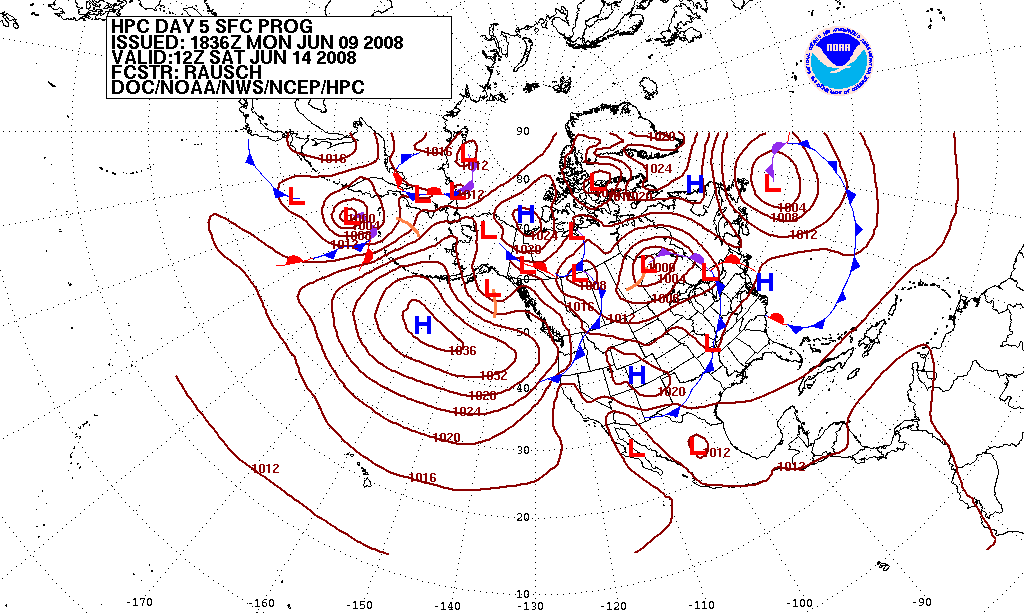
Modern weather forecasting systems operate through a multi-stage process centered on Numerical Weather Prediction (NWP). This begins with data assimilation, where vast quantities of real-time observations from sources like GOES satellites, Doppler radar, weather balloons, and surface stations are collected and processed. This data is then fed into complex mathematical models that represent the physical laws governing atmospheric behavior, such as fluid dynamics and thermodynamics. These models divide the atmosphere into a three-dimensional grid and simulate its evolution over time. Because the atmosphere is a chaotic system, small initial errors can amplify significantly, leading to forecast uncertainty. Therefore, ensemble forecasting, running multiple model simulations with slightly varied initial conditions, is crucial for estimating the probability of different weather outcomes. Human meteorologists then interpret these model outputs, applying their expertise to refine forecasts, recognize patterns, and communicate them effectively.
📊 Key Facts & Numbers
The global weather forecasting market is a colossal enterprise, estimated to reach $11.5 billion by 2027, growing at a compound annual growth rate (CAGR) of 7.1% from 2020. The ECMWF operates one of the world's most powerful supercomputing facilities for weather modeling, capable of performing over 4 quadrillion calculations per second. The NOAA in the United States invests over $6 billion annually in weather and climate research and operations. Forecast accuracy has dramatically improved; for instance, the probability of a 24-hour temperature forecast being within 2 degrees Fahrenheit has increased from about 70% in the 1950s to over 95% today. However, the accuracy of 5-day forecasts is now comparable to 1-day forecasts from 30 years ago, while 10-day forecasts still exhibit significant uncertainty, with accuracy dropping considerably beyond 7 days. The sheer volume of data processed is staggering, with global models generating terabytes of data daily.
👥 Key People & Organizations
Key figures in the development of weather forecasting systems include Carl-Gustaf Rossby, whose work in the 1930s elucidated the behavior of large-scale atmospheric waves (Rossby waves), fundamental to understanding mid-latitude weather patterns. Jule Charney was instrumental in developing the first successful numerical weather prediction models in the late 1940s and early 1950s, working at the Institute for Advanced Study. Organizations like the World Meteorological Organization (WMO) play a crucial role in coordinating global meteorological observations and data exchange. Major national meteorological services, such as the UK Met Office, Deutscher Wetterdienst (DWD) in Germany, and the Japan Meteorological Agency (JMA), are at the forefront of research and operational forecasting. Private companies like The Weather Company (an IBM business) and AccuWeather also contribute significantly to the forecasting landscape, often focusing on specialized commercial applications.
🌍 Cultural Impact & Influence
Weather forecasting systems have permeated nearly every facet of modern life, shaping daily routines, economic activities, and public safety protocols. From deciding what to wear to planning outdoor events, forecasts influence individual decisions. For industries like agriculture, aviation, and shipping, accurate forecasts are not just conveniences but necessities for operational efficiency and safety, preventing billions of dollars in losses annually. The ability to predict severe weather events like hurricanes, tornadoes, and floods has led to improved warning systems, saving countless lives. Furthermore, the visualization of weather data through maps, animations, and apps has become a ubiquitous part of media and digital platforms, influencing public perception and engagement with environmental science. The cultural resonance is evident in how weather forecasts are integrated into news broadcasts and digital interfaces worldwide.
⚡ Current State & Latest Developments
The current state of weather forecasting is characterized by rapid advancements in artificial intelligence (AI) and machine learning (ML). Companies like Google AI are developing deep learning models, such as GraphCast, which can produce forecasts comparable to traditional NWP models but at a fraction of the computational cost and much faster. These AI models are showing particular promise in predicting extreme weather events with greater lead times. Furthermore, there's a growing emphasis on probabilistic forecasting and communicating forecast uncertainty more effectively to the public. The integration of data from new sources, such as connected vehicles and IoT devices, is also expanding the observational network. Efforts are underway to improve sub-seasonal to seasonal (S2S) forecasts, aiming to provide reliable outlooks weeks to months in advance, crucial for long-term planning in sectors like energy and water management.
🤔 Controversies & Debates
A persistent controversy surrounds the accuracy and communication of weather forecasts, particularly concerning longer-range predictions and extreme events. Critics often point to instances where forecasts have been significantly wrong, leading to public distrust or misallocation of resources. The inherent chaotic nature of the atmosphere means perfect long-term prediction is likely impossible, a fact that is not always clearly communicated. There's also debate about the balance between public services provided by national meteorological agencies and the growing private sector forecasting market, including data access and commercialization. Ethical considerations arise regarding the potential for forecast bias, especially in regions with less robust observational networks, and the equitable dissemination of warnings for vulnerable populations. The increasing reliance on complex models also raises questions about transparency and the 'black box' nature of some AI-driven forecasting approaches.
🔮 Future Outlook & Predictions
The future of weather forecasting systems points towards a hybrid approach, seamlessly blending physics-based NWP models with AI/ML techniques. We can expect AI to accelerate the data assimilation process, improve model resolution, and enhance the prediction of localized, high-impact events. The development of 'digital twins' of the Earth's climate system, running in near real-time, could provide unprecedented insights into atmospheric behavior. There's also a push towards hyper-local forecasting, leveraging dense sensor networks and edge computing to provide highly specific predictions for small areas. Furthermore, the integration of weather and climate modeling will become more sophisticated, allowing for better understanding of how climate change impacts extreme weather patterns and improving long-term climate projections. The goal is not just more accurate forecasts, but also more actionable intelligence derived from them.
💡 Practical Applications
Weather forecasting systems have a vast array of practical applications that touch nearly every aspect of modern life. In aviation, forecasts are critical for flight planning, route optimization, and ensuring passenger safety by predicting turbulence, icing conditions, and hazardous weather. The energy sector relies heavily on forecasts for predicting demand (e.g., for heating and cooling) and for managing renewable energy sources like solar and wind power. Agriculture uses forecasts to optimize planting and harvesting schedules, manage irrigation, and protect crops from frost or extreme heat. Emergency management agencies depend on accurate predictions of severe weather to issue timely warnings, coordinate evacuations, and deploy resources effectively during natural disasters. Maritime operations use forecasts to navigate safely and avoid dangerous sea conditions. Even retail businesses use weather data to predict consumer behavior and manage inventory, for example, stocking more umbrellas during rainy periods.
Key Facts
- Year
- 17th Century (instrumentation) - Present (AI integration)
- Origin
- Global
- Category
- technology
- Type
- technology
Frequently Asked Questions
How accurate are modern weather forecasts?
Modern weather forecasts have achieved remarkable accuracy, especially for short-term predictions (1-3 days). For example, 24-hour temperature forecasts are now over 95% accurate within a 2-degree Fahrenheit range, a significant improvement from the mid-20th century. However, forecast accuracy diminishes rapidly beyond 7 days due to the chaotic nature of the atmosphere. While 5-day forecasts are now as accurate as 1-day forecasts were 30 years ago, predicting specific conditions 10 or more days out remains challenging and is often presented probabilistically.
What is the difference between weather forecasting and climate prediction?
Weather forecasting predicts atmospheric conditions for a specific location and time, typically ranging from hours to about two weeks. It focuses on short-term, dynamic atmospheric states. Climate prediction, on the other hand, deals with long-term averages and statistical trends of weather patterns over decades or centuries, often influenced by factors like greenhouse gas emissions. While both use complex models, weather forecasting is about predicting the 'state' of the atmosphere, whereas climate prediction is about predicting the 'behavior' of the atmosphere over extended periods.
How do supercomputers contribute to weather forecasting?
Supercomputers are essential for running the complex mathematical models used in Numerical Weather Prediction (NWP). These models divide the Earth's atmosphere into millions of grid points and simulate physical processes like temperature, pressure, and wind changes over time. Processing this immense amount of data and running simulations for multiple scenarios (ensemble forecasting) requires the immense computational power that only supercomputers can provide. Organizations like the ECMWF operate some of the world's most powerful supercomputers dedicated to weather modeling, performing quadrillions of calculations per second.
What are the main sources of weather data?
Weather forecasting systems rely on a diverse array of data sources. These include ground-based weather stations measuring temperature, humidity, and pressure; Doppler radar detecting precipitation and wind speed; weather balloons (radiosondes) measuring conditions in the upper atmosphere; and a vast network of satellites like GOES and MetOp providing global coverage of cloud patterns, temperature, and atmospheric composition. Data from buoys, ships, and aircraft also contribute to this global observational network.
Can AI replace traditional weather models?
While AI and machine learning models, such as Google AI's GraphCast, are showing impressive results and can produce forecasts much faster and with less computational cost than traditional Numerical Weather Prediction (NWP) models, they are unlikely to completely replace them in the near future. Current research suggests a hybrid approach, where AI enhances NWP by improving data assimilation, refining model outputs, or predicting specific phenomena, will be the most effective path forward. NWP models are grounded in fundamental physics, providing a robust framework that AI can complement and accelerate, rather than entirely supplant.
How can I get the most reliable weather forecast?
For the most reliable forecasts, consult sources that utilize advanced NWP models and are transparent about their methodology. National meteorological services, such as the U.S. National Weather Service, UK Met Office, or Deutscher Wetterdienst, often provide the most authoritative and detailed information. Reputable private providers like The Weather Company also offer high-quality forecasts. It's also beneficial to look at ensemble forecasts or probabilistic outlooks when available, as these provide a better sense of the range of possible outcomes and the forecast's confidence level, especially for longer-range predictions.
What is the future of weather forecasting accuracy?
The future of weather forecasting accuracy is bright, driven by advancements in AI, increased computational power, and more sophisticated data assimilation techniques. We can expect significant improvements in predicting extreme weather events, longer lead times for warnings, and more granular, hyper-local forecasts. The integration of AI with physics-based models promises to unlock new levels of precision. While perfect long-term prediction remains elusive due to atmospheric chaos, the ability to provide more reliable probabilistic outlooks and actionable intelligence will continue to grow, enhancing preparedness and decision-making across various sectors.