
Contents
Overview
An elective monarchy is a system where the head of state, typically a monarch, is chosen through an election rather than solely by birthright. This fundamental difference from hereditary monarchies means the legitimacy of the ruler stems from selection, not just lineage. The specifics of who votes, who can be voted for, and how the election is conducted can vary dramatically, making each instance unique. It's a political structure that blends monarchical tradition with democratic or aristocratic selection mechanisms, offering a distinct path to leadership.
📜 Historical Roots & Evolution
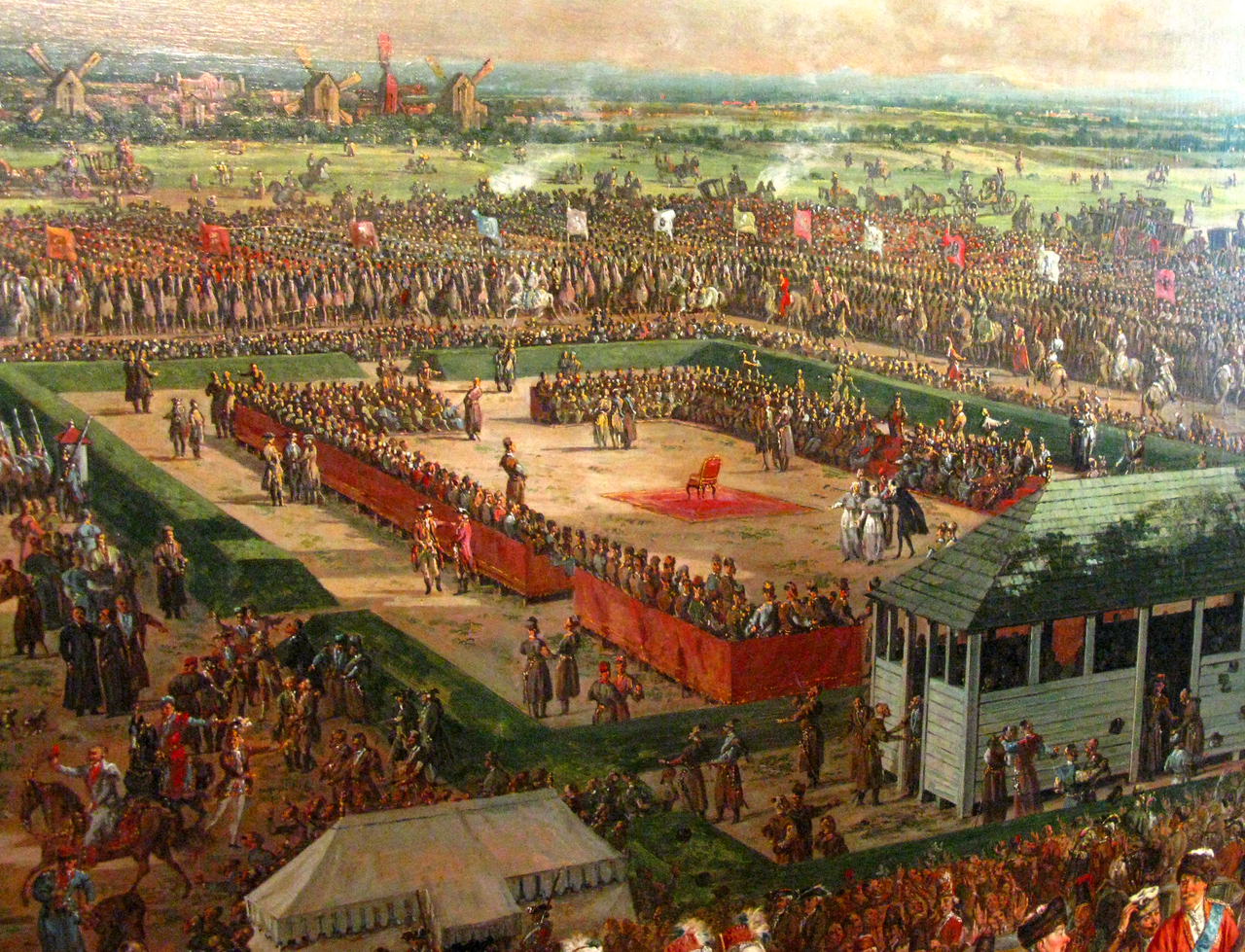
The concept of elective monarchy isn't new; its roots stretch back to ancient times. Early forms can be seen in tribal chieftaincies and even in the Roman Republic's selection of consuls. A prominent historical example is the Holy Roman Empire, where emperors were elected by a college of prince-electors for centuries. Many other European states, like Poland-Lithuania and Bohemia, also experimented with elective succession, often transitioning from elective to hereditary systems over time as ruling families consolidated power and influence.
🌍 Modern Examples & Variations
While less common today than hereditary monarchies, elective systems persist. The most prominent modern example is Vatican City, where the Pope is elected by the College of Cardinals. Malaysia also operates under a unique rotational elective monarchy, where nine hereditary state rulers elect a paramount ruler (Yang di-Pertuan Agong) for a five-year term. These examples showcase how the principle of election can be adapted to vastly different cultural and political contexts, from religious states to federal constitutional monarchies.
⚖️ The Election Process: Who Votes?
The 'electorate' in an elective monarchy is a critical defining feature. Historically, this could range from a select group of powerful nobles or clergy, as seen with the prince-electors of the Holy Roman Empire, to a broader, though still limited, body of citizens or representatives. In modern cases like Vatican City, the electors are a specific, high-ranking group (Cardinals). The composition of the electorate directly shapes the political dynamics and the types of candidates likely to succeed, often reflecting the power structures of the society at the time of its establishment.
🤔 Pros and Cons: A Balanced View
Elective monarchies present a fascinating dichotomy. On the one hand, they can offer a degree of meritocracy or broader representation compared to strict hereditary succession, potentially leading to more capable rulers. The election process can also provide a mechanism for peaceful transition during dynastic crises. However, they can also be prone to political maneuvering, corruption, and instability if the election process is contentious or if powerful factions vie for control. The risk of a 'failed' election or a ruler beholden to a narrow elite is ever-present.
💡 Key Concepts & Terminology
Understanding elective monarchies requires grasping key terms. A 'prince-elector' refers to a ruler with the right to elect the Holy Roman Emperor. The 'Golden Bull of 1356' codified the electoral college for the Holy Roman Empire, solidifying the power of seven electors. A 'rotational monarchy' is a specific type where the crown passes between different ruling families or states in a predetermined sequence, as seen in Malaysia. Distinguishing between a purely elective system and one with semi-elective elements, like a regency council choosing a successor, is also crucial.
🌟 Vibe Score & Controversy Spectrum
The Vibe Score for elective monarchies generally hovers around a 65/100, reflecting their historical significance and enduring, albeit niche, presence. The Controversy Spectrum is moderately high, often ranging from 6 to 8 out of 10, particularly when discussing historical examples or potential modern applications. Debates frequently center on the legitimacy of unelected rulers, the potential for corruption in electoral processes, and whether such systems are compatible with modern democratic ideals. The inherent tension between monarchical tradition and elective selection fuels ongoing discussion.
🚀 The Future of Elective Monarchies
The future of elective monarchies is uncertain but intriguing. While a widespread resurgence is unlikely given the global trend towards republics and parliamentary democracies, existing systems may continue to evolve. The unique rotational system in Malaysia, for instance, offers a model for power-sharing among traditional rulers. Furthermore, as societies grapple with succession issues in various forms of leadership, the historical precedent of elective monarchies might offer unconventional solutions, perhaps influencing how we think about leadership selection in unexpected domains, from corporate boards to international organizations.
Key Facts
- Year
- Ancient Origins
- Origin
- Ancient Greece, Germanic Tribes, Medieval Europe
- Category
- Political Systems
- Type
- Political System
Frequently Asked Questions
What is the primary difference between an elective and a hereditary monarchy?
The primary difference lies in how the head of state attains their position. In a hereditary monarchy, succession is determined by birthright, following a predetermined line of descent. In an elective monarchy, the monarch is chosen through some form of election, where a specific group or individual selects the successor, rather than it being automatically passed down through family lines.
Are there any well-known elective monarchies today?
Yes, the most prominent example is Vatican City, where the Pope is elected by the College of Cardinals. Malaysia also features a unique rotational elective monarchy, where nine hereditary state rulers elect the Yang di-Pertuan Agong (paramount ruler) for a five-year term. These represent distinct modern applications of the elective principle in monarchical systems.
Who typically elects the monarch in an elective monarchy?
The electors vary significantly depending on the specific system and historical period. Historically, it could be a council of nobles, powerful clergy, or a designated group of electors, such as the prince-electors of the Holy Roman Empire. In modern examples, the electorate is usually a defined body, like the College of Cardinals in Vatican City or the hereditary rulers in Malaysia.
Can an elective monarchy become hereditary?
Absolutely. History is replete with examples where elective monarchies gradually transitioned into hereditary ones. This often occurred when the elected ruler's family became powerful enough to consistently influence or dictate the succession, leading to repeated elections of heirs. Conversely, hereditary monarchies sometimes adopted elective elements to manage succession crises.
What are the main advantages of an elective monarchy?
Potential advantages include the possibility of selecting a more capable or suitable ruler based on merit or consensus, rather than just birth. It can also provide a structured method for succession, potentially avoiding disputes that can plague purely hereditary systems, especially during times of dynastic uncertainty. The election process can, in theory, lend greater legitimacy to the monarch's rule.
What are the main disadvantages or criticisms of elective monarchies?
Criticisms often focus on the potential for corruption, political intrigue, and factionalism within the electoral body. The electorate might be too narrow, representing only an elite rather than the broader populace. There's also the risk of instability if the election process is contentious or if powerful groups manipulate the outcome. Some argue it can be less efficient than a clear hereditary line.