
Contents
- 🎵 Origins & History
- ⚙️ How It Works
- 📊 Key Facts & Numbers
- 👥 Key People & Organizations
- 🌍 Cultural Impact & Influence
- ⚡ Current State & Latest Developments
- 🤔 Controversies & Debates
- 🔮 Future Outlook & Predictions
- 💡 Practical Applications
- 📚 Related Topics & Deeper Reading
- Frequently Asked Questions
- References
- Related Topics
Overview
The concept of harnessing water's power for mechanical work dates back to ancient civilizations, with the earliest known water wheels appearing in the Roman Empire around the first century BCE. These early devices, primarily used for milling grain and irrigation, laid the groundwork for later innovations. The transition to generating electricity began in the late 19th century, spurred by advancements in AC and DC power systems. The first hydroelectric power station, the Pearl Street Station in New York City, began operation in 1882, powered by Thomas Edison's direct current system, though it was quickly overshadowed by Nikola Tesla's AC system, which allowed for more efficient long-distance transmission. Early pioneers like George Westinghouse championed AC, enabling the construction of larger, more remote hydroelectric facilities. The Hoover Dam, completed in 1936, became an iconic symbol of this era's engineering prowess and the transformative potential of large-scale hydropower.
⚙️ How It Works
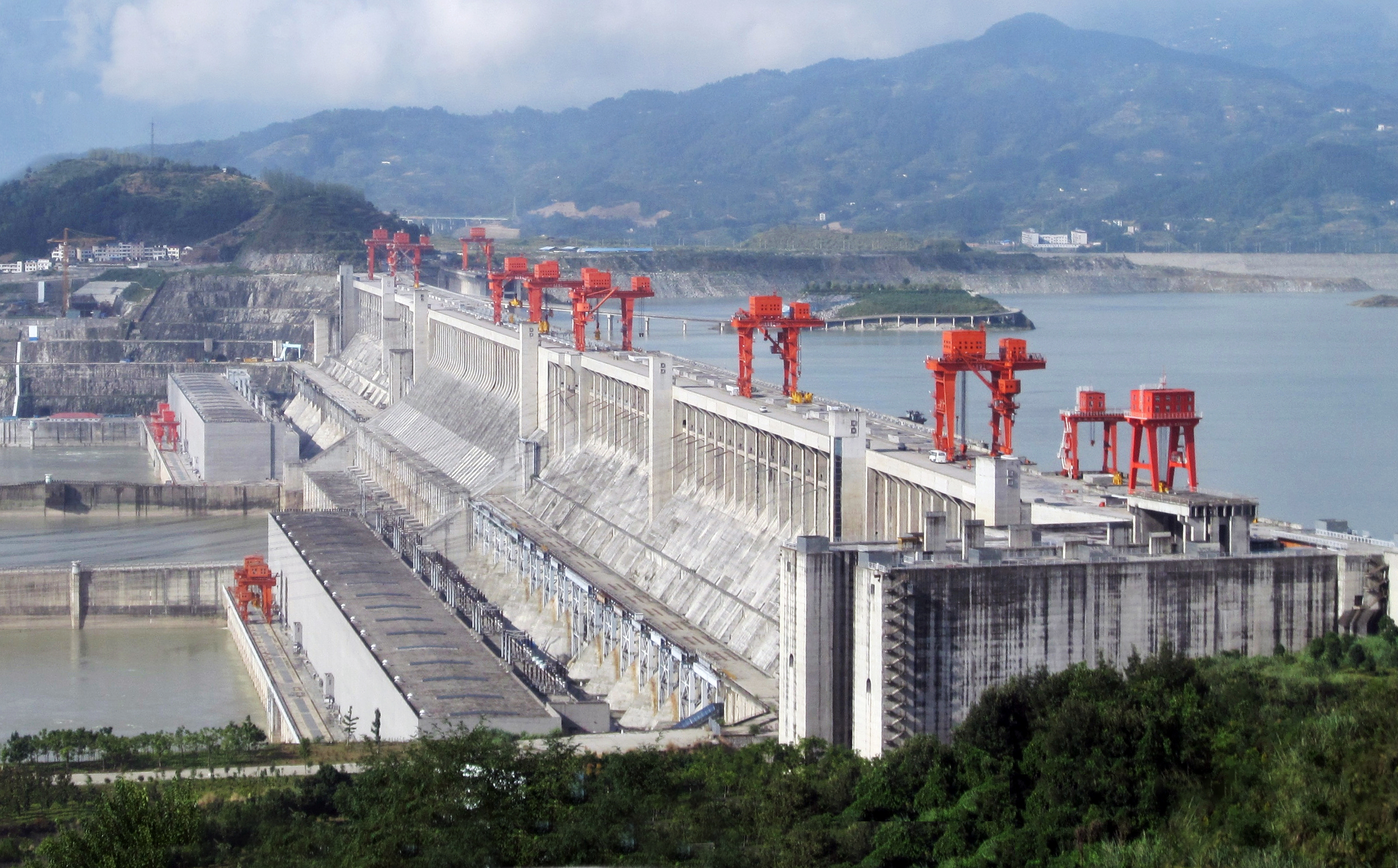
At its core, a hydroelectric power plant operates by converting potential energy stored in water held at a height into kinetic energy as it flows downwards, and then into electrical energy. Water is typically impounded behind a dam to create a reservoir, storing potential energy. When electricity is needed, sluice gates open, allowing water to flow through large pipes called penstocks to a turbine. The force of the moving water spins the turbine blades, which are connected to a generator. The generator, essentially a large electromagnet rotating within coils of wire, produces electricity through electromagnetic induction. The electricity is then stepped up in voltage by transformers for efficient transmission over power lines to consumers. After passing through the turbine, the water is released back into a river or reservoir downstream, completing the cycle.
📊 Key Facts & Numbers
Hydropower is a titan in the global energy landscape, accounting for roughly 15% of worldwide electricity generation. In 2023, this amounted to an estimated 4,210 TWh of energy produced. Globally, there are over 1,700 large dams (defined as over 15 meters high or with reservoirs exceeding 3 million cubic meters), with China leading in installed capacity at over 400 GW. The Three Gorges Dam alone has an installed capacity of 22,500 MW, making it the world's largest power station. Globally, the installed capacity of hydropower plants exceeds 1,300 GW. Despite its scale, hydropower's share of global electricity has remained relatively stable, hovering around 15-16% for the past decade, though its absolute generation has increased.
👥 Key People & Organizations
Key figures in the development of hydroelectric power include Nikola Tesla, whose work on AC systems was crucial for efficient transmission, and George Westinghouse, who commercialized Tesla's innovations. Thomas Edison's early DC system, while ultimately less dominant for large-scale power, was foundational. Engineers like Arthur Morgan, who led the Tennessee Valley Authority (TVA), were instrumental in developing massive river basin projects. Organizations such as the International Hydropower Association (IHA) advocate for and promote sustainable hydropower, while national entities like the U.S. Bureau of Reclamation have overseen the construction of monumental projects like the Hoover Dam. Companies like General Electric and Siemens AG are major manufacturers of turbines and generators for these plants.
🌍 Cultural Impact & Influence
Hydroelectric power plants have profoundly shaped human civilization and the environment. They have enabled industrialization, powered cities, and provided irrigation for agriculture on an unprecedented scale. Culturally, iconic dams like the Hoover Dam and the Aswan Dam have become symbols of human ingenuity and control over nature, often featured in art, literature, and film. However, their construction has also led to significant social and environmental impacts, including displacement of communities and alteration of river ecosystems, sparking debates that continue to this day. The sheer scale of projects like the Three Gorges Dam has also influenced geopolitical landscapes and international cooperation or conflict over water resources.
⚡ Current State & Latest Developments
The current state of hydroelectric power is one of mature technology facing new challenges and opportunities. While new large-scale dam construction has slowed in many developed nations due to environmental concerns and high costs, there's a resurgence of interest in upgrading existing facilities to increase efficiency and capacity. Pumped-storage hydropower, a form of energy storage, is gaining traction as a critical component for grid stability, especially with the increasing integration of intermittent renewables like solar power and wind power. Countries like China continue to invest heavily in new projects, while others, like Norway, already derive a vast majority of their electricity from hydropower. The development of smaller, 'run-of-river' hydro projects is also being explored as a less impactful alternative.
🤔 Controversies & Debates
The most significant controversy surrounding hydroelectric power plants revolves around their environmental and social impacts. Large dams, particularly those creating vast reservoirs, can inundate significant land areas, leading to habitat destruction, loss of biodiversity, and the displacement of human populations, sometimes numbering in the millions, as seen with the Three Gorges Dam. Reservoirs can also alter river flows, impact fish migration, and, in tropical regions, release substantial amounts of methane, a potent greenhouse gas, from decomposing organic matter. Critics, such as organizations like International Rivers, argue that the true costs, including environmental externalities and social disruption, are often underestimated. Conversely, proponents highlight hydropower's role in providing reliable, low-carbon electricity and its flexibility in balancing renewable energy grids.
🔮 Future Outlook & Predictions
The future of hydroelectric power is likely to be characterized by optimization and integration rather than massive new construction in many regions. Pumped-storage hydropower is poised for significant growth, acting as a crucial grid-scale battery to store excess renewable energy and release it during peak demand. Innovations in turbine technology aim to improve efficiency and reduce environmental impacts, such as fish-friendly turbines. There's also a growing focus on 'repowering' existing dams, upgrading turbines and generators to boost output without increasing the physical footprint. Furthermore, the potential for small-scale and micro-hydro projects in developing nations remains substantial, offering decentralized power solutions. The ongoing challenge will be balancing energy needs with ecological preservation and social equity, potentially leading to more collaborative and environmentally sensitive project designs.
💡 Practical Applications
Hydroelectric power plants have a wide array of practical applications, primarily centered around electricity generation. They are a cornerstone of national grids in many countries, providing a stable and dispatchable power source. Beyond bulk electricity, they are crucial for grid stability, offering rapid response to fluctuations in demand. Pumped-storage hydropower systems function as massive batteries, storing energy by pumping water uphill during off-peak hours and releasing it through turbines during peak demand. In some cases, reservoirs created by dams also serve dual purposes, providing water for irrigation, municipal water supply, and flood control. The consistent power output makes them ideal for powering industrial processes and large urban centers.
Key Facts
- Year
- 1882 (first power station)
- Origin
- Global
- Category
- technology
- Type
- technology
Frequently Asked Questions
How much of the world's electricity comes from hydropower?
Hydropower is a significant contributor to global electricity, supplying approximately 15% of the world's total energy needs. In 2023, this amounted to around 4,210 TWh, making it the largest single source of renewable electricity and surpassing nuclear power generation. This substantial output underscores its critical role in meeting global energy demand with a relatively low-carbon footprint compared to fossil fuels.
What are the main components of a hydroelectric power plant?
A typical hydroelectric power plant consists of several key components. A dam impounds water to create a reservoir, storing potential energy. Penstocks are large pipes that channel water from the reservoir to the turbines. Turbines are rotated by the force of the moving water, and their shafts are connected to generators, which convert mechanical energy into electrical energy. Transformers then increase the voltage for efficient transmission over power lines.
What are the primary environmental concerns associated with hydroelectric dams?
The construction of large hydroelectric dams raises several environmental concerns. These include the inundation of vast land areas, leading to habitat loss and biodiversity reduction. Dams can alter river ecosystems, affecting water quality, sediment flow, and fish migration patterns. In tropical regions, reservoirs can release significant amounts of methane, a potent greenhouse gas, from decomposing submerged vegetation. The displacement of communities is also a major social and environmental issue.
How does pumped-storage hydropower work?
Pumped-storage hydropower acts like a large-scale battery for the electricity grid. It involves two reservoirs at different elevations. During periods of low electricity demand (and thus lower prices), excess electricity is used to pump water from the lower reservoir to the upper reservoir. When demand is high, water is released from the upper reservoir back down through turbines to generate electricity. This process allows for efficient storage and rapid release of energy, balancing the grid.
Are hydroelectric power plants truly 'green' or 'renewable'?
Hydroelectric power is considered renewable because it harnesses the continuous water cycle, a natural process. It is also a low-carbon source during operation, emitting far less greenhouse gas than fossil fuel plants. However, the 'green' label is debated due to the significant environmental impacts of large dams, such as habitat destruction, altered river flows, and methane emissions from reservoirs, especially in tropical areas. The sustainability of a project often depends on its specific design, location, and management practices.
What is the historical significance of early hydroelectric power stations?
The development of early hydroelectric power stations marked a pivotal moment in the industrial revolution and the advent of the electrical age. The Pearl Street Station, operational in 1882, demonstrated the feasibility of generating electricity from water power, albeit with DC limitations. The subsequent adoption of AC systems, championed by Nikola Tesla and George Westinghouse, allowed for more efficient transmission over greater distances, paving the way for the construction of massive projects like the Hoover Dam and enabling the electrification of cities and industries worldwide.
What are the future trends for hydroelectric power development?
Future trends in hydroelectric power are likely to focus on optimizing existing infrastructure and integrating it with other renewable sources. Pumped-storage hydropower is expected to grow significantly as a key energy storage solution to support intermittent renewables like solar power and wind power. There's also a push to 'repower' older dams by upgrading turbines and generators for increased efficiency and output. While new large-scale dam construction is limited in many regions, smaller, run-of-river projects and innovative turbine designs that minimize environmental impact are being explored, particularly in developing nations.