
Contents
- 🗺️ Who Were the Xiongnu?
- ⏳ Timeline of Power
- ⚔️ Military Might & Tactics
- 👑 Leadership & Organization
- 🤝 Diplomacy & Conflict with China
- 🌐 Steppe Empire Dynamics
- 🏺 Material Culture & Lifestyle
- 🤔 Legacy & Historical Debate
- 🌟 Vibepedia Vibe Score
- 💡 Key Takeaways for the Curious
- Frequently Asked Questions
- Related Topics
Overview
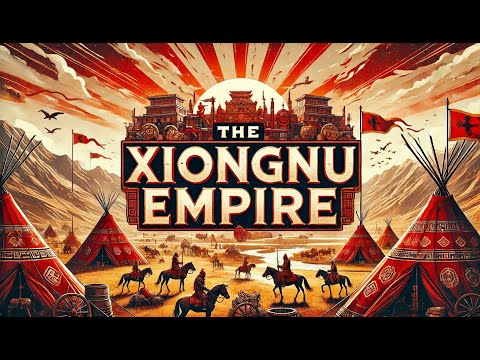
The Xiongnu were a formidable confederation of nomadic peoples who dominated the eastern Eurasian Steppe from the 3rd century BCE to the 1st century CE. Their mastery of mounted warfare and sophisticated political organization allowed them to challenge and often dictate terms to the Han Dynasty of China, a conflict that shaped the geopolitical landscape of ancient Asia. Understanding the Xiongnu requires grappling with their elusive origins, their complex relationship with settled civilizations, and their lasting impact on the development of subsequent steppe empires. Their legacy is a potent reminder of the power dynamics between nomadic and agrarian societies and the enduring influence of mobile peoples on global history.
🗺️ Who Were the Xiongnu?
The Xiongnu were not a single ethnic group but a formidable confederation of nomadic peoples who dominated the eastern Eurasian Steppe for centuries, roughly from the 3rd century BC to the late 1st century AD. Their influence stretched across a vast territory, impacting the trajectory of both steppe societies and settled empires, most notably Han Dynasty China. Understanding the Xiongnu requires looking beyond simplistic labels; they were a dynamic political and military entity, a true powerhouse whose existence fundamentally shaped the geopolitical landscape of ancient East Asia.
⏳ Timeline of Power
The Xiongnu's rise to prominence is inextricably linked to the consolidation of power under Modu Chanyu around 209 BC. This period marked the transition from a loose tribal alliance to a unified empire capable of challenging powerful neighbors. Their influence waxed and waned over the subsequent centuries, with significant periods of conflict and uneasy peace with the Han Dynasty. By the late 1st century AD, internal strife and pressure from rival groups like the Xianbei led to their fragmentation and eventual absorption or displacement, though their impact lingered.
⚔️ Military Might & Tactics
The Xiongnu's military prowess was legendary, built upon highly mobile cavalry archers. Their tactics emphasized speed, surprise, and coordinated maneuvers, allowing them to strike deep into enemy territory and retreat before a decisive engagement could occur. They were masters of the steppe environment, utilizing its vastness for strategic advantage. Their effectiveness against the more heavily armored infantry of settled civilizations like China was a constant source of concern and a testament to their superior horsemanship and battlefield adaptability.
👑 Leadership & Organization
At the apex of Xiongnu power stood the Chanyu, a supreme leader whose authority was crucial for maintaining the confederation's unity. The Chanyu's position was often hereditary, though succession could be fraught with internal power struggles. The confederation was organized into various tribal units, each led by chieftains who owed allegiance to the Chanyu. This hierarchical structure, while capable of mobilizing immense force, also contained the seeds of internal division that would eventually contribute to their decline.
🤝 Diplomacy & Conflict with China
The relationship between the Xiongnu and Han Dynasty China was a defining feature of their history, characterized by a complex interplay of warfare, tribute, and diplomacy. For centuries, the Xiongnu posed a significant threat to the northern borders of the Han empire, leading to numerous military campaigns and the construction of defensive fortifications like the Great Wall of China. However, periods of peace were often secured through marriage alliances and the exchange of goods, demonstrating a pragmatic approach to managing their powerful neighbor.
🌐 Steppe Empire Dynamics
As a nomadic empire, the Xiongnu's power was intrinsically tied to their control over grazing lands and trade routes across the Eurasian Steppe. Their ability to extract tribute from settled populations and control the flow of goods, particularly horses and luxury items, was vital to their economy and political stability. The vastness of their territory meant that maintaining cohesion was a constant challenge, requiring effective leadership and a shared sense of identity, however fluid.
🏺 Material Culture & Lifestyle
Archaeological evidence, though often challenging to interpret due to the nomadic lifestyle, reveals a rich material culture. Xiongnu burials, such as those found at Noin-Ula, have yielded exquisite artifacts including textiles, metalwork, and lacquerware, often reflecting influences from both steppe traditions and interactions with settled civilizations like Sogdia and China. Their lifestyle was centered around pastoralism, with portable dwellings and a deep connection to their horses, which were central to their economy and warfare.
🤔 Legacy & Historical Debate
The historical understanding of the Xiongnu is heavily reliant on Chinese sources, which often portray them through a lens of conflict and 'barbarian' otherness. This has led to ongoing scholarly debate regarding their ethnic composition, linguistic affiliations, and the true extent of their political and cultural influence. Some theories even link them to later groups like the Huns of Europe, though this remains a contentious point among historians. Deciphering their true identity requires careful sifting of biased records and archaeological findings.
🌟 Vibepedia Vibe Score
Vibe Score: 85/100 - The Xiongnu command a high Vibe Score due to their sheer historical impact, military dominance, and the enduring mystery surrounding their origins and ultimate fate. They represent a peak of nomadic power, a force that directly challenged and influenced one of the world's most enduring civilizations. Their story is one of empire-building on the move, a testament to the power of mobility and martial skill in shaping ancient history. Their legacy continues to spark debate and fuel fascination.
💡 Key Takeaways for the Curious
For anyone interested in the dynamics of nomadic empires, the history of Central Asia, or the complex relationship between settled and nomadic peoples, the Xiongnu offer a compelling case study. Their military innovations, political organization, and cultural interactions provide crucial insights into a period often overshadowed by the empires they interacted with. Understanding their rise and fall is essential for a complete picture of ancient Eurasian history and the forces that shaped the Silk Road.
Key Facts
- Year
- c. 209 BCE – 155 CE
- Origin
- Eastern Eurasian Steppe
- Category
- Ancient History / Nomadic Cultures
- Type
- Historical Confederation
Frequently Asked Questions
Were the Xiongnu Chinese?
No, the Xiongnu were distinct from the Han Chinese. They were a confederation of nomadic peoples who inhabited the steppes north of China and frequently engaged in conflict and diplomacy with the Han Dynasty. While they interacted extensively and influenced each other, they were not ethnically or politically part of China.
What language did the Xiongnu speak?
The exact language or languages spoken by the Xiongnu are unknown and a subject of ongoing scholarly debate. It's widely believed they spoke a Turkic or Mongolic language, or possibly a mix of languages from different groups within their confederation. Surviving linguistic evidence is scarce and often debated.
What happened to the Xiongnu?
The Xiongnu confederation gradually fragmented due to internal conflicts and external pressures, particularly from the Xianbei people, starting in the late 1st century AD. Some groups were defeated and dispersed, while others migrated, potentially influencing later groups like the Huns in Europe. Their unified empire ceased to exist.
Did the Xiongnu build the Great Wall?
The Xiongnu did not build the Great Wall, but their constant raids and invasions were a primary reason for its construction and expansion by various Chinese dynasties, most notably the Qin and Han. The Wall was a defensive measure against Xiongnu incursions into Chinese territory.
What is the most significant Xiongnu archaeological find?
The tombs at Noin-Ula in modern-day Mongolia are among the most significant Xiongnu archaeological finds. Discovered in the early 20th century, these tombs yielded a wealth of artifacts, including remarkably preserved textiles, lacquerware, and metal objects, offering invaluable insights into Xiongnu craftsmanship and their interactions with other cultures.
Are the Xiongnu related to the Huns?
The potential link between the Xiongnu and the Huns of Europe is a long-standing and highly debated theory among historians. Some scholars propose that a branch of the Xiongnu migrated westward and eventually became the Huns, while others argue the evidence is insufficient to establish a direct lineage. It remains a fascinating, though unproven, hypothesis.